

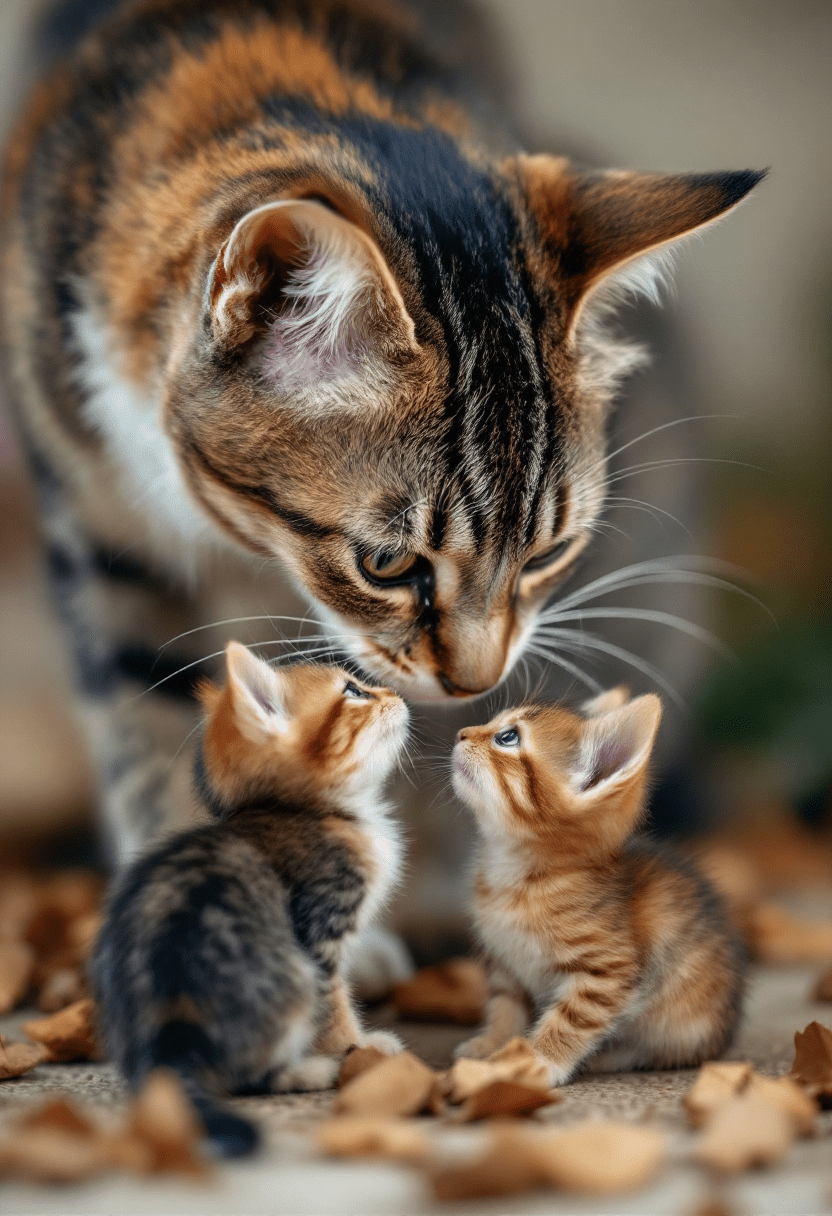
While mother cats fiercely protect their litters, fewer than 10% of male felines actively participate in raising kittens. This stark contrast highlights one of nature’s most puzzling questions: Does a father cat know his kittens? Can paternal cats truly identify their young?
Feline family dynamics differ significantly from those of humans or even dogs. Maternal bonds are well-documented, with mothers grooming, feeding, and teaching their young for weeks. However, male behavior remains unpredictable. Some exhibit curiosity toward newborns, while others display aggression, a survival instinct rooted in their wild ancestors.
Research suggests scent plays a crucial role. Cats possess 200 million olfactory receptors, allowing them to detect subtle chemical signals. While males might recognize a mating partner’s scent on kittens, this doesn’t guarantee parental care. Exceptions exist, like a documented case of a male cat staying by his partner’s side, but such instances are rare.
Understanding these behaviors helps owners create safer environments for their pets. We’ll explore scientific findings, real-world observations, and practical strategies for managing interactions between adult males and vulnerable litters.
Principais conclusões
- Paternal recognition in cats relies more on scent than visual cues
- Most males show little interest in offspring due to biological instincts
- Supervised introductions reduce risks during early kitten development
- Exceptional cases exist where males assist in nurturing young
- Proper management ensures kitten safety around adult cats
Understanding Feline Family Dynamics
Feline social structures challenge human assumptions about parenting roles. Unlike human families, where both parents often share responsibilities, mothers handle nearly all kitten-rearing duties in the animal kingdom. This biological design ensures survival but leaves little room for paternal participation.
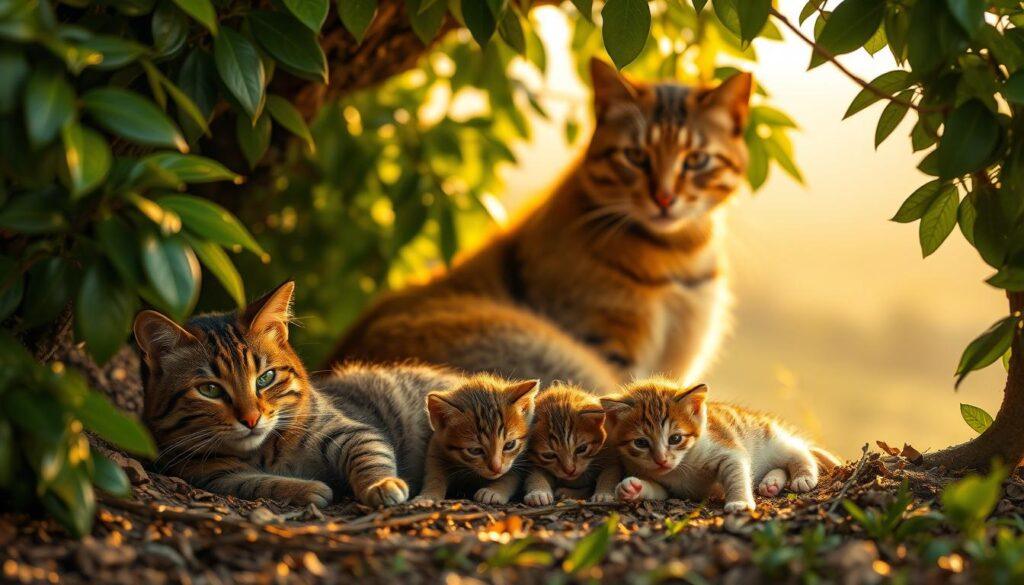
Maternal Mastery vs. Paternal Distance
Mother cats exhibit remarkable dedication from birth, providing warmth, milk, and protection. They teach hunting skills and social boundaries during the first critical weeks. Male counterparts, however, rarely engage beyond mating. Wild instincts drive many to view litter as competition rather than kin.
Instincts That Shape Interactions
Three factors dominate feline behavior:
- Scent signatures: Chemical cues determine recognition
- Hierarchy preservation: Adult males prioritize territory
- Survival programming: Mothers instinctively isolate newborns
These patterns explain why successful introductions between males and litters require gradual scent exchanges. Early positive experiences can occasionally override natural distrust, particularly in domesticated environments where food security reduces competition.
While exceptions exist, some neutered males show nurturing tendencies, the rule remains clear. Feline families thrive through maternal leadership, with paternal figures playing minimal roles outside rare, specialized cases.
Insights on does a father cat know his kittens
Understanding whether paternal felines recognize their young requires examining both biological research and modern social trends. While science explores scent-based recognition mechanisms, viral online stories showcase rare but heartwarming exceptions.
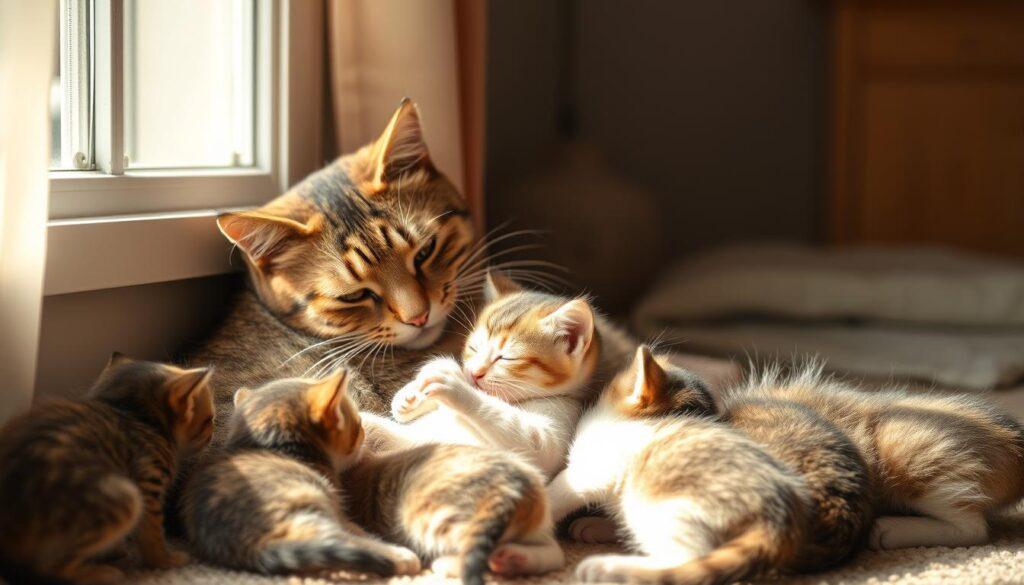
Scientific Perspectives on Feline Paternal Recognition
Studies reveal male cats lack innate paternal instincts due to evolutionary priorities. Their 200 million olfactory receptors can detect pheromones from mates but often fail to link these scents to offspring. Researchers at the Feline Behavior Institute note males may tolerate litters near shared territories but rarely exhibit nurturing behaviors.
Biological factors play a key role. Unneutered males prioritize mating over caregiving, viewing newborns as competition for resources. Time spent with the mother cat during pregnancy slightly increases recognition odds, though risks remain if the male wasn’t present at birth.
Real-Life Observations and Social Media Moments
TikTok’s viral sensation Santos defied expectations by guarding his mate Poppy during labor and interacting gently with their litter. This outlier case garnered 4.2 million views, sparking debates about feline emotional capacity.
Experts caution against assuming such bonds are common. Love to Know Pets emphasizes that unsupervised interactions frequently trigger predatory instincts in males, endangering the young. Controlled introductions over several weeks, using scent-swapping techniques, remain the safest approach for households with multiple cats.
Health, Behavior, and Safety in Feline Parenting
Creating secure environments for young felines requires understanding biological instincts and environmental triggers. Unmanaged interactions between adult males and litters can lead to stress or injury without proper protocols.
Potential Risks When Males Engage Newborns
Unfamiliar males often perceive mewing sounds and small movements as prey signals. This predatory response stems from their hunting programming, even in domesticated settings. Stress-induced aggression may also occur if the mother feels threatened.
Strategies for Safe Coexistence
Neutering reduces territorial behaviors by 60-90%, according to feline welfare studies. Supervised meetings using scent-swapped blankets help build familiarity. Always separate parties at the first sign of raised fur or hissing.
Domestic vs. Wild Behavior Patterns
| Fator | Domestic Setting | Wild Environment |
|---|---|---|
| Interaction Style | Guarded curiosity | Aggressive avoidance |
| Risk Level | Moderate (managed) | High (uncontrolled) |
| Human Influence | Direct supervision | None |
Food availability dramatically alters male priorities. Well-fed house cats show more tolerance than their wild counterparts competing for scarce resources. Still, never leave newborns unattended with unrelated adults.
Consistent routines and separate living spaces during weaning periods prevent conflicts. Monitor the mother’s comfort levels closely; her relaxed posture indicates successful bonding efforts.
Conclusão
Feline paternal recognition remains a complex interplay of instinct and environment. While most males lack innate caregiving drives, scent-based awareness occasionally bridges this gap. Scientific studies confirm that olfactory cues dominate over visual connections, though exceptions emerge in domesticated environments where neutered males sometimes engage with litters.
Real-world observations reveal variability; some males ignore offspring, while rare cases show gentle interactions. Proper supervision remains critical, as territorial instincts can override recognition. Neutering reduces risks significantly, aligning behaviors closer to maternal nurturing patterns.
Owners should assess both domestic habits and ancestral wild traits when managing feline families. While multi-cat households may foster bonds, each dynamic requires tailored strategies. Prioritize scent introductions and separate spaces during early development stages.
Ultimately, feline relationships defy simple rules. Observing individual temperaments and providing structured care ensures safer, healthier connections between generations.
PERGUNTAS FREQUENTES
Can male cats recognize their biological offspring?
Unlike humans or dogs, most domestic males lack innate parental instincts. They rely on scent cues rather than visual recognition. If separated early, they may not distinguish their kittens from others.
Are there risks when introducing a male to newborn litters?
Yes. Unneutered males may show aggression due to territorial instincts or mating drives. Supervision is critical during early interactions to protect vulnerable kittens.
How does neutering impact paternal behavior?
Neutering reduces testosterone-driven aggression and mating urges. Fixed males often display calmer behaviors, making coexistence with litters safer, but not necessarily parental care.
Do wild feline fathers engage in kitten care?
A> Wild males like lions rarely participate. Their role focuses on territory defense. Domesticated breeds mirror this independence, though exceptions exist in socialized groups.
Can kittens form bonds with unrelated males?
Yes. Early socialization helps. Adult males raised around the litter may tolerate or even groom kittens, especially if familiar with the mother’s scent.
Why do some social media videos show males cuddling kittens?
Individual personalities and upbringing play roles. Males raised in nurturing environments or exposed early to litters may exhibit rare affectionate behaviors.
Does mating behavior influence paternal instincts?
No. Mating is hormonally driven, not linked to caregiving. Post-mating, males typically leave parenting duties to mothers, reflecting their biological design.