
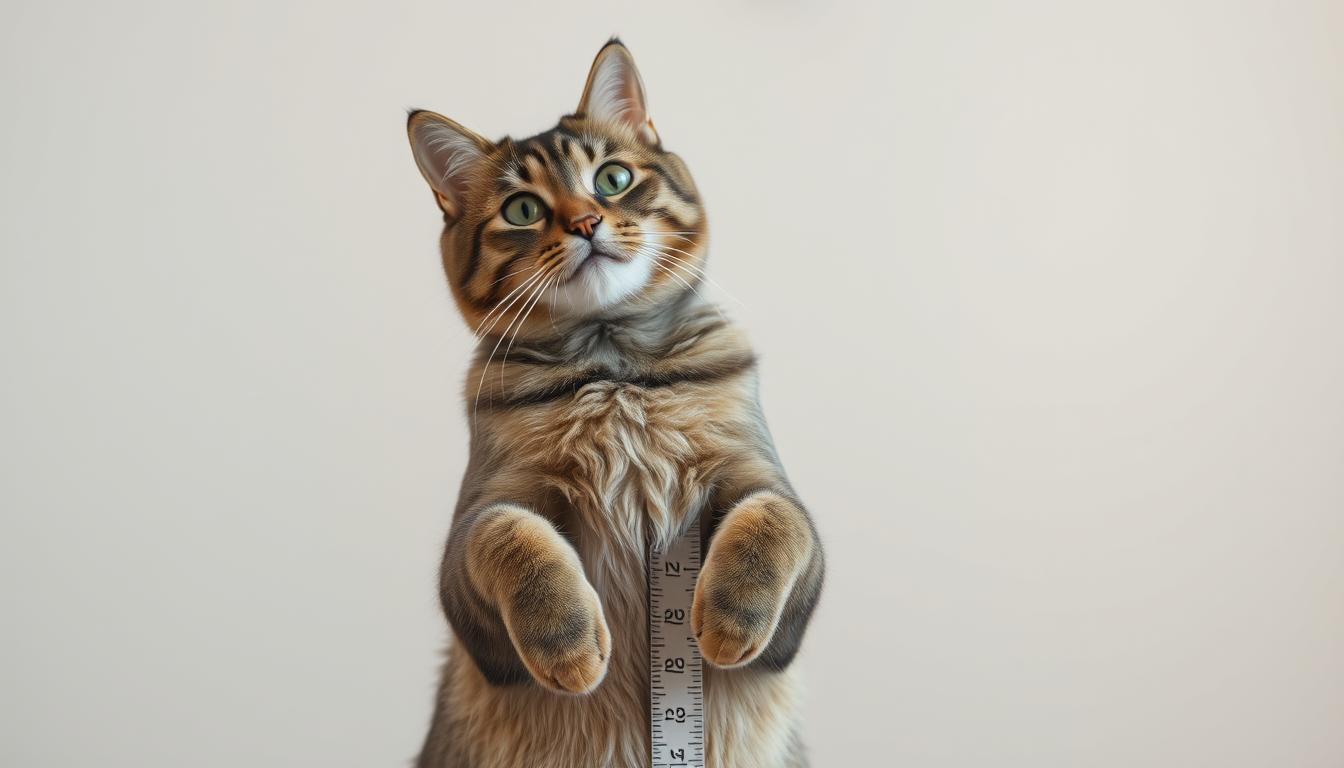
Did you know a Maine Coon can stand over 16 inches tall, nearly double the height of most domestic felines? While these gentle giants defy expectations, most pet cats typically measure between 9 and 10 inches at the shoulder. Understanding their stature, especially when considering how tall the average cat is, isn’t just trivia; it helps owners choose proper feeding stations, carriers, and climbing structures. between 9 and 10 inches at the shoulder. Understanding their stature isn’t just trivia; it helps owners choose proper feeding stations, carriers, and climbing structures.
This guide explores feline measurements using data from trusted sources like CatWiki and Daily Paws. You’ll discover how genetics, nutrition, and breed shape growth patterns. For example, Siamese cats often stay lean and compact, while Ragdolls develop larger frames over three years.
We’ll break down size comparisons in everyday terms like matching a cat’s shoulder height to a standard coffee mug. You’ll also learn why monitoring growth matters for spotting health issues early. Whether you’re adopting a kitten or caring for a senior companion, these insights simplify pet care decisions.
Key Takeaways
- Breed plays the biggest role in determining a feline’s shoulder height
- Measurements typically focus on the ground-to-shoulder area in inches
- Nutrition and health history influence growth rates across life stages
- Knowing adult size helps select appropriately sized accessories and toys
- Domestic shorthairs vary more in dimensions than their purebred counterparts
Introduction to Cat Dimensions and Measurements
Understanding a cat’s physical proportions starts with precise measurements. Veterinarians track shoulder height and body length to assess growth patterns and identify potential health concerns. Most domestic companions measure 9–10 inches from ground to shoulder, though breeds like Bengals often exceed this range.

Overview of Feline Measurements
Height refers to the vertical distance from paws to shoulder blades, while length spans nose to tail base. These metrics help determine whether a pet aligns with breed standards or requires nutritional adjustments. Clinics use specialized tools like stadiometers for accuracy, especially when monitoring kittens.
Why Cat Height Matters
Abnormal stature can signal skeletal disorders or improper development. For example, a sudden growth plateau might indicate thyroid imbalances. Standardized measurements also let owners compare their pet’s size to typical breed profiles, aiding in care decisions for food portions and climbing towers.
How tall is the average cat
When measuring feline stature, most domestic breeds fall within a narrow range. According to PetMD, adult cats typically measure 9 to 10 inches from paw to shoulder. This metric serves as a baseline for tracking healthy development, though variations exist even among mixed-breed pets.

| Breed Type | Height Range (inches) | Weight Correlation |
|---|---|---|
| Domestic Shorthair | 8–11 | 8–12 lbs |
| Siamese | 9–10 | 6–14 lbs |
| Maine Coon | 10–16 | 13–18 lbs |
Nutrition and genetics create significant deviations. For example, Bengal cats often reach 13 inches due to selective breeding, while malnourished adults may plateau below 8 inches. These variations emphasize why standardized measurements matter; they help identify growth abnormalities early.
Shoulder height alone doesn’t tell the full story. Body length and weight interact with vertical measurements to assess overall health. A 10-inch-tall Ragdoll weighing 15 pounds requires different care than a lean 10-inch Abyssinian at 8 pounds.
Factors Influencing Cat Size
A cat’s final dimensions aren’t random; they’re shaped by a mix of biological blueprints and lifestyle factors. While some elements like genetics set hard limits, others like diet quality create flexibility within those boundaries.
Breed and Genetics
DNA determines up to 80% of a cat’s potential height, according to Cornell Feline Health Center studies. Maine Coons carry a dominant gene for large frames, while Munchkins have a mutation limiting leg growth. Mixed-breed cats often fall between the parent breeds’ sizes, as shown in breed-specific growth patterns.
Nutrition and Overall Health
Kittens fed high-protein diets grow 15% taller than those with carb-heavy meals, per Journal of Feline Medicine research. Calcium intake strengthens bones, while deficiencies stunt development. Vets emphasize:
“The first year’s nutrition permanently impacts adult stature balance is non-negotiable.”
Gender Differences in Cat Growth
Male cats typically outweigh females by 2–4 pounds and have broader frames. A University of Pennsylvania study found neutered males develop 12% more muscle mass than females by age three. Use this comparison to track your pet’s progress:
| Gender | Avg Height | Muscle Mass |
|---|---|---|
| Male | 10–12″ | High |
| Female | 9–11″ | Moderate |
Owners can support healthy growth through regular vet checks and tailored feeding plans. Monitor kittens using guides like tail-length correlations to predict adult size.
Cat Breed Variations and Their Heights
From compact companions to towering felines, cat breeds showcase remarkable diversity in stature. While domestic shorthairs typically measure 8–10 inches at the shoulder, pedigree varieties often defy these norms through selective breeding. Let’s explore how genetics and breed standards create these striking differences.
Domestic Cats and Standard Breeds
Mixed-breed felines display the widest range in height due to unpredictable genetic combinations. Data from CatWiki reveals domestic shorthairs often stay under 11 inches, while purebreds like British Shorthairs reach 12–14 inches. Three factors shape these variations:
- Ancestral lineage influencing bone structure
- Breeding practices prioritizing specific traits
- Regional adaptations to climate or terrain
Notable Breeds: Maine Coon, Savannah, and More
Giant breeds redefine feline proportions. Maine Coons average 10–16 inches tall, with some males surpassing 18 inches according to Daily Paws. Savannah cats, hybrid descendants of wild servals, often match these measurements by age three. Compare key breeds:
| Breed | Height Range | Unique Trait |
|---|---|---|
| Maine Coon | 10–16″ | Tufted ears, water-resistant coat |
| Savannah | 14–17″ | Lean build spotted patterning |
| American Shorthair | 9–11″ | Muscular frame, rounded paws |
These sizes aren’t accidental; breed clubs enforce strict standards. As one feline geneticist notes:
“Maine Coons evolved larger frames to survive harsh winters, while Savannahs inherit height from their African wildcat ancestors.”
For owners seeking active companions, certain breeds excel in outdoor adventures due to their stature and athleticism. Always consider adult dimensions when choosing a pet; their vertical reach impacts everything from furniture choices to exercise needs.
Growth Patterns and When Cats Stop Growing
Feline development follows distinct phases, with 85% of stature achieved within the first six months. While most reach full height by 12-16 months, giant breeds like Maine Coons may continue developing for four years. Tracking these milestones helps owners anticipate care needs and spot potential health issues.
Kitten Growth Stages
Newborns gain ½–¾ ounce daily during their initial eight weeks. By three months, kittens typically triple their birth weight. Key phases include:
- 0–6 months: Rapid bone and muscle development
- 6–12 months: Slower vertical growth, increased muscle definition
- 12+ months: Final height stabilization in most breeds
Research shows domestic shorthairs achieve 70% of adult height by six months. Larger breeds like Savannahs may grow 1 inch monthly until age two.
The Impact of Diet, Genetics, and Care
Protein-rich foods containing taurine boost bone density, while calcium deficiencies can reduce final stature by 15%. A Journal of Animal Physiology study found that kittens fed balanced diets grew 20% taller than those with restricted nutrition.
“Early malnutrition can permanently alter growth plates consistent vet checkups are crucial during the first year.”
Genetic factors set boundaries, but the environment shapes outcomes. For example, littermates raised separately often show 1–2 inch differences in shoulder height. Regular deworming and vaccinations also support proper development, as detailed in guides about when cats reach full maturity.
Measuring Your Cat’s Height Accurately
Determining your feline companion’s stature requires precision and patience. Proper measurements help track growth milestones and ensure accessories like carriers fit comfortably. Let’s break down the safest methods to gauge vertical dimensions without stressing your pet.
Step-by-Step Measurement Guide
Follow these steps for reliable results:
- Choose a calm moment: Wait until your cat stands naturally, ideally after playtime when they’re relaxed.
- Position tools: Place a rigid measuring tape against a wall where their front paws rest.
- Locate the base: Measure from the floor to where the neck meets the shoulders, avoiding the head.
- Use treats: Reward cooperation with small snacks to maintain positive associations.
Common mistakes include measuring while the cat crouches or including the ears. For squirming pets, try this alternative:
- Place a treat on a flat surface
- Snap a side-view photo as they stretch upward
- Use photo editing tools to mark the measurement points
| Method | Accuracy | Best For |
|---|---|---|
| Manual Tape | ±0.5″ | Calm adults |
| Photo Analysis | ±1″ | Active kittens |
| Vet Assessment | Exact | Health concerns |
If measurements seem inconsistent across sessions, consult a veterinarian. Irregularities in posture or shoulder alignment could indicate joint issues. As one feline specialist advises:
“Annual height checks during wellness exams provide baseline data for detecting growth abnormalities early.”
The Role of Pet Care in Cat Development
Proper care routines shape a feline’s lifelong vitality and physical capabilities. Three pillars of nutrition, medical oversight, and activity directly influence skeletal health, muscle tone, and metabolic efficiency. Studies show that cats receiving consistent care have 30% fewer joint issues and maintain ideal weight ranges longer.
Nutrition and Regular Vet Visits
High-quality diets fuel proper growth during critical feline developmental stages. Hill’s Pet Nutrition recommends these components for balanced meals:
- Animal protein as the first ingredient
- Omega fatty acids for coat health
- Controlled calorie counts per life stage
Annual veterinarian exams catch issues like thyroid disorders early. Bloodwork and body condition scoring help adjust feeding plans before weight problems escalate.
Managing Weight and Encouraging Exercise
Obesity affects 60% of U.S. cats, shortening lifespans by 2–5 years. Combat this with interactive routines:
| Activity | Duration | Calories Burned |
|---|---|---|
| Feather wand play | 15 mins | 40–60 |
| Food puzzle toys | 20 mins | 30–50 |
| Vertical climbing | 10 mins | 25–35 |
PetMD advises measuring portions and avoiding free-feeding. Combine playtime with treat rewards to reinforce positive behavior while keeping cats agile.
Conclusion
Feline stature reveals fascinating insights into health and heritage. Most adult cats reach 9–10 inches at the shoulder, though breeds like Maine Coons and Savannahs redefine these norms. Genetics dictate 80% of potential height, while nutrition and veterinary care fill the remaining 20%.
Key factors shape development:
- Purebred lineages often follow predictable growth curves
- Protein-rich diets during kittenhood maximize bone density
- Gender differences create 1–2 inch variations in mature pets
Regular measurements help spot skeletal issues early. As studies from PetMD and Cornell University confirm, combining at-home tracking with annual vet exams ensures lifelong wellness. Remember: a Ragdoll’s 15-inch frame demands different care than a Siamese’s compact build.
Use this guide to select appropriately sized accessories and monitor your companion’s progress. Whether raising a spirited Bengal or a laid-back domestic shorthair, understanding their physical profile enhances every life stage.

Great article! I can’t believe how tall Maine Coons can get! 🙂
Thanks so much! 😊 Maine Coons really are gentle giants, nearly double the height of most cats. They’re the real skyscrapers of the feline world!
Such a fun and surprisingly informative read! I never really thought about how tall the average cat is, but now I’m eyeing mine like a proud parent at a growth check-up. I love that you included different breeds too—it’s fascinating how much variety there is in something as simple as height. Thanks for satisfying my random curiosity in the best way!
Thank you! 😊 I love that visual of the growth check-up, cats really do keep surprising us, even with something as every day as their height. So glad you enjoyed the breed comparisons too!
I’ve had a main coon before. His paws were huge! Definitely a big boy.
Aren’t they incredible? Those massive paws are like built-in snowshoes! Maine Coons really are majestic in every way, sounds like your boy was a gentle giant!
Wow! This is such a great resource for any cat owners. I had no idea how big some breeds can get. I loved the tips on how to help your cat lose weight. Thanks for sharing your insight!
Thank you so much! I’m really glad you found it helpful, especially the weight loss tips. It’s amazing how diverse cat breeds can be, right? Thanks for reading!