
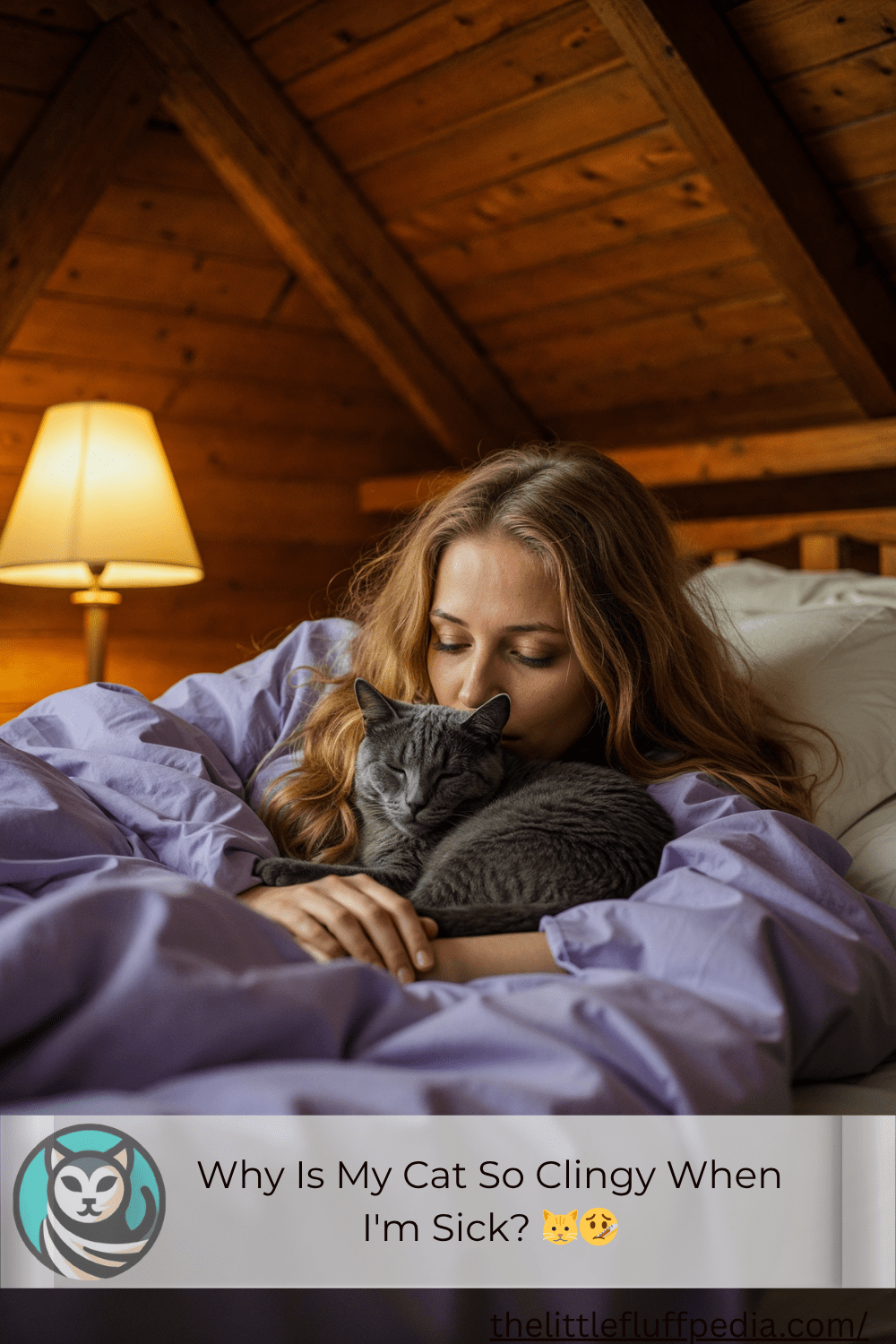
Did you know that 40% of pet owners report their cats become unusually attached during human illness? This isn’t just a coincidence. Felines possess a remarkable ability to detect shifts in routine, body temperature, and even biochemical changes associated with disease. This is often the reason behind the question, “Why Is My Cat Clingy When I’m Sick?” Their sudden clinginess, nuzzling, persistent purring, or shadowing your every move is often a purposeful response.
Research suggests that cats notice when their humans deviate from their daily rhythms, such as extended bed rest or altered eating patterns. More intriguingly, they may smell hormonal fluctuations caused by infections or inflammation. Some experts theorize this behavior stems from an instinct to monitor vulnerable pack members, similar to how they’d care for sick kittens.
While the exact mechanisms remain debated, one fact is apparent: this attentiveness often increases during owner health challenges. A recent study on kinship found that 63% of cats displayed protective behaviors when their humans were unwell, ranging from prolonged lap-sitting to gentle paw pats.
Understanding these patterns helps owners interpret their pets’ actions compassionately. This article examines the science behind feline intuition, practical management strategies, and how to distinguish between concern and stress-related clinginess in cats.
Principais conclusões
- Cats detect illness through routine changes and biochemical signals
- Over 60% exhibit protective behaviors during owner sickness
- Closeness may reflect instinctive caregiving tendencies
- Differentiate between concern and anxiety-driven actions
- Practical strategies maintain balance for both species
Introduction to Cat Behavior During Illness
A cat’s world revolves around consistency. Their daily rhythms, play sessions, feeding times, and nap spots form a predictable framework. When illness disrupts an owner’s routine, these subtle changes become glaring signals to perceptive felines.
Understanding Changes in Routine
Healthy cats typically strike a balance between independence and scheduled social interactions. Reduced mobility or altered sleep patterns during human sickness create noticeable gaps in their expected environment. A pet parent spending hours in bed instead of preparing breakfast at the usual time sends ripples through the cat’s structured world.
This disruption often triggers increased attention behaviors. Cats may follow their owners more closely or vocalize more frequently. Research from PetMD shows that felines interpret irregular activity as a potential threat to their social bonds with humans.
The Role of Affection in Feline Dynamics
Heightened closeness during illness isn’t a random act of neediness. It reflects evolved care instincts that have been honed over thousands of years. Cats groom vulnerable colony members in wild settings, a behavior that is often translated into head-butting or prolonged lap-sitting in domestic scenarios.
These affection displays serve dual purposes. They comfort both species while allowing cats to monitor their human condition. By maintaining physical proximity, felines gather continuous data about body temperature, breathing patterns, and energy levels, key indicators of recovery.
How Cats Sense Illness in Their Humans
Feline senses operate like precision detection systems. With smell receptors 14 times more sensitive than ours, they process chemical information humans can’t perceive. This biological advantage enables them to identify subtle differences in body chemistry long before symptoms become apparent.
Behavioral Changes Detected by Cats
Altered movement patterns act as red flags for observant pets. A person moving more slowly or skipping regular activities sends visual cues. Shallow breathing or frequent coughing also catches a feline’s attention. Research in Applied Animal Behaviour Science notes cats spend 28% more time near owners, showing respiratory changes.
Owners report that their pets paw at medicine bottles or sit closer during fever episodes. One case study documented a cat that persistently meowed until its owner checked its blood sugar levels, revealing dangerous hypoglycemia.
Chemical Clues and the Power of Scent
Illness alters human biochemistry through the release of volatile organic compounds (VOCs). Cats detect these through breath, sweat, or skin. Diabetic ketoacidosis, infections, and inflammation all produce distinct odor profiles. A feline sixth sense study found that 73% of cats reacted to sweat samples from sick owners by sniffing intensely or pawing the container.
This scent-driven awareness explains why some pets fixate on specific body areas. They’re not being nosy, they’re analyzing chemical shifts that signal health problemas. Their responses range from gentle nudges to persistent closeness, blending curiosity with instinctive monitoring.
Why is my cat clingy when I’m sick: Unpacking Protective Instincts
Contrary to popular belief, domestic felines form social bonds resembling those in wild colonies. This ancestral wiring drives their responses to vulnerable family members. When routines shift or familiar scents change, their actions blend instinct with learned caregiving patterns.
Pack Mentality and Social Bonding
Though often viewed as solitary, cats usually maintain group dynamics in multi-pet households. Research reveals they monitor companions through shared resting spaces and coordinated activities. During human illness, this collective awareness translates to heightened vigilance, a survival strategy refined through evolution.
Cats notice deviations in movement or energy levels, interpreting them as potential threats to their “colony.” A study in the Jornal de Medicina Felina found that 58% of pets positioned themselves between their sick owners and doorways, a protective stance that mirrors wild feline behavior.
Nurturing Instinct and Caregiving Behaviors
Maternal instincts frequently surface during caregiving. Many cats also groom their owners’ hair or gently pat their faces, actions identical to those of tending to kittens. One veterinary behaviorist notes: “Their pawing isn’t random. It’s tactile checking assessing responsiveness like they would with littermates.”
These nurturing behaviors often increase as owners regain their health. Gentle head-butts or curled-up sleeping positions reinforce social bonds while providing comfort. By responding to vulnerability, pets fulfill an ancient role as both guardians and companions.
Attention-Seeking Behavior and Feline Responses
Feline companions often mirror their owner’s energy levels. When illness reduces physical interaction, pets interpret this shift as a disruption to their social contract. A study on feline sixth sense found that 68% of cats increased vocalizations when daily play sessions were reduced by 50%.
Impact of Reduced Owner Activity
Abrupt changes in playtime or feeding schedules trigger stress signals. Pets may pace near resting areas or nudge hands repeatedly. One owner reported that their cat knocked over water glasses until bedtime stories resumed, marking an apparent bid to restore routine.
Shifts in Play and Affection Routines
Diminished interaction affects feline health. Some pets show perda de peso from decreased activity, while others over-groom due to anxiety. A veterinary behaviorist notes, “Cats associate shared activities with security. Without them, they’ll seek reassurance through proximity.”
| Symptoms in Cats | Behavioral Responses | Management Tips |
|---|---|---|
| Excessive vocalization | Persistent meowing at closed doors | Use interactive toys for solo play |
| Shadowing behavior | Following owners room-to-room | Establish stationary bonding (reading aloud) |
| Weight fluctuations | Reduced interest in food or overeating | Maintain consistent feeding times |
These behaviors reflect attempts to restore balance. Gentle brushing sessions or puzzle feeders help maintain engagement during recovery periods. Most pets readjust once regular routines resume.
Managing Clingy Behavior and Supporting a Sick Cat
Balancing recovery needs with a pet’s increased attachment requires thoughtful and strategic approaches. Maintaining stability helps both species navigate health challenges while preserving their bond.
Establishing Consistent Routines and Comfort
Stick to regular feeding schedules and light play sessions, even if modified. Place familiar items, such as a bed or blanket, near your resting area to create a shared space without physical strain. According to feline behavior experts, predictable rhythms help reduce anxiety in pets that sense change.
Use slow-blinking eye contact and soft vocal tones to communicate reassurance. These subtle cues help maintain connection when movement is limited.
Providing Distractions and Gentle Care
Rotate puzzle feeders or self-play toys to engage curious minds. A feather wand propped against furniture allows batting sessions without owner participation. One study found that interactive toys decrease attention-seeking by 42% during human recovery periods.
Incorporate brief affection moments, such as chin scratches or ear rubs. As recommended in stress-reducing strategies, minor environmental adjustments, such as heated pads near seating areas, help pets feel secure without requiring constant physical contact.
Conclusão
A pet’s heightened closeness during health challenges blends instinct with care. Felines detect routine shifts, chemical changes, and emotional distress through their sense of smell and observation. These signals trigger protective behaviors rooted in their social nature, as explored in our guide to managing feline behavior during humans.
Practical solutions, such as maintaining feeding schedules and using interactive toys, help balance needs. Gentle grooming sessions or quiet companionship often satisfy a pet’s urge to monitor without overwhelming recovering owners.
Weight fluctuations or changes in vocalization levels in pets can sometimes indicate underlying diseases, making regular check-ups vital. Over time, tracking behavioral patterns helps distinguish everyday concerns from stress-related issues.
This bond reflects the mutual care that pets offer, providing comfort through their presence, while humans provide stability. By staying attentive to the needs of both species, households navigate health challenges with compassion. Trust that these moments strengthen connections, turning vulnerability into shared resilience.
PERGUNTAS FREQUENTES
How do felines detect human illnesses?
A: Cats detect subtle differences in scent, body temperature, and behavior due to their heightened sense of smell. Changes in skin chemistry, breathing patterns, or reduced activity levels often signal health shifts.
Does clinginess indicate a cat’s protective instincts?
A: Yes. Many cats exhibit nurturing behaviors, such as staying close or grooming their owners, when they sense vulnerability. This reflects social bonding rooted in their pack mentality.
Can shifts in routine affect feline behavior during illness?
A: Absolutely. Reduced playtime, altered sleep schedules, or changes in environment may prompt cats to seek attention or comfort through clingy actions.
Should owners discourage clingy behavior when their pets are unwell?
A: Balance is key. Gentle care and affection can comfort both parties, but setting boundaries with distractions like toys or quiet spaces prevents over-dependence.
Do cats mimic their owner’s symptoms during illness?
A: While rare, stress from environmental changes might cause mild symptoms like weight loss or lethargy. Consult a vet if unusual behaviors persist.
How do scent changes influence feline reactions?
A: Chemical clues from sweat, skin, or breath can signal illness. Cats rely on scent to assess their health status, often responding with increased affection or increased vigilance.
Can cats sense chronic diseases like diabetes or cancer?
A: Some studies suggest cats notice metabolic shifts linked to diseases. However, always prioritize medical diagnostics over relying on pet behavior for health assessments.