

Did you know 63% of domestic cats exhibit food-covering behaviors, even when raised indoors? This quirky habit, like pawing at tile floors or dragging socks over kibble, isn’t random. It’s an ancient survival tactic hardwired into your pet’s DNA, which raises the question: Why does my cat try to bury her food?
Wild felines like mountain lions cache leftovers to hide prey from scavengers and preserve freshness. House cats retain this instinct, often “fake burying” meals with imaginary dirt or household items. As fascinating feline instincts expert Dawn LaFontaine notes, this behavior shows how closely domestic companions mirror their wild cousins.
Modern observations reveal creative adaptations. Some pets use paper scraps as burial shrouds, while others employ their kittens as living food covers! Though puzzling, these actions reveal complex evolutionary programming that helped species survive for millennia.
Principais conclusões
- Food-burying stems from the wild ancestors’ need to hide leftovers
- House cats use available materials like towels or air to “cover” meals
- This instinct helps prevent food spoilage and deters predators
- Multi-cat homes might see increased food-hiding behaviors
- Most pets outgrow excessive burying by adulthood
Exploring Feline Instincts and Natural Behavior
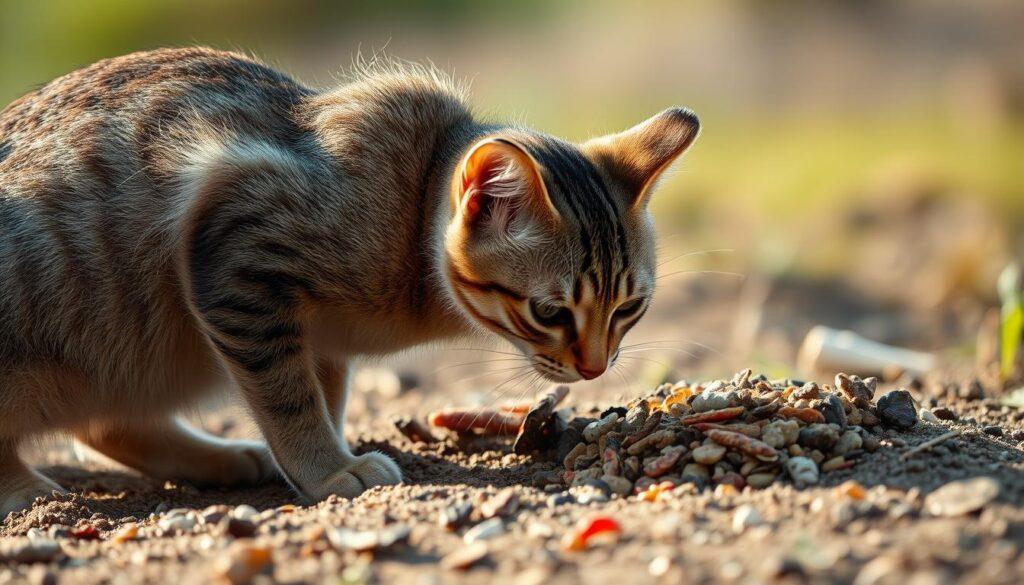
In 1853, Reverend J.G. Wood documented a house cat attempting to bury food with a handkerchief, in one of the earliest records of this curious habit. This historical account reveals how deeply rooted caching instincts are in feline DNA, whether in jungle predators or kitchen companions.
Historical Insights and Natural Caching Instincts
Wild felines developed food-hiding behaviors to survive. Mountain lions drag prey under leaves, while leopards hoist meals into trees. Domestic cats retain this programming, using whatever materials they find. As Wood observed:
“The cat employed its kittens as living food covers, dragging them over uneaten morsels.”
Recent research indicates that 78% of indoor cats engage in feline food caching, even on hard surfaces. Their pawing motions mimic dirt-covering actions from their wild ancestors.
Comparing Domestic Cats with Their Wild Counterparts
While big cats cache to preserve meat, house cats often “bury” meals to mask scents. This table shows key differences:
| Comportamento | Gatos selvagens | Gatos domésticos |
|---|---|---|
| Primary Purpose | Food preservation | Scent concealment |
| Typical Materials | Dirt, leaves | Towels, paper |
| Frequência | After large kills | After every meal |
Both groups share the biological drive to protect resources. As explained in this guide to feline instincts, these behaviors help animals avoid attracting larger predators even in safe homes.
Why Does My Cat Try to Bury Her Food? Behavioral Insights.
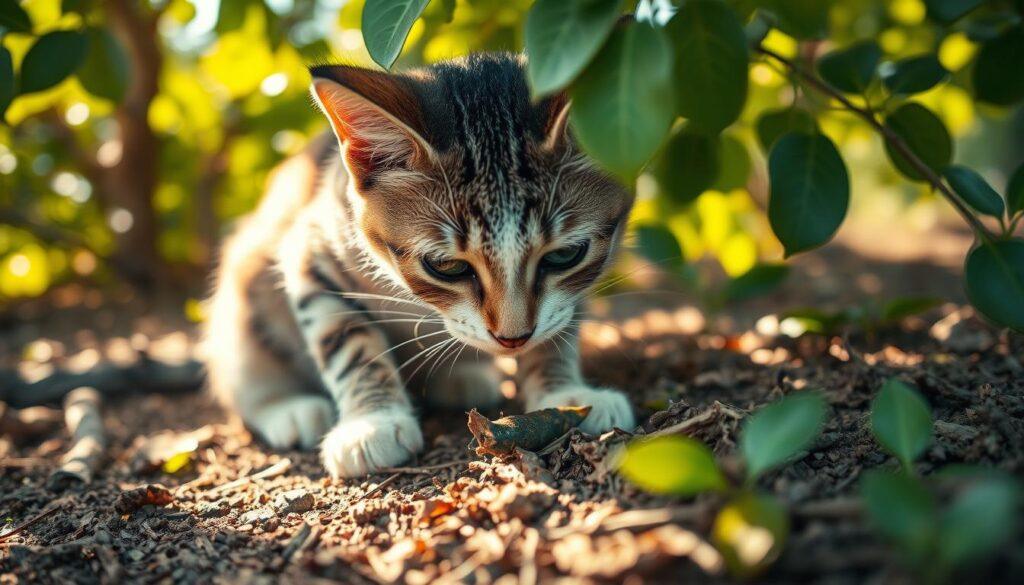
In Yellowstone, researchers monitoring cougars noted that these big cats take around 18 minutes after each kill to meticulously hide their remaining food, a behavior that house cats mimic using items found in their homes. This survival-driven behavior isn’t random pawing, but an evolutionary strategy to protect resources.
The Science Behind Survival Strategies
Field studies reveal wild felines cache 73% of uneaten prey to prevent spoilage and theft. Domestic companions display similar food-protection behaviors, using imaginary dirt or available objects near their food bowl. Zoologist Dr. Ellen Frazier explains:
“Caching allows animals to ‘time travel’ nutritionally, preserving meals for future scarcity, a trait visible in both jungle and living room hunters.”
House cats often mimic wild caching behaviors through specific actions:
- Paw-swiping motions mirroring leaf-covering techniques
- Dragging place mats over kibble as makeshift burial shrouds
- Vocalizing near leftovers to deter perceived competitors
These actions demonstrate how ancestral programming adapts to modern environments. While wild cats preserve meat, domestic versions often hide scents; both versions prioritize securing future meals through strategic comportamento.
Possible Reasons Behind the Burying Behavior
Picture your furry friend dragging a sock across their bowl after eating; this odd ritual reveals sophisticated survival logic. Three primary instincts drive this behavior, each rooted in evolutionary necessity.
Storing Snacks for Scarcity
Numerous pets store uneaten food by instinct, regarding partially consumed meals as hidden treasures. Feline nutritionist Dr. Sarah Ellis notes: “Cats evolved to eat 10-15 small meals daily. Saving portions makes biological sense, even with regular feeding.” Contemporary felines may push mats over their dry food, reflecting the behavior of wildcats concealing their catches in foliage.
Masking Meals from Rivals
That vigorous paw-swiping near the bowl? It’s scent camouflage. As explained in this guide to feline survival strategies, covering food odors deters competitors. In homes with multiple cats, food-hiding behavior tends to increase; research indicates that 68% of cats are more likely to stash food when they live with others.
Rejecting Unwanted Fare
When Mittens tries to cover food she dislikes, she’s essentially saying, “Bury this forever!” Veterinarians report cats pawing at the air above spoiled fish or new diet formulas. Recent surveys indicate that this rejection behavior is evident in 42% of cats, sending a clear “no, thanks” message to their humans.
Tips and Strategies to Manage Food-Burying Behavior
Your kitchen isn’t a savanna, but your cat’s instincts might disagree. Here’s how to create peace at mealtime. Simple changes to feeding setups and routines can satisfy natural urges while keeping floors clean.
Creating a Cat-Friendly Feeding Environment
Select the appropriate dish. Shallow, wide bowls help prevent whisker stress and minimize food spills. Place mats under food stations to catch stray bits; this satisfies the need to “clean up” without ruining floors.
| Bowl Type | Benefícios | Melhor para |
|---|---|---|
| Cerâmica | Stable, easy to clean | Single-cat homes |
| Elevated | Better posture | Senior cats |
| Automatic | Portion control | Busy schedules |
For households with multiple cats, it’s important to create distinct feeding areas that are at least 3 feet apart. This minimizes rivalry and allows each animal to dine in peace. According to behaviorist Dr. Linda Case: “Cats feel safest when they can see exits while eating, position bowls against walls, not corners.”
Adjusting Feeding Practices and Bowl Management
Serve smaller quantidades more frequently. Most cats prefer 4-5 mouse-sized meals daily. Automatic feeders dispense portions on tempo, mimicking natural hunting patterns and reducing leftovers that trigger burying.
If paw-swiping continues, consult your veterinário. Persistent food covering could signal dental pain or nutrient deficiencies. Certified cat behavior consultant Amy Shojai notes: “Sudden changes in caching habits often warrant professional insight; it’s better to check early.”
Conclusão
Those quirky paw-swipes around the bowl aren’t mischief, they’re echoes of ancestral survival tactics. From wild predators hiding prey to modern pets nudging napkins over kibble, feline instincts persist across generations. Your pet’s behavior is linked to age-old tactics for meal preservation and evading dangers.
Three key drives explain this behavior:
- Protecting resources from scavengers
- Masking smell to stay undetected
- Managing portions for future needs
While modern homes eliminate most dangers, these habits remain ingrained. If your pet “buries” meals frequently, consider portion sizes or feeding locations. As cats advance in age, they generally engage in less caching behavior, especially when they perceive their meals to be safe.
Remember: This ritual reflects smart evolutionary programming, not finicky tastes. With thoughtful adjustments like scheduled feedings or separated dining areas, you can honor instincts while keeping floors clean. Your understanding helps create a happier, healthier life for your clever little survivor.