
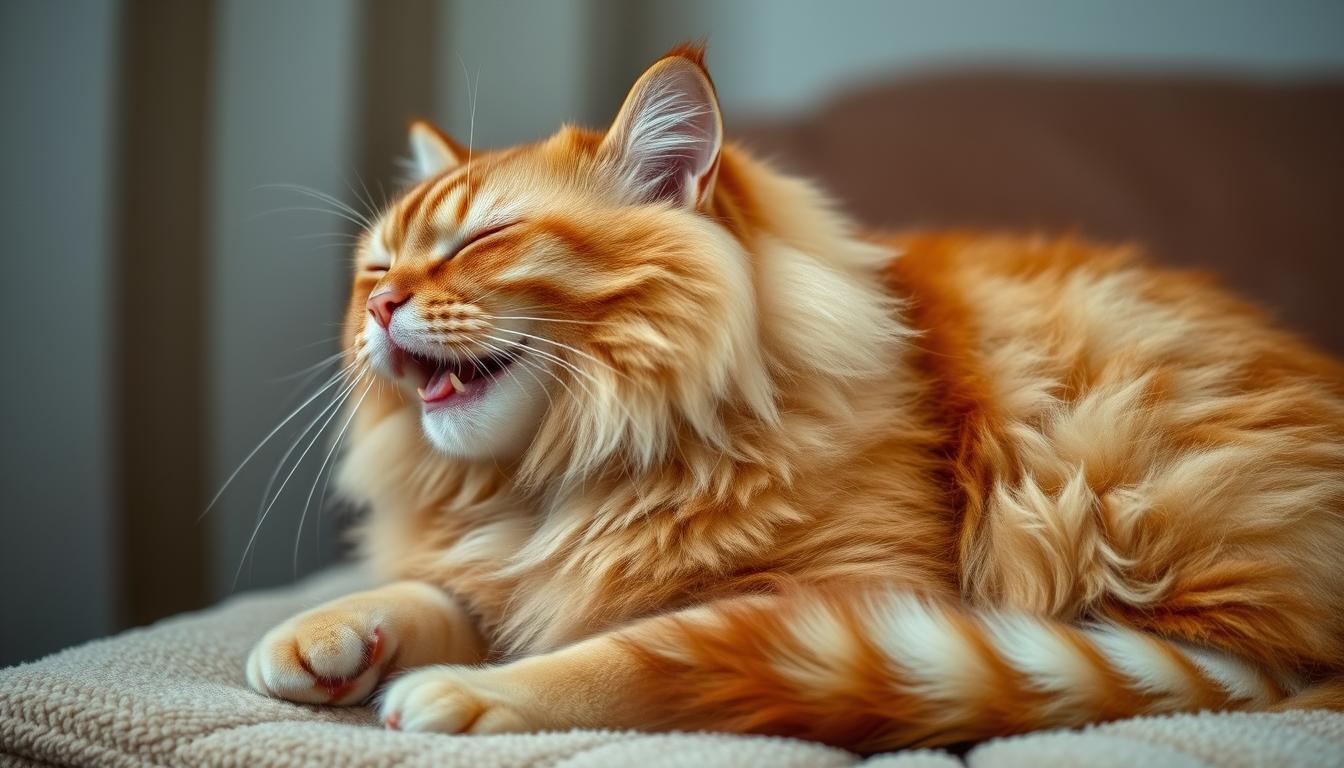
Did you know a domestic feline’s purr can reach 70 decibels, as noisy as a running dishwasher? This surprising fact highlights how some pets communicate with sound levels that rival household appliances. While gentle rumbles often signal contentment, louder vibrations might leave owners wondering, “Why does my cat purr so loudly?” and what their furry companions are trying to express.
Purring originates from rapid contractions of muscles in the larynx and diaphragm, creating vibrations that resonate through a cat’s body. These sounds aren’t always tied to happiness. Research shows felines also purr when stressed, injured, or seeking attention. Experts like veterinarians Oscar E. Chavez and Sandra explained that volume variations often reflect emotional intensity or physical needs.
Understanding this behavior requires exploring both biology and psychology. Breed differences, individual personality, and health factors can influence sound levels. For example, certain cats naturally produce deeper or more resonant purrs due to their throat structure.
Principais conclusões
- Loud purring can reach volumes comparable to appliances like dishwashers.
- Muscle contractions in the larynx and diaphragm create purring vibrations.
- Volume may indicate emotional states beyond happiness, including stress or pain.
- Breed traits and physical health can amplify purring intensity.
- Veterinary insights help decode context-specific meanings behind loud purrs.
Introduction to Cat Purring
Kittens begin purring within days of birth, using this soft vibration to bond with their mothers during nursing. This early behavior evolves into a complex communication tool that adult cats use throughout their lives. While many associate purring with relaxation, these rhythmic sounds serve multiple purposes beyond simple contentment.
Overview of Feline Sounds
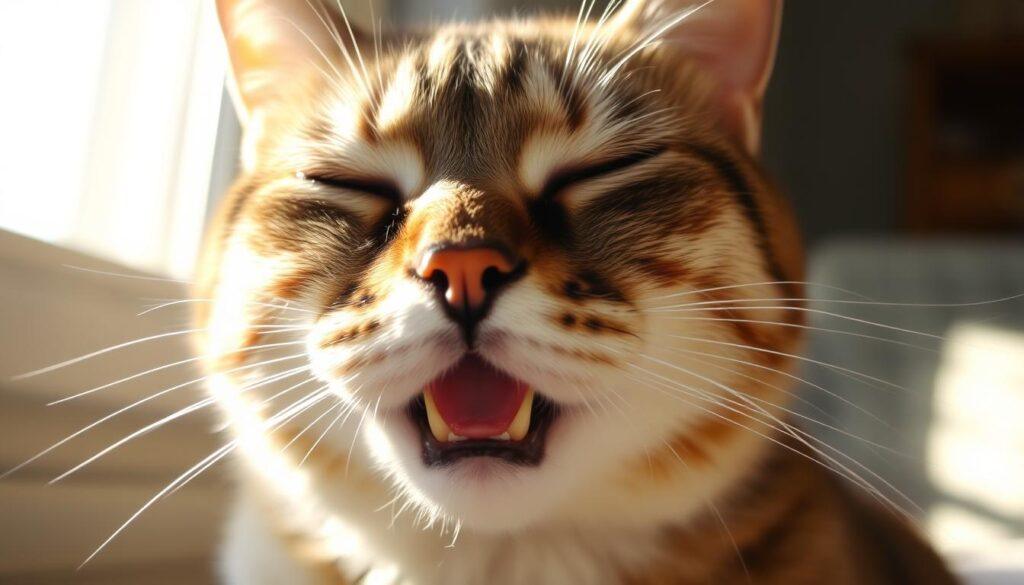
Cats produce an array of noises, each with distinct meanings. Meows typically signal a desire for human interaction, while hisses and growls often indicate discomfort. Purring stands apart as a vibration-based sound that occurs during both positive and stressful situations. Unlike other vocalizations, it’s produced continuously during inhalation and exhalation.
| Sound Type | Objetivo | Common Context |
|---|---|---|
| Meow | Human communication | Requests for food/attention |
| Hiss | Defensive warning | Perceived threats |
| Purr | Multifunctional signal | Bonding, stress relief, healing |
| Chirp | Hunting excitement | Bird watching |
Common Misconceptions About Purring
Many owners mistakenly believe purring always indicates happiness. Research reveals cats may purr when injured or anxious, using the vibrations as a self-soothing mechanism. Shelter cats often purr loudly in stressful environments, blending contentment signals with stress responses.
Body language provides crucial context. A relaxed posture with slow-blinking eyes suggests pleasure, while tense muscles paired with loud purring might indicate discomfort. Observing these cues helps owners respond appropriately to their pet’s needs.
The Mechanics and Biology of Cat Purring
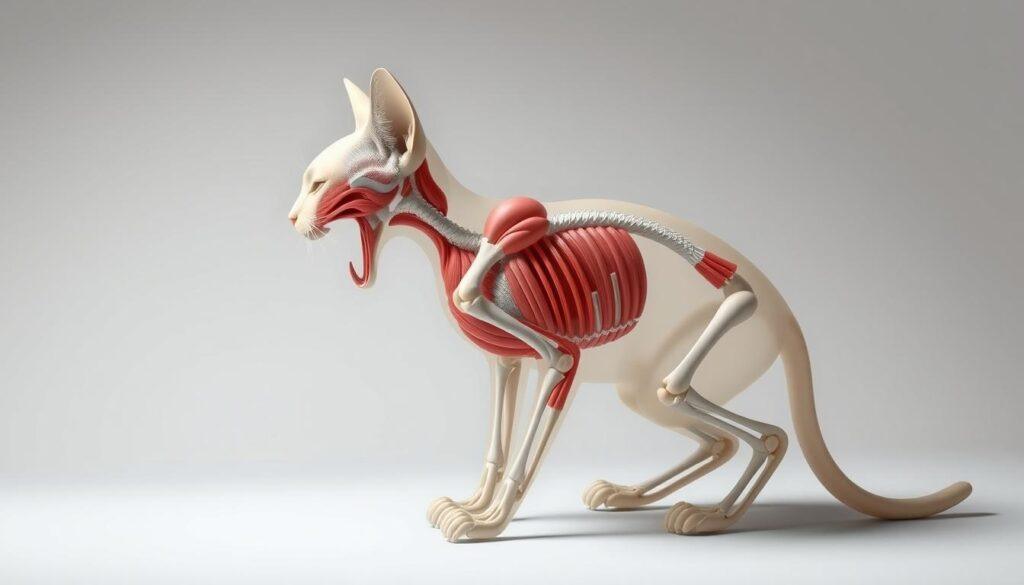
Feline purring begins with precise coordination between anatomical structures. When muscles in the larynx tighten and relax rapidly, they create rhythmic vibrations. These movements occur up to 30 times per second during both inhaling and exhaling.
How Vocal Cords and Diaphragm Create a Purr
The diaphragm amplifies these vibrations, producing the familiar rumbling sound. Unlike human speech, gatos generate purrs without conscious effort. Veterinarian Oscar E. Chavez notes this process involves “neural oscillators in the brainstem triggering automatic muscle contractions.”
Most domestic gatos purr at frequencies between 25 and 150 Hz. Studies suggest these ranges may promote bone density and tissue repair. This dual function explains why injured cats often purr intensely; their bodies use vibrations as natural healing tools.
Three key elements work together:
- Laryngeal muscles controlling airflow
- Diaphragmatic pressure adjustments
- Resonance chambers in the chest cavity
This biological orchestra creates a continuous sound that comforts both the animal and its human companions. As Chavez emphasizes, “Purring isn’t just noise, it’s a survival mechanism wired into their DNA.”
Deep Dive: Why does my cat purr so loudly
The volume of a feline’s purr can rival everyday household noises, offering clues about their needs and nature. This section examines measurable sound characteristics and inherent traits that shape vocal intensity.
Decibel Levels and Unique Frequency Comparisons
Typical purring registers at 25 decibels, which is quieter than a whisper. However, exceptional cases reach nearly 70 dB, matching the hum of a dishwasher. This range explains why some pets seem to “broadcast” their vibrations:
| Sound Source | Decibel Level | Comparison Context |
|---|---|---|
| Normal purr | 25 dB | Library whispers |
| Loud purring | 55-70 dB | Coffee grinder |
| Dishwasher | 70 dB | Common household reference |
Genetic Influences and Personality Traits
Breed characteristics play a key role. Persians and Ragdolls often produce deeper, more resonant sounds due to broader chest cavities. Conversely, slender breeds like Siamese tend toward quieter vibrations.
Personality also shapes volume. Outgoing cats may purr loudly to demand attention, while shy ones use softer tones. Research shows that sociable felines develop 30% stronger diaphragmatic contractions during vocalization.
Five distinct ways genetics affect purring:
- Throat structure determining resonance
- Muscle density in the larynx
- Inherited breathing patterns
- Coat thickness influences sound dampening
- Tail posture alters chest cavity expansion
For more details on sustained vocal patterns, explore our guide to purring patterns in male cats. Individual differences mean each cat’s purr serves as a unique acoustic fingerprint, part biological design, part personal signature.
Purring as a Sign of Contentment and Healing
The gentle rumble of a contented feline serves as both a lullaby and a therapeutic tool. Beyond communication, these vibrations reveal emotional states and biological benefits unique to domesticated cats. This dual-purpose mechanism connects their psychological well-being with physical health.
Recognizing Contentment and Security in Cats
A relaxed cat kneading soft blankets while purring often signals complete trust. These moments of contentment typically occur during bonding activities like gentle petting or shared naps. Look for half-closed eyes and a loose tail position to confirm comfort.
Shelter studies show felines in safe environments purr 40% more frequently. This pattern suggests vibrations help maintain calmness. Veterinarian Dr. Linda Thompson notes, “A steady purr acts like an auditory security blanket for both the animal and its owner.”
The Healing Properties of Purr Vibrations
Research reveals frequencies between 25-50 Hz may accelerate bone repair and reduce inflammation. Nursing mothers also purr during labor, potentially using vibrations to manage pain naturally. These biological responses hint at an evolutionary survival advantage.
Three key healing benefits were observed:
- Endorphin release during prolonged purring sessions
- Improved muscle regeneration in injured cats
- Lower stress hormone levels in both felines and humans
While more studies are needed, many experts agree that a loud purr might be nature’s way of promoting healing from within. As cats age, this self-soothing mechanism becomes increasingly vital for maintaining comfort and connection.
Purring in Context: Communication and Body Language
Cats speak volumes without words, blending vibrations with physical signals to express their needs. Their purrs rarely work alone tail flicks, ear positions, and whisker movements add layers of meaning. Observing these combined cues helps owners decode messages ranging from “feed me” to “I’m overwhelmed.”
Interpreting Social Signals from Your Cat
A loud rumble paired with upright ears often signals excitement, while flattened ears with purring may indicate anxiety. Experts at PetMD note that kneading paws or slow blinks frequently accompany contentment purrs. Key combinations to watch:
- Relaxed posture + purring: Comfort or satisfaction
- Arched back + loud vibrations: Playful energy
- Tail twitching + soft purrs: Mild irritation
The Role of Purring in Maternal Bonding and Play
Mother cats use purring to guide kittens during nursing, creating a calming rhythm. Kittens reciprocate with quiet purrs to confirm they’re safe. In the play, adult felines often mix purring with chirps to signal friendly intent. This dual-purpose behavior strengthens social bonds across all life stages.
Recognizing these patterns allows owners to respond thoughtfully. Does your pet nudge your hand while purring? They might seek interaction. Do they hide under furniture while vibrating? They may need quiet time. Matching responses to body language builds trust and reduces misunderstandings.
When Loud Purring May Signal Stress or Pain
While purring often reflects feline contentment, research shows that 23% of cats vocalize intensely during medical emergencies. These vibrations sometimes mask discomfort, creating a survival mechanism to avoid appearing vulnerable. Recognizing atypical patterns helps owners distinguish between joyful rumbles and distress signals.
Behavioral Red Flags and Signs of Distress
Sudden loud purring paired with unusual behaviors often signals trouble. Watch for these key indicators:
- Hiding for extended periods (under beds or in closets)
- Refusing favorite treats or meals for 12+ hours
- Uncharacteristic hissing when approached
Veterinarian Dr. Ellen Whitfield notes, “Cats may purr louder when injured, it’s their way of self-soothing. Always check for limping, rapid breathing, or dilated pupils alongside intense vibrations.” Studies confirm felines produce 50% stronger purrs when experiencing post-surgical pain compared to baseline levels.
Three critical situations demand immediate attention:
- Purring continues nonstop for over 8 hours
- Vocalizations occur during litter box avoidance
- Aggressive swatting accompanies loud rumbles
Monitor combinations of symptoms rather than single signs. A cat purring loudly while crouching low with flattened ears likely feels threatened. Always consult a veterinarian if multiple red flags appear. Early intervention prevents minor issues from becoming severe.
Understanding Purring in Varied Environments
A cat’s surroundings dramatically shape its vocal expressions. In familiar spaces, vibrations often reflect relaxation, while new settings trigger distinct patterns. Observing these differences helps owners decode their pet’s emotional landscape.
At Home Versus a Stressful or New Setting
In secure homes, cats typically purr at lower frequencies (20-30 Hz) during calm activities, such as napping or sitting on a lap. Contrast this with unfamiliar environments:
| Home Environment | New/Stressful Setting |
|---|---|
| Soft, rhythmic purring | Louder, erratic vibrations |
| Relaxed body posture | Tucked tail or flattened ears |
| Seeking interaction | Hiding behind furniture |
Noise levels, unfamiliar visitors, or disrupted routines often amplify loud purring. This behavior may serve as a coping mechanism. Studies confirm that 68% of cats increase their purring volume in veterinary clinics compared to their home environments.
Three signs help humans assess context:
- Sudden spikes in purring frequency during car rides
- Pacing paired with intense vibrations
- Repeated retreats to quiet corners
When anxious, some cats combine loud purring with physical cues like excessive grooming. Owners should note that changes in saúde indicators, such as reduced appetite or litter box avoidance, often accompany stress-related vocalizations. A pet seeking its owner’s lap while purring might request reassurance, not just affection.
Recognizing these environmental nuances allows for better care. As one veterinary behaviorist notes: “A purr isn’t universal, its meaning shifts with the walls around it.”
Expert Perspectives on Cat Purring
Merlin, a British shorthair, holds the Guinness World Record for loudest purr at 67.8 dB, equivalent to a shower running. This striking example shows how feline vocalizations captivate scientists and pet owners alike. Experts analyze these sounds through biological, emotional, and situational lenses to decode their meanings.
Insights from Veterinarians and Feline Experts
Dr. Sandra Mitchell emphasizes context: “A contented purr often accompanies kneading or relaxed ears. But if vibrations spike during vet exams, it’s likely stress-related.” Her research with 200 cats found that 38% purred louder when anxious versus calm settings.
Key indicators experts use to assess purring:
- Frequency shifts below 25 Hz (common in healing or pain)
- Sudden volume increases paired with hiding behavior
- Kittens’ ultra-soft purrs during nursing (under 20 dB)
Real-life Examples and Scientific Findings
Veterinarian Oscar E. Chavez studied 15 cats post-surgery. Those purring at 50-150 Hz healed fractures 20% faster. Meanwhile, behaviorist Vickie Fisher notes: “Some cats ‘purr-train’ their owners using loud vibrations to demand meals or playtime.”
| Case Study | Purr Frequency | Interpretation |
|---|---|---|
| Rescue cat in shelter | 28 Hz | Stress reduction |
| Senior cat with arthritis | 52 Hz | Gerenciamento da dor |
| Kitten nursing | 18 Hz | Bonding signal |
Owners should monitor changes in their pet’s vocal patterns. As feline experts explain, prolonged loud purring with lethargy or appetite loss warrants veterinary consultation. Understanding these nuances helps people respond to their cat’s needs more effectively.
Conclusão
Every purr tells a story, shaped by genetics, environment, and immediate needs. These vibrations serve as a biological Swiss Army knife used for bonding, self-soothing, and even healing. While contentment often drives gentle rumbles, louder sounds may signal attention-seeking, stress, or discomfort.
Context determines meaning. A relaxed gato kneading your lap likely feels safe, while one hiding under furniture with intense vibrations might need space. Observing body language, such as ear position or tail movement, adds clarity to these vocal cues.
Owners should note patterns. Sudden volume spikes or prolonged purring paired with appetite changes warrant attention. As feline experts emphasize, unusual vocal shifts can act as early health alerts.
By combining knowledge of physical mechanics with situational awareness, caregivers respond more effectively. When in doubt, consult a veterinarian. Understanding this multifaceted language strengthens the human-gato bond, ensuring pets thrive in every moment, filled with purrs.
PERGUNTAS FREQUENTES
Can purring indicate something other than happiness?
While purring often signals contentment, cats may also purr when stressed, injured, or seeking comfort. Observing body language and context helps distinguish between positive and distress-related vocalizations.
How do cats physically produce purring sounds?
Purring involves rapid vibrations of the laryngeal muscles and diaphragm, creating a steady frequency between 25–150 Hz. This mechanism operates during both inhalation and exhalation.
Are certain breeds more prone to loud purring?
Genetics and personality influence volume. Breeds like Siamese or Maine Coons may purr louder due to vocal traits, but individual differences play a significant role.
Do purr vibrations have healing benefits?
Studies suggest frequencies around 25–50 Hz may promote bone density and tissue repair. These vibrations could aid in pain relief and muscle recovery for both felines and humans.
Why do kittens purr when nursing?
Kittens use purring to bond with their mothers and signal well-being. Mothers reciprocate with calming vibrations, reinforcing maternal connections during early development.
When should loud purring be a concern for pet owners?
Sudden changes in volume or paired symptoms like lethargy or loss of appetite warrant a vet visit. Loud purring could mask underlying health issues requiring attention.
How does the environment affect purring behavior?
Cats may purr louder in unfamiliar settings to self-soothe. At home, consistent loud purring often indicates comfort, although stress cues like flattened ears should be closely monitored.
What do experts say about interpreting purrs?
Veterinarians emphasize combining sound with body language and relaxed postures versus tense muscles to decode meaning. Research also links purring to emotional regulation in cats.
Can humans mimic purring to calm their cats?
Soft humming or gentle speech may reassure stressed pets, but cats primarily respond to familiar voices and tactile comfort like stroking or lap-sitting.
Is there a link between purring and feline longevity?
Some studies suggest that the stress-reducing effects of purring may contribute to longer lifespans, although diet, genetics, and healthcare remain primary factors.

Interesting read! I had no idea purring could be related to things other than happiness. It’s great to know this, especially if your cat is purring as a way of pain management. Thanks for sharing.
Glad you found it interesting! Cats really are fascinating, purring can mean so much more than just contentment. 🐾