

Discovering a feline visitor lingering around your property creates both concern and responsibility. Many assume these animals are simply lost pets, but over 70% of community cats lack permanent homes, according to Cats Protection. If you’re wondering what to do with a stray cat that won’t leave, your actions could mean the difference between life-threatening risks and a safe outcome.
First, determine whether the animal is a stray, feral, or someone’s outdoor pet. Strays often appear approachable but might show signs of distress, while feral cats typically avoid human contact. Contact local shelters or use online tools like PetFBI to scan for missing pet reports.
This guide combines practical steps from SPCA NOVA and other U.S.-based animal welfare experts. You’ll learn how to:
- Assess the cat’s health and needs safely
- Provide temporary food/shelter without encouraging dependency
- Connect with certified Trap-Neuter-Return (TNR) programs
We’ll also explore legal considerations and community resources available in all 50 states. Whether fostering, adopting, or facilitating rescue, every action contributes to solving America’s growing community cat challenge.
Principais conclusões
- 70 million community cats need humane solutions in the U.S.
- Proper identification prevents accidental pet reunification delays
- Temporary care requires specific food types and shelter setups
- TNR programs reduce overpopulation humanely
- Legal protections vary by state and municipality
- Collaboration with local rescues improves outcomes
Understanding Stray, Feral, and Owned Cats
Cats lingering around homes can have diverse backgrounds, each demanding a unique approach. Recognizing whether an animal is abandoned, wild, or simply exploring requires careful observation. Misidentification often leads to ineffective solutions, making accurate assessment vital for both human and feline safety.
Recognizing the Differences in Behavior
Socialized strays may approach people cautiously, while feral cats typically maintain distance. Owning outdoor pets often displays confidence, walking with their tails upright. A cat that meows persistently or rubs against surfaces might have once lived in a home.

Identifying Visual and Physical Markers
Look for clipped ear tips, a universal sign of spay/neuter through Trap-Neuter-Return programs. Well-groomed coats suggest recent care, whereas matted fur could indicate prolonged independence. Collars or microchips (found at vet clinics) often confirm ownership.
Why Knowing the Cat’s Background Matters
Former pets adapt more easily to shelters or adoption, while feral cats thrive in managed community colonies. Local networks like Nextdoor or Facebook groups frequently share posts about missing pets.
“One reunited owner told us, ‘Without those online alerts, we’d never have found our cat three towns over.'”
Understanding these distinctions helps direct resources effectively. Contacting a local shelter or rescue organization ensures appropriate next steps, whether reuniting a lost pet or supporting population control efforts.
Assessing the Stray Cat’s Condition
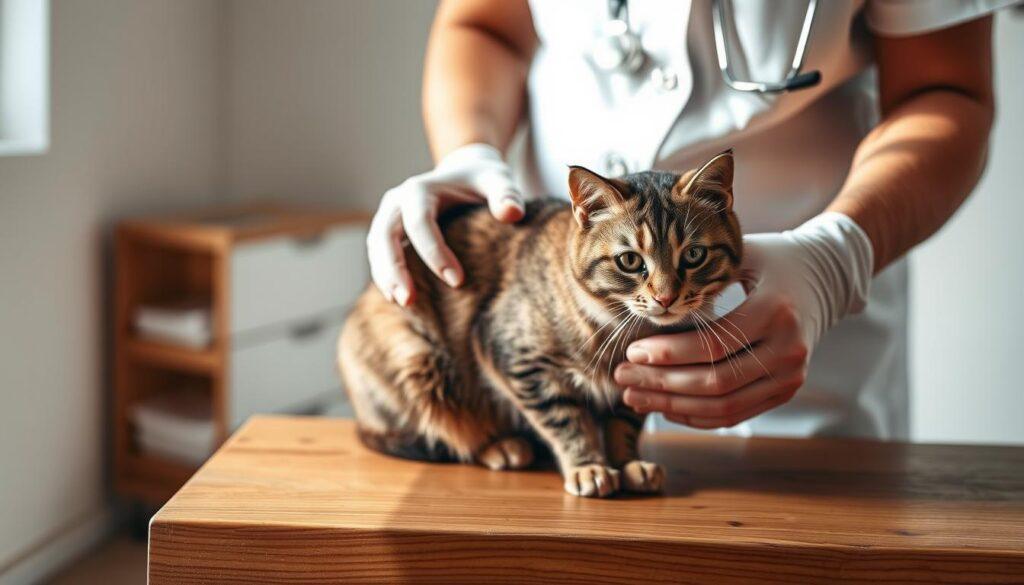
Evaluating a feline visitor’s needs begins with a careful health assessment. Approach slowly from a safe distance, avoiding direct eye contact to minimize stress. Observe whether the animal retreats or tolerates your presence. This initial interaction reveals critical clues about its history and current state.
Observing Health and Physical Signs
Check for visible injuries like limping or open wounds. Matted fur, crusted eyes, or labored breathing often signal underlying issues. Dehydration is common over shallow water in a clean dish and monitor consumption. Neutered cats may display a tipped left ear, a universal TNR program marker.
Interpreting Body Language and Behavior
A crouched posture or flattened ears suggests fear, while relaxed tail movements indicate comfort. Persistent vocalization could mean pain or hunger. Watch for signs of adjustment, like exploring the area cautiously, which hints at prior human interaction.
Create a quiet space for observation, keeping other pets away. Note how the cat reacts to people nearby; sudden aggression might indicate illness. Always prioritize safety, and wear gloves if handling becomes necessary.
O que fazer com um gato de rua que não vai embora
Balancing compassion with practical solutions requires an understanding of feline psychology. Animal Care Centers of NYC reports 62% of community cats revisit locations with consistent food sources. This creates challenges for those wanting to help without enabling dependency.
Smart Nutrition Practices
Providing meals attracts feline visitors but may keep them returning. Limit feeding to specific times and remove leftovers promptly. Use shallow dishes placed away from doorways to discourage nesting behavior.
For feral colonies, collaborate with certified TNR groups. They often establish managed feeding stations as part of population control programs. Stray cats needing rehabilitation require different strategies:
| Ação | Stray Cats | Feral Cats |
|---|---|---|
| Feeding Frequency | Temporary (1-2 weeks) | Long-term scheduled |
| Interação humana | Encouraged for socialization | Minimized |
| Containment | Humane traps for vet visits | Outdoor shelters only |
Structured Intervention Plan
Follow this sequence for effective management:
- Document the cat’s patterns using photo timestamps
- Share findings through local animal networks
- Install a temporary shelter 15+ feet from your home
Digital media platforms like PawBoost amplify missing pet alerts. When relocation becomes necessary, work with professionals to relocate cat populations to approved colony sites. Proper planning creates safer outcomes for all involved.
Providing Immediate Care and Shelter
When a feline needs urgent assistance, timely action prevents crises. Quick setup of basic resources stabilizes their situation while preparing for professional support. Follow these steps to create a safe environment without disrupting neighborhood dynamics.
Setting Up a Feeding Station With Food and Water
Use disposable containers for easy cleanup. Place dry kibble and fresh water in shaded areas away from traffic. Elevated surfaces like wooden pallets keep meals safe from insects. Avoid leaving food overnight to deter wildlife.
Schedule feedings during daylight hours. This limits interactions with nocturnal animals. Remove uneaten portions within 30 minutes to prevent spoilage.
Creating a Safe and Comfortable Shelter
Convert plastic storage bins into insulated hideouts. Cut an entry hole and line the interior with straw, never towels, which retain moisture. Position shelters against walls or under porches for wind protection.
Cardboard boxes work for temporary use. Wrap them in waterproof trash bags and weigh them down with bricks. Ensure openings face away from prevailing winds.
Monitoring for Health Issues and Injuries
Observe eating patterns and mobility daily. Labored breathing, discharge, or lethargy requires urgent vet attention. Contact local animal welfare groups if symptoms persist beyond 24 hours.
Check for microchips at veterinary clinics. Many rescue programs scan free of charge. Early detection of infections or parasites improves rehabilitation success rates.
Document visible injuries with timestamps. Share photos through community networks to accelerate identification. Temporary care bridges the gap until long-term solutions materialize.
Identifying Ownership and Seeking Local Help
Locating a cat’s owner demands methodical efforts and community collaboration. Start by examining the feline for signs of previous care, then activate local networks to amplify your search. These steps streamline reunification while ensuring the animal receives proper support.
Checking for Identification and Microchips
Inspect the cat’s collar area gently. Look for engraved tags or breakaway collars indicating ownership. A tipped left ear often signals participation in TNR programs common among unowned felines.
Visit a vet clinic promptly for microchip scanning. Most facilities offer free scans, revealing registration details if present. Document any findings, including chip numbers or distinctive markings like scars.
Contacting Animal Shelters and Rescue Organizations
File a found report with nearby shelters within 24 hours. Provide clear photos and location details. Many rescue groups maintain databases matching lost pet alerts.
Follow up every 48 hours, as overwhelmed staff may prioritize urgent cases. Shelters often collaborate with foster networks to house animals temporarily.
Utilizing Social Media and Community Networks
Post high-quality photos on platforms like Nextdoor and PawBoost. Include the cat’s eye color, weight, and unique behaviors. Local Facebook groups dedicated to lost pets yield faster results than broad community pages.
Create physical flyers with tear-off contact tabs. Place them near parks, grocery stores, and veterinary offices. Neighborhood apps like Ring’s Neighbors feature real-time alerts for missing animals.
Persistent outreach connects felines with owners or rescue partners. Shelters report 33% higher reunion rates when digital and physical posts combine, according to SPCA NOVA data.
Conclusão
Addressing a persistent feline presence requires compassion and strategic planning. Start by assessing the animal’s condição through careful observation and health checks. Document findings to create a clear paper trail for shelters or veterinarians.
Behavior differences determine the next steps. Socialized cats often need reunification efforts, while feral ones thrive through TNR programs. Always prioritize welfare by coordinating with local organizations for detailed guidance.
Engage neighbors and community networks to share information. Regular contact with rescue groups ensures access to traps, vaccines, and spay services. A hands-on approach, like setting timed feedings, prevents dependency while meeting urgent needs.
Successful outcomes rely on collaboration. Report findings promptly and follow proven protocols. Together, communities can create safer environments through responsible care practices and shared vigilance.
