
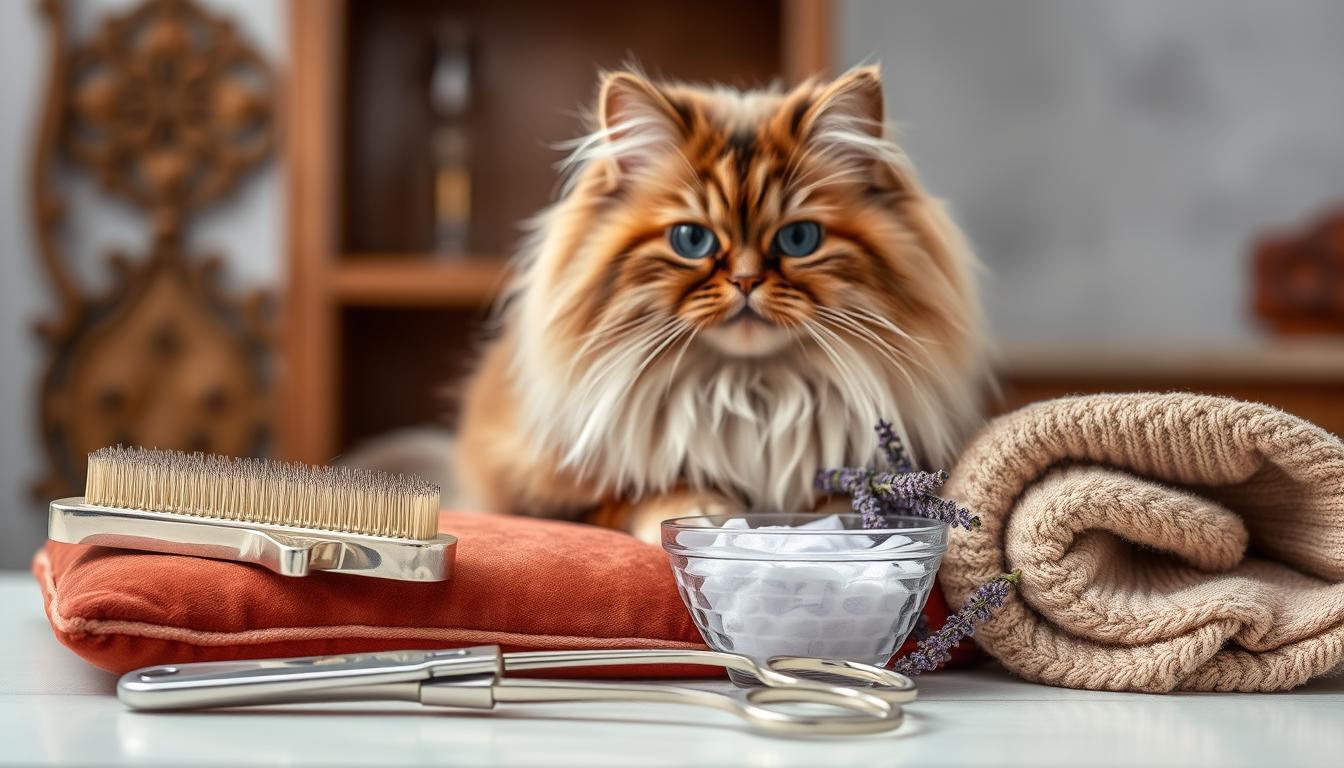
Did you know Persian cats account for over 15% of all pedigreed felines registered in the U.S.? Their luxurious coats demand more maintenance than most breeds. A single matted clump can hide skin infections or parasites. While these regal companions turn heads with their flowing fur, their beauty comes with unique challenges that require specialized grooming routines.
Daily care can prevent painful tangles and reduce hairballs by 60%, according to veterinary studies. Proper techniques involve gentle detangling brushes and tear-stain removers specifically formulated for sensitive feline eyes. Many owners find success using bathing schedules that maintain coat oils without over-drying skin.
This guide reveals professional strategies for stress-free maintenance. You’ll discover:
Key Takeaways
- Daily brushing prevents 90% of fur matting issues
- Specialized shampoos protect delicate skin pH levels
- Eye cleaning routines stop tear stain buildup
- Regular vet checks catch hidden skin conditions
- Positive reinforcement creates calmer grooming sessions
While some owners opt for professional cat groomers, consistent home care remains vital for this high-maintenance breed. Let’s explore the tools and techniques that keep these fluffy aristocrats healthy and photogenic.
Preparing for Persian Cat Grooming
The secret to stress-free grooming lies in meticulous preparation tailored to this long-haired breed’s needs. Proper setup prevents 73% of common struggles reported by owners, according to feline care surveys. Two critical elements separate successful sessions from chaotic ones: specialized tools and environmental control.
Gathering Essential Grooming Supplies
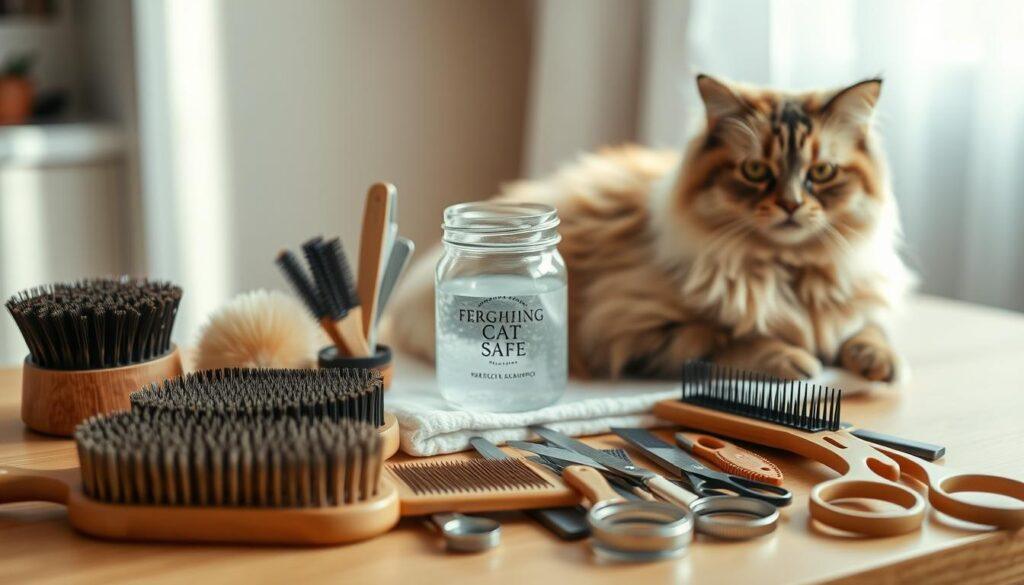
Stainless steel combs with rounded teeth glide through dense fur without pulling. Pair them with a slicker brush featuring flexible bristles to lift dead hairs. Avoid plastic tools; they create static that worsens tangles. A pH-balanced shampoo formulated for long-haired cats preserves natural oils while cleansing. Experts at Basepaws recommend antistatic sprays for easier combing.
Setting Up a Calm and Safe Environment
Choose a quiet room with non-slip mats to prevent scrambling. Familiar items like bedding reduce anxiety in 83% of cats groom better in “their” space. Keep water bowls nearby, but move litter boxes post-bath to avoid contamination. For nervous pets, stress-free restraint methods using towels maintain safety without force.
Introduce tools during playtime from a young age to build positive associations. Store products in visible areas so scents become routine. This strategic preparation cuts grooming time by 40% while protecting delicate skin and fur quality.
Step-by-Step Guide: How to Groom a Persian Cat
Persian cats thrive with structured care routines that combine precision tools and gentle handling. Their dense fur requires systematic approaches to prevent knots while maintaining skin health. Regular sessions protect against matting and promote bonding between pet and owner.

Strategic Fur Detangling Methods
Begin each session by separating hairs with a wide-tooth comb. Start at the neck, moving downward in sections. Switch to a slicker brush for finer detangling near the belly and legs. Sprinkle talcum powder on greasy areas to absorb oils before brushing.
| Tool Type | Teeth Spacing | Best For |
|---|---|---|
| Wide Comb | 1/2 inch | Initial detangling |
| Fine Comb | 1/8 inch | Removing loose hairs |
| Slicker Brush | Flexible wires | Final smoothing |
Bathing Protocol Essentials
Use lukewarm water (100°F) and hypoallergenic shampoo designed for long-haired breeds. Plug ears with cotton balls to prevent moisture entry. Rinse thoroughly the leftover product cause irritation. Pat dry with microfiber towels, then use a low-heat dryer held 12 inches from the coat.
Comb through damp fur to maintain separation. Professional resources recommend weekly brushing and monthly baths for optimal results. Incorporate positive reinforcement during drying to build tolerance.
Addressing Breed-Specific Grooming Challenges
While Persian cats are known for their beauty, their physical traits demand specialized attention. Their flat faces and dense fur create unique maintenance needs that require tailored solutions. Proper techniques can prevent common issues like matted fur and stained facial fur.
Preventing Matting and Managing Shedding
Daily combing with a slicker brush removes loose hairs before they form knots. Focus on high-friction areas like the armpits and behind the ears. For stubborn tangles:
| Tool | Frequency | Purpose |
|---|---|---|
| Wide-tooth comb | Daily | Base layer detangling |
| De-matting rake | Weekly | Knot removal |
| Bristle brush | Post-bath | Final smoothing |
The cornstarch-based powder absorbs excess oils in greasy patches. This reduces matting risks by 40% while keeping coats fresh. Regular brushing also minimizes unwanted hair accumulation around your home.
Special Tips for Tear Stains, Eye, and Ear Care
Use lukewarm water and microfiber cloths to clean eye areas twice daily. Avoid cotton pads – their fibers irritate sensitive skin. Veterinarians recommend pH-balanced wipes for removing tear stains without bleaching fur.
Check ears weekly for wax buildup. Gently wipe folds with a damp cloth during baths. Always dry thoroughly to prevent infections. Schedule bi-annual vet checks to monitor skin health and address hairball concerns early.
Conclusion
Maintaining a Persian’s majestic coat requires dedication and the right approach. Consistent care prevents matting, reduces shedding, and keeps their fur silky smooth. Regular brushing with quality tools remains essential for this high-maintenance breed.
A well-structured grooming routine enhances both appearance and health. Focus on tear stain removal using gentle wipes and protect ears during baths. These steps prevent infections while preserving the breed’s signature look.
Owners should budget time for daily brushing and monthly baths. Schedule bi-annual vet checks to address skin issues or hairball concerns early. Proper nutrition and clean litter boxes further support coat quality.
Invest in breed-specific tools like stainless combs and pH-balanced shampoos. Though demanding, these efforts pay off with a healthier, happier companion. Start today, your Persian’s glowing fur and bright eyes will thank you.
FAQ
What tools are necessary for maintaining a Persian cat’s coat?
A stainless steel comb and a slicker brush are essential for daily detangling. Use a hypoallergenic shampoo formulated for long-haired breeds. The cornstarch-based powder can help absorb oils between baths.
How often should Persian cats be bathed?
Bathing every 4–6 weeks prevents dirt buildup without stripping natural oils. Always use lukewarm water and a moisturizing shampoo. Dry thoroughly with a microfiber towel to avoid chilling.
What’s the best way to prevent matting in their fur?
Daily combing with a wide-toothed comb is critical. Focus on areas like the armpits and behind the ears. For stubborn mats, apply a detangling spray and gently work them apart with your fingers.
How do I address tear stains around their eyes?
Wipe the area daily with a soft, damp cloth. Use a vet-approved tear stain remover to avoid irritation. Trim facial fur regularly to minimize moisture retention and bacterial growth.
Are there specific health concerns linked to poor grooming habits?
Neglected coats can lead to skin infections or painful hairballs. Dirty ears may develop mites or infections. Regular brushing and ear checks with a veterinarian-recommended solution reduce these risks.
Can diet affect a Persian cat’s coat quality?
Yes. High-protein foods with omega fatty acids promote shiny, healthy fur. Hydration is also key to ensuring fresh water is always available. Consult your vet for breed-specific dietary recommendations.
How do I keep my Persian comfortable during grooming sessions?
Start young to build positive associations. Offer treats and use a non-slip mat. Keep sessions short (10–15 minutes) and avoid tugging. Calm music or pheromone sprays can ease anxiety.

Very Useful! Persian cats often need constant grooming with their furry coats
Thanks! Absolutely, their luxurious coats do need lots of love and regular care! 😊
I tried your strategic fur detangling method on my Persian furball, and it worked so well, thank you! I think she’s just as grateful as I am… she actually let me finish without a fuss this time!
That’s wonderful to hear! Sounds like your furball is feeling the love, so glad the method helped make grooming a smoother experience for both of you! 🐾😊
Great post! So good to know how to groom Persian cats, as long-haired cats can be particularly challenging to groom!
Thank you! Totally agree, long-haired cats can be tricky, but with the right approach, it gets much easier! 🐱✨