
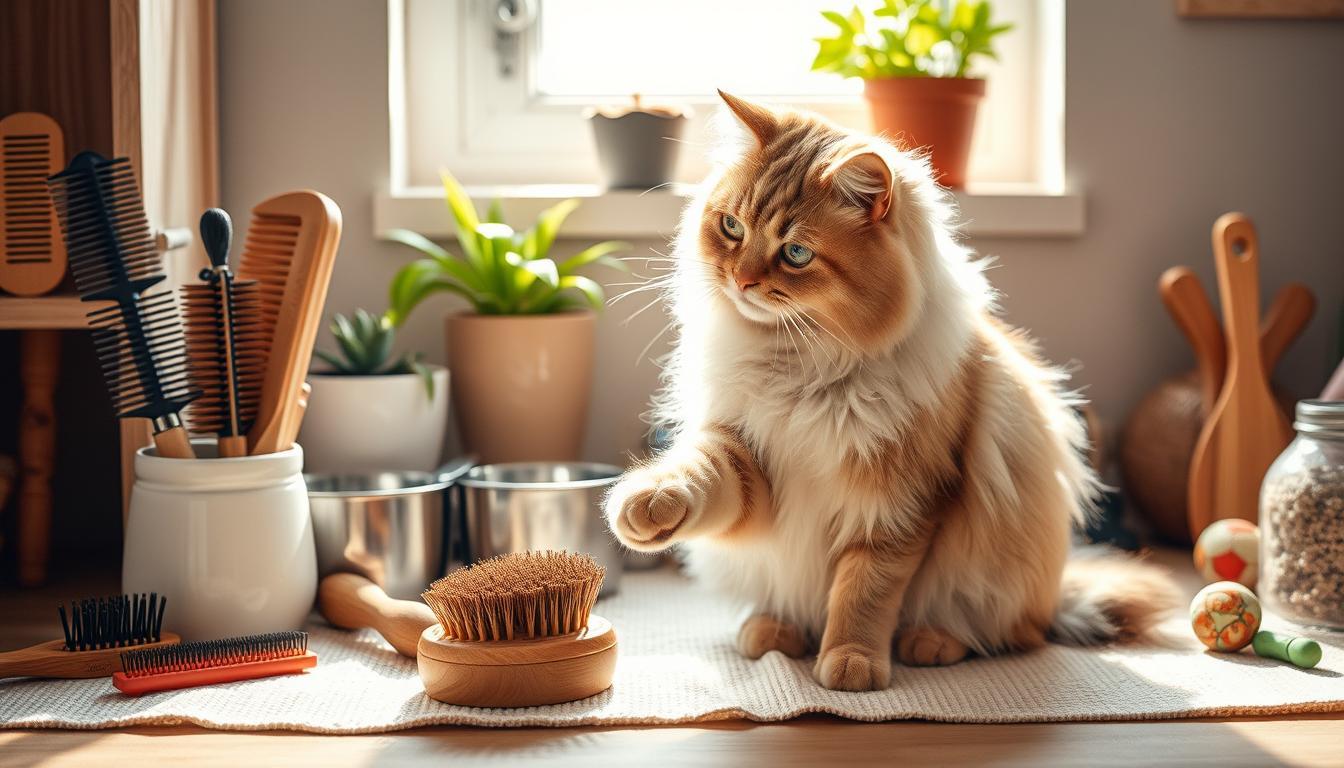
Did you know adult cats groom themselves for up to 50% of their awake time? Cats spend a lot of time grooming, using their tongues, teeth, and paws to keep their coats clean and remove parasites. Knowing how to encourage a cat to groom itself can also help them regulate body temperature and maintain overall health.
But sometimes, cats stop grooming, which can cause health problems. As a cat owner, it’s important to understand their grooming habits. This way, you can help them stay clean and healthy.
Long-haired cats need daily brushing, while short-haired ones can be brushed a few times a week2. Some breeds, such as Persians, require extra care to prevent matting. Encouraging your cat to groom itself is key to their health and appearance.
Key Takeaways
- Understanding your cat’s grooming habits is crucial for their overall health and well-being.
- Common reasons why cats stop grooming include age, illness, obesity, and lack of learning.
- Providing appropriate grooming tools and maintaining a stress-free environment can encourage cats to groom themselves.
- Brushing techniques, catnip, and positive reinforcement can stimulate a cat’s natural grooming instincts.
- Consulting with a veterinarian or professional groomer may be necessary for cats with severe grooming issues or underlying health concerns.
Understanding Your Cat’s Grooming Habits
Cats spend a lot of time grooming themselves. They can spend up to 50% of their awake time grooming. This habit starts when they are kittens, learning from their mother3. They begin grooming early in their life4.
The Importance of Self-Grooming for Cats
Self-grooming is crucial for cats. It keeps their coat and skin healthy by removing loose hair and preventing hairballs3. It also spreads natural oils, protecting their fur3. Plus, grooming helps them cool down since they can’t sweat3.
Regular cat grooming is key, especially for long-haired breeds. It prevents painful matting and reduces shedding4. Each cat has its grooming rituals3.
Moreover, grooming shows comfort and companionship among cats3. It’s also a way for cats to calm themselves, with grooming being the most common3.
Common Reasons Why Cats Stop Grooming
Cats may stop grooming for various reasons. Senior, ill, and overweight cats often face grooming challenges.
As cats age, they may find grooming uncomfortable due to arthritis or overgrown claws. Sick cats may lose interest in grooming due to pain or discomfort. Changes in grooming habits can signal health issues like dental problems or obesity4.
Overweight cats may have trouble grooming certain areas of their body3. Excessive grooming can also harm them, causing hair loss or skin injury3.
| Reason for Decreased Grooming | Explanation |
|---|---|
| Old Age | Overweight cats may struggle to reach certain areas of their bodies, leading to neglect of those areas during grooming. |
| Illness | Ill cats may lose interest in grooming due to pain, discomfort, or overall weakness. Changes in grooming habits can indicate underlying health issues. |
| Obesity | Overweight cats may struggle to reach certain areas of their body, leading to neglect in grooming those parts. |
Cat owners should watch for changes in their cat’s grooming habits. Regular cat grooming keeps their coat healthy and helps spot health concerns early.
Identifying Grooming Issues in Cats
As a cat owner, knowing your cat’s grooming habits is crucial. Cats groom themselves frequently, but stopping can lead to health or behavioral problems. Spotting grooming issues early helps keep your cat healthy and happy. Learning to spot signs of poor grooming is key to responsible cat ownership.
Signs of Decreased Grooming
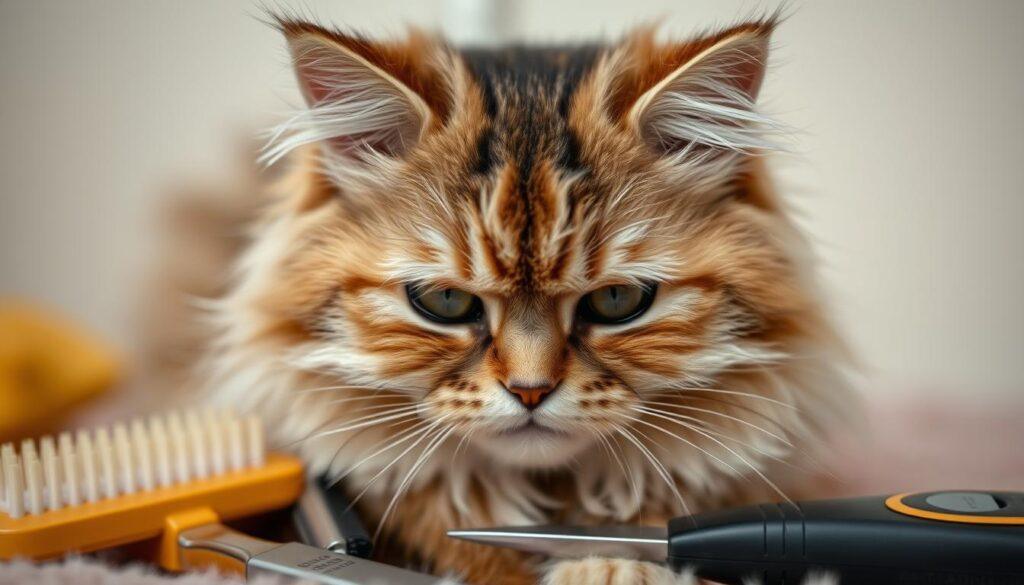
When a cat stops grooming, the signs are clear. A bad coat is one of the first signs. You might see matted, dirty, or greasy fur and a bad smell5. Other signs include:
- Hair loss and bald patches5
- Skin sores and inflamed skin5
- Sleeping more than usual
- Eating less or a lack of appetite
- Difficulty using the litter box
Too much grooming can also be a problem. Cats with psychogenic alopecia groom too much, especially on their bellies and legs. This can cause hair loss, skin irritation, and sores.
Health Concerns Related to Poor Grooming
Poor grooming can lead to health issues. Skin irritation and infections are common when a cat’s coat is dirty. Eating too much fur can cause intestinal blockages, which need vet help5. Other health concerns include:
| Health Concern | Description |
|---|---|
| Dental Disease | Lack of grooming can lead to a buildup of bacteria in the mouth, causing tooth decay and gum disease. |
| Parasites | A dirty coat can attract fleas, ticks, and other parasites that can cause skin irritation and transmit diseases7. |
| Allergies | Allergies to food, fleas, or environmental factors can cause skin irritation and lead to overgrooming7. |
| Ringworm | Indoor-only cats can be affected by infectious causes of itchiness, such as ringworm, which can lead to overgrooming. |
If you think your cat has grooming issues, watch their behavior and see a vet. Changes in grooming need vet attention for accurate diagnosis and treatment5. Your veterinarian may recommend lab work or refer you to a dermatologist for tests or biopsies.
Remember, early detection and intervention are key when it comes to addressing cat grooming problems. By staying vigilant and seeking professional help when needed, you can help keep your feline friend healthy, happy, and well-groomed.
Creating a Grooming-Friendly Environment
To get your cat to groom itself, make their space comfy and inviting. Give them the right tools and keep your home stress-free. This will help your cat feel relaxed and more likely to groom regularly.
Providing Appropriate Grooming Tools
It’s essential to provide your cat with the right grooming tools. Different breeds need different grooming based on their coat, age, and health8. Long-haired cats like Persians need daily grooming to avoid mats and infections8. Short-haired cats like Siamese need weekly brushing to stop hairballs8.
Choose grooming products made for cats, like soft brushes and cat-friendly shampoos9. These products make grooming a better experience for your cat9. Regular brushing keeps your cat’s skin clean and healthy10.
| Cat Breed | Coat Type | Recommended Grooming Tools | Grooming Frequency |
|---|---|---|---|
| Persian | Long, thick coat | Wide-toothed comb, slicker brush | Daily |
| Siamese | Short, fine coat | Soft bristle brush, grooming glove | Weekly |
| Sphynx | Hairless | Soft cloth, baby wipes | Monthly |
Maintaining a Stress-Free Home
Cats are sensitive, and stress can hurt their grooming. Keep your home calm and stress-free10. Give your cat a quiet, comfy spot to groom, away from loud noises and stress.
Understanding your cat’s body language during grooming, such as signs of stress like flat ears or dilated pupils, can help prevent them from feeling overwhelmed9.
Use pheromone diffusers or calming aids to lower your cat’s stress. Also, make sure they have easy access to food, water, litter boxes, and scratching posts. This helps reduce stress and makes them feel secure.
By making your home grooming-friendly and stress-free, you encourage your cat to groom regularly. This is good for their health and well-being.
Encouraging Your Cat to Groom Through Positive Reinforcement
Positive reinforcement is a great way to get your cat to groom itself. Cats have good memories and can learn quickly. When they groom, give them praise, treats, or affection to help them associate it with positive experiences.
Cats respond well to positive reinforcement and will eagerly respond to treats or toys. Save special cat treats for grooming to increase interest. Cats groom frequently because it keeps them warm and comfortable.
Rewarding good behavior with treats, praise, or attention helps cats understand the difference between good and bad behavior, making positive reinforcement techniques like clicker training highly effective in strengthening the bond between owners and their feline companions11.
Here are some tips for using positive reinforcement to encourage grooming:
- Be patient and consistent, as it may take time for your cat to groom regularly.
- Avoid yelling or startling your cat, as this can be stressful and may not work well due to their sensitive hearing11.
- Play with interactive toys to bond with your cat and encourage grooming12.
| Positive Reinforcement Technique | Benefit |
|---|---|
| Praise and affection | Creates a positive association with grooming |
| High-value cat treats | Increases motivation to participate in grooming |
| Clicker training | Strengthens the bond between the owner and the cat |
By using these positive reinforcement methods, you can help your cat groom more often. But if your cat’s grooming habits change suddenly, it might be a health issue. You should take them to the vet11.
How to Encourage a Cat to Groom Itself
It’s important to help your cat groom itself for its health. Cats naturally groom a lot. But sometimes, they need our help. Using cat grooming techniques and catnip can keep them clean and healthy.
Brushing Techniques to Stimulate Grooming
Brushing your cat daily is key. It stops matting, helps hair grow, and keeps skin oils flowing14. Brush in strokes that feel natural to your cat. This removes fur and boosts their grooming instinct.
Senior, overweight, or sick cats might find grooming hard14. Brushing them regularly is vital to keep their coat in good shape and avoid skin problems.
Using Catnip and Other Incentives
Catnip for grooming can also help. Catnip makes cats want to groom more. Give them catnip before or during grooming to make it fun.
Other ways to encourage grooming include treats, praise, and play. Give your cat a treat or praise after grooming. Playtime before or after grooming also helps.
If your cat’s grooming habits change significantly, it might be sick or stressed. See a vet to check for health issues and get the right care14.
When to Seek Professional Help
Even with your best efforts, sometimes your cat needs professional help. If they can’t groom themselves or show signs of skin problems, it’s time to see a vet or groomer.
Consulting with a Veterinarian
If your cat’s grooming habits change or they show signs of illness, get a vet appointment. A veterinary consultation can help identify the cause. They can also recommend appropriate grooming products and treatments.
Experts say some cats need baths for health or grooming reasons. Veterinarians may administer medication to calm cats during grooming.
Professional Grooming Services
For cats with long hair or mats, professional cat grooming is essential. Groomers have the skills and tools to groom your cat safely and effectively.
How often to groom depends on your cat’s coat and needs. Short-haired cats need grooming every 8 to 12 weeks. Long-haired cats should go every 4 to 6 weeks17. Senior cats or those with mobility issues might need more frequent visits17.
Professional groomers can bathe, remove mats, and trim fur to keep your cat comfortable16. They can also spot skin problems and parasites early17.
| Cat Coat Type | Recommended Grooming Frequency |
|---|---|
| Short-haired cats | Every 8 to 12 weeks |
| Long-haired cats (e.g., Persians, Himalayans, Maine Coons) | Every 4 to 6 weeks, with daily brushing at home |
| Senior cats or those with mobility issues | More frequent appointments as needed |
Regular grooming keeps your cat’s coat looking great and prevents hairballs17. Working with your vet and groomer ensures your cat stays healthy and happy.
Conclusion
Encouraging your cat to groom itself is key to their health. Understanding their grooming habits and creating a clean environment helps. Cats spend about half their time grooming18. Kittens start grooming at 5-6 weeks old18.
But if a cat doesn’t groom well, it might be sick. Look for matted fur, a greasy coat, and dull fur. About 70-80% of cats shed heavily, but regular grooming can help.
To get your cat to groom, use positive reinforcement. Brush them regularly and provide the right tools. Approximately 25% of cats have dry, flaky skin or dandruff 19. Regular baths can help with this.
Additionally, up to 10% of people may be allergic to cats. Regular grooming, including baths, can reduce allergens. If grooming issues or health problems persist, see a vet or groomer.
With patience and love, you can keep your cat’s coat and skin healthy. Professional groomers can safely manage cat stress during baths. Regular grooming can make cats more energetic and happy19.
By focusing on your cat’s grooming, you’ll have a happier, healthier pet. This strengthens your bond and improves their well-being and happiness19.
FAQ
How do I know if my cat has stopped grooming itself?
Look for signs such as matted fur, greasy skin, and a bad odor. Also, watch for changes in sleep and eating habits. Trouble using the litter box is another clue.
What are some common reasons why cats stop grooming themselves?
Cats may stop grooming due to age, illness, or pain. Dental problems and being overweight can also play a role. Senior cats might have physical issues, while sick cats may not feel like grooming.
What health concerns can arise from poor grooming in cats?
Poor grooming can cause skin problems, infections, hairballs, and dental disease. These issues can affect your cat’s health.
How can I create a grooming-friendly environment for my cat?
Provide your cat with the right grooming tools, such as brushes and combs. Keep your home calm and stress-free. Ensure they have a quiet, comfortable spot to groom and relax.
What role does positive reinforcement play in encouraging a cat to groom?
Positive reinforcement, such as praise and treats, helps your cat associate grooming with positive experiences. This can encourage them to groom more.
How can brushing my cat help stimulate their grooming behavior?
Brushing your cat with strokes that feel natural to them can spark their grooming instinct. It also makes grooming a pleasant experience for them.
Can catnip or silver vine help encourage a cat to groom itself?
Yes, catnip and silver vine can stimulate cats and increase grooming.
When should I seek professional help for my cat’s grooming issues?
If your cat’s grooming problems don’t improve, or if you notice signs of skin issues or infections, see a vet. They can check for any health problems.
Source Links
- 6 Ways to Clean Your Cat When He Can’t Do It Himself – wikiHow – https://www.wikihow.com/Clean-Your-Cat-When-He-Can’t-Do-It-Himself
- Here’s Why Cats Groom Themselves – https://www.thesprucepets.com/understanding-cat-grooming-553960
- Cats & Self Grooming – https://www.whiskas.com.au/blog/understanding-your-cats-grooming
- When Cats Can’t Stop Grooming: Understanding and Addressing Overgrooming – Chimacum Valley Veterinary Hospital – https://chimacumvet.com/cat-overgrooming/
- Cat Overgrooming: What it Looks Like & How to Stop It – https://www.zoetispetcare.com/blog/article/cat-overgrooming
- Train Your Cat to Like Grooming: Basics, Breeds, Techniques – https://www.lifewithcats.tv/handling-and-grooming-training/
- Keeping Your Cat Calm During Grooming – Cat Grooming Guide – Hello Pets Inc. – https://www.hellopetsinc.com/keeping-your-cat-calm-during-grooming/
- Cat Grooming Tips – https://www.aspca.org/pet-care/cat-care/cat-grooming-tips
- How to Discipline Your Cat the Right Way – https://www.thesprucepets.com/how-to-discourage-bad-behavior-551821
- Helping Your Cat Express Their Natural Behaviors – Oliver Animal Hospital – https://oliveranimalhospital.com/helping-your-cat-express-their-natural-behaviors/
- Reasons Your Cat May Not Be Grooming Itself & How You Can Help – Lucky Dawg Salon Grooming in California – https://luckydawgsalongrooming.com/reasons-your-cat-may-not-be-grooming-itself-how-you-can-help/
- Do Cats Groom Themselves: Breaking Down The Myth – The Dapper Cat – https://www.thedappercat.com/blog/do-cats-groom-themselves
- Why Do Cats Lick Themselves So Often? 11 Vet-Reviewed Reasons for This Behavior – Catster – https://www.catster.com/cat-behavior/why-do-cats-lick-themselves/
- Squeaky Clean Grooming – Does My Cat Need a Bath? – https://www.squeakycleangrooming.com/news/2018/10/31/does-my-cat-need-a-bath