
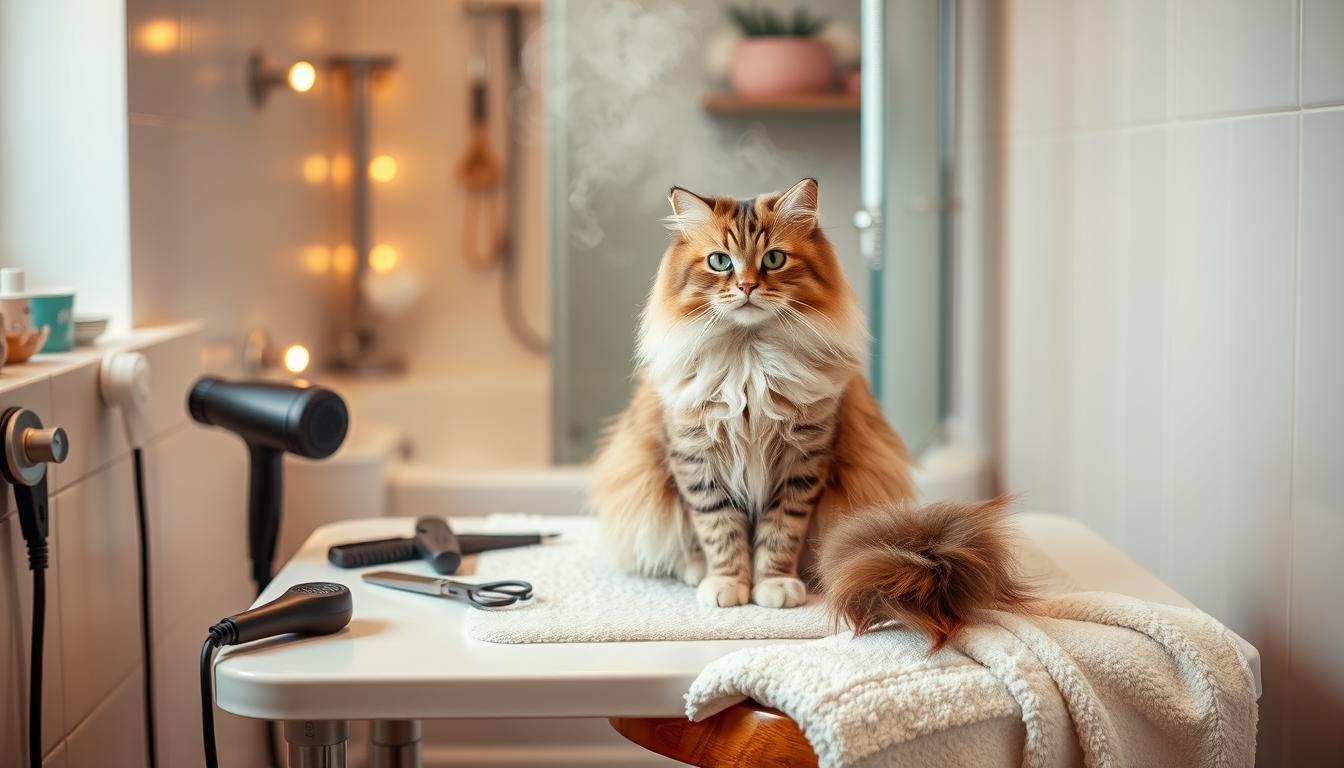
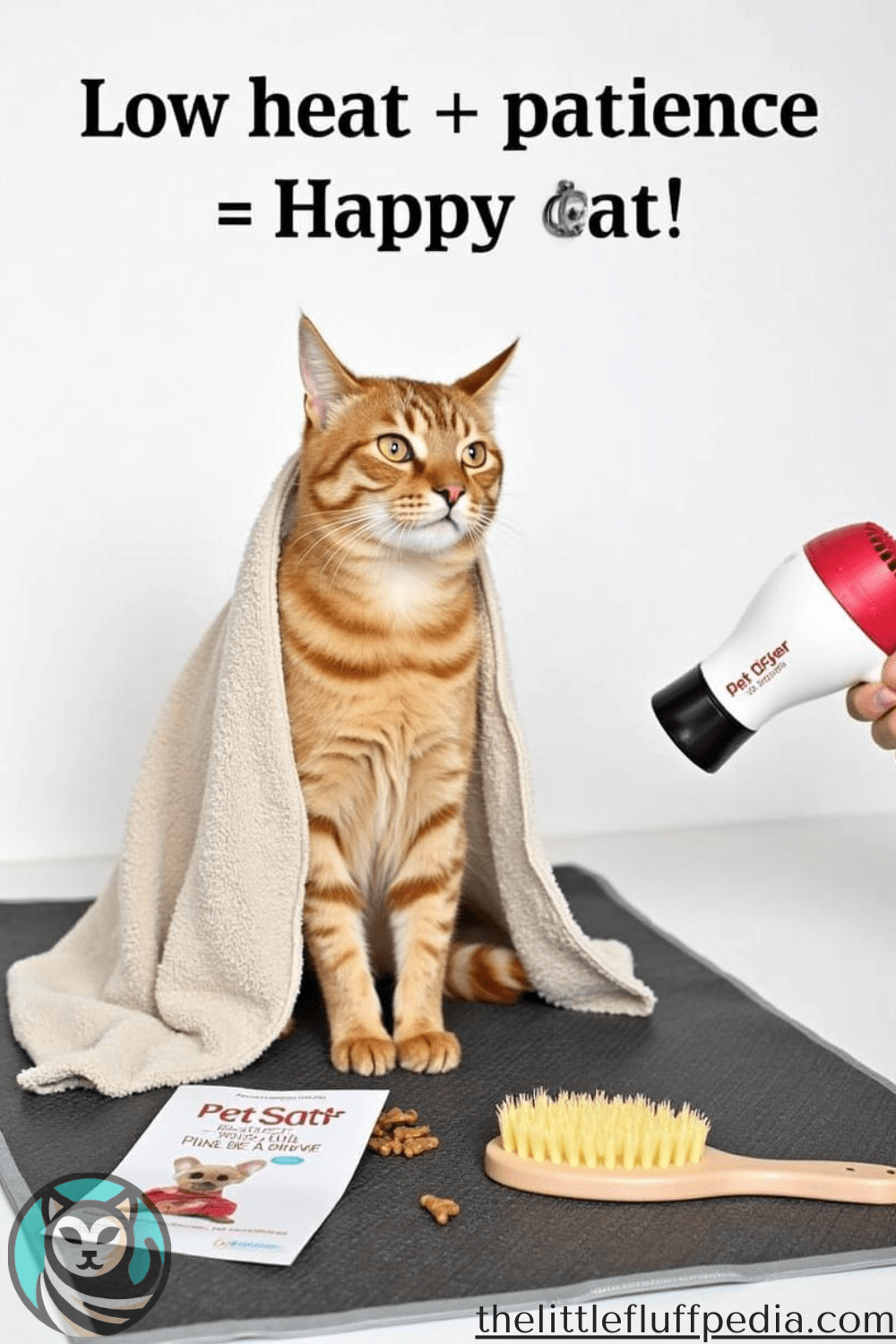
Did you know dogs need baths every 8 to 12 weeks, but cats usually groom themselves? They might need a bath if they’re dirty or smelly1. Occasionally, the answer to “Can you blow-dry a cat?” is yes, especially after a bath or if they get into something sticky. Just remember, excessive bathing can dry out their skin, as grooming experts with 15 years of experience advise.
When blow-drying cats safely, start slowly and create a calm and comfortable environment. This helps reduce stress.
Keeping cats clean and well-groomed is vital for their health and to avoid skin issues. These issues are a big reason why pet owners take their cats to the vet2. Signs of skin problems include itching, redness, hair loss, rashes, and swellings. These can be due to parasites, allergies, stress, or seasonal changes2.
Regular grooming, like brushing 1-2 times a week, is key to keeping a cat’s coat healthy2. When drying wet cats, make sure to dry them well to prevent yeast infections. This shows the importance of both blow-drying and towel-drying1.
Key Takeaways
- Cats can often groom themselves, but may occasionally need bathing and blow-drying.
- Overbathing can lead to skin dryness and damage in pets
- Introduce cats to blow-drying gradually and create a calm environment.
- Regular grooming helps prevent skin problems in cats
- Thoroughly dry cats after bathing to avoid yeast infections
Understanding Feline Grooming Needs
Cats are known for their self-grooming habits. But regular grooming with their owners is also important. It keeps their coat healthy and them happy. All cats shed, even hairless ones, losing skin cells and producing natural oils3. This strongly suggests that all cats require proper feline grooming.
The Importance of Regular Grooming for Cats
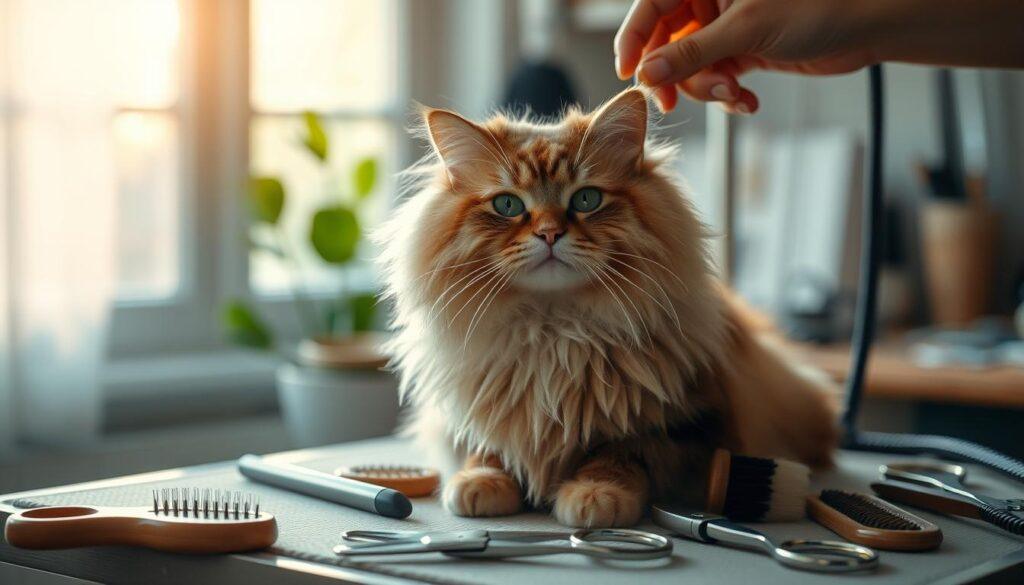
Brushing helps remove dirt, grease, and dead hair. It also improves blood circulation and the skin and coat. This is especially good for older cats who can’t groom as well3.
Brushing every 4-6 weeks helps prevent matting and pelting. Not grooming can cause severe matting. This can lead to discomfort, sores, infections, and even death.
Regular nail trimming is also key. Trimming every month prevents overgrowth and related problems3. Some breeds, like Persians and Exotics, need extra care to avoid tear stains3.
Cats’ Natural Grooming Habits
Cats groom themselves with their tongues and teeth. But this might not be enough. Long-haired breeds require daily combing to avoid tangles and mats3.
When a cat’s hair sheds and dries, it can form hard knots. This leads to matting and hairball concerns.
Grease on a cat’s skin causes hair to stick together, resulting in tangles and mats if not removed through regular cleaning.
Not bathing enough can lead to grease buildup and other issues. It’s important to understand these grooming needs for a cat’s health and happiness.
When Is It Necessary to Blow-Dry a Cat?
Cats are known for their self-grooming skills. But sometimes, blow-drying is needed for their comfort and health. Regular grooming, including baths and blow-drying, can help solve problems like dandruff. It makes the cat look and feel cleaner.
Cats should get a bath at least twice a year, even if they groom themselves daily6.
Situations That May Require Blow-Drying
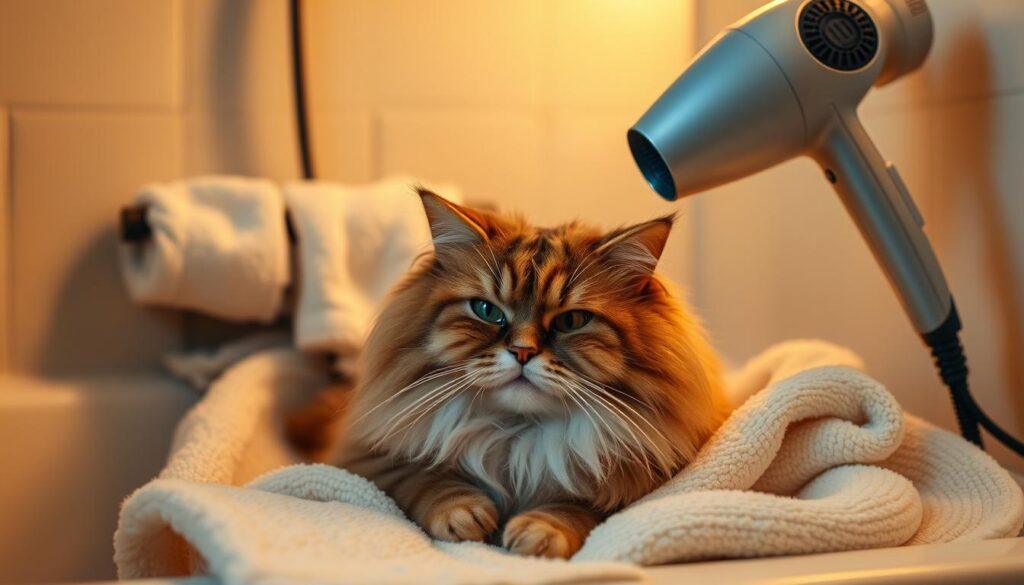
Blow-drying is needed after a bath or grooming session in some cases. If a cat gets too dirty or sticky, a bath and dry can prevent skin and coat issues. Professional groomers can clean out stuck items in a cat’s coat, keeping them safe and healthy.
Blow-drying also removes tangles and dead hair. This stops matting and keeps the coat fluffy and groomed.
Long-haired or sick cats require more baths and blow-drying to keep their coats healthy6. Professional grooming can get rid of mats and tangles, preventing pelts. Blow-drying helps reduce hairballs, shedding, and dander, which is good for allergy sufferers.
Risks of Leaving a Cat Wet or Damp
Keeping a cat damp for too long can harm their health. A damp cat coat is a breeding ground for bacteria and fungus, leading to skin problems. It also makes the cat uncomfortable, especially in cold weather or for those with weak immune systems.
Blow-drying a cat after a bath dries them faster. It also lets owners check for any skin or coat issues. Professional groomers can trim nails, preventing damage to skin and furniture from long claws.
| Situation | Risks of Not Blow Drying |
|---|---|
| A dirty or sticky coat | Skin and coat problems from prolonged dampness |
| Long-haired or ill cats | Matting, pelting, and discomfort |
| Damp coat | Bacterial and fungal growth, skin irritations, and chilling |
In conclusion, while not every bath needs blow-drying, it’s key in certain situations. It keeps the cat’s skin and coat healthy, prevents matting, and ensures comfort. Knowing when to blow-dry a cat helps owners keep their pets in top shape.
Preparing Your Cat for Blow Drying
Getting your cat ready for blow-drying is key to a stress-free grooming session. Cats require regular grooming to keep their coats healthy. Indoor cats might need more grooming to avoid tangles and remove dead hair2.
When introducing your cat to the blow dryer, make sure the environment is calm and comfy. Use positive reinforcement to make grooming a fun experience for your cat.
Introducing Your Cat to the Blow Dryer
Start introducing your cat to the blow dryer when they’re young. Kittens usually adapt better to new things. Begin by turning the dryer on from a distance, letting your cat get used to the sound and feel of the air.
Slowly move the dryer closer while watching your cat’s reactions. Always use low heat to avoid hurting them. Start drying on their sides, then move to their legs and underside.
Creating a Calm and Comfortable Environment
To make your cat comfortable during blow-drying, reduce stressors such as loud noises or strangers. Use a head or ear covering to block the dryer’s sound. Keep the room warm and free from drafts.
International award-winning breeder Laura Thomas offers a free online grooming course. Lesson 6 focuses on drying techniques.
Using Positive Reinforcement and Rewards
Positive reinforcement is crucial when introducing cats to hair dryers. Reward your cat with praise, treats, or their favorite toy after each session. This makes grooming a positive experience for both of you.
Be patient and take breaks if your cat seems stressed or uncomfortable. The goal is to make grooming a pleasant and bonding experience.
By thoroughly preparing your cat for blow-drying, you can keep their coat healthy and strengthen your bond. With patience, positive reinforcement, and the right techniques, your cat will enjoy their grooming sessions with you.
Learn how to prepare your cat for blow-drying and make grooming a positive experience.
Choosing the Right Equipment for Blow-Drying Cats
Choosing the appropriate equipment for blow-drying your cat is key. It’s important to think about their needs and how they feel. There are many pet-drying tools available for both owners and groomers to keep pets happy and healthy. The correct blow dryer can make grooming easier and less stressful for you and your cat.
Types of Blow Dryers Suitable for Cats
There are different blow dryers for cats, each with its benefits:
- High-velocity dryers, like the GustyAir Pro Dryers, dry pets quickly. They reduce discomfort and the chance of getting cold. They’re great for cats with thick or long coats.
- Stand or hands-free dryers: These dryers let you brush and guide your cat while drying. They’re quieter, making them ideal for sensitive cats.
- Handheld dryers: These dryers are light and easy to carry. They have cool-to-warm settings, making them perfect for sensitive areas like the face and ears.
Features to Look for in a Cat-Friendly Blow Dryer
When looking for a blow dryer for your cat, consider these features for a safe and comfy grooming session:
- Adjustable temperature settings: Look for dryers with multiple heat settings, including cool. This ensures safe drying for sensitive or small breeds.
- Variable speed settings: Adjustable speed and flexible hoses let you dry cats of all sizes and moods comfortably.
- Quiet operation: Cats can get scared by loud noises. Choose dryers that are quiet or have noise-reduction features.
- Wide nozzle opening: A wider nozzle spreads airflow more evenly. This makes it less intense and easier for cats to get used to.
- Lightweight and ergonomic design: A lightweight dryer with an ergonomic handle makes grooming easier on your hands and arms.
Professional pet hair dryers, like those from Tool Klean, offer both power and gentleness. They’re good for both professional grooming and home use. Pet blow dryers dry the coat and remove loose fur. This reduces the need for constant vacuuming and lint rolling at home.
Investing in a high-quality, cat-friendly blow dryer can make grooming a more pleasant experience for both you and your feline friend. It also promotes healthy coat and skin.
Step-by-Step Guide: Can You Blow-Dry a Cat Safely?
Blow-drying a cat requires care and the right steps. Cats with short hair might not need it often. But long-haired cats require regular baths and blow-drying to keep their coats healthy and looking good9. It’s key to use the right temperature and airflow and to watch your cat’s comfort while drying.
Setting the Appropriate Temperature and Airflow
Always use the lowest heat setting when blow-drying your cat. Keep the dryer 6-8 inches from your cat’s skin. Never focus the airflow on one spot for too long. Since 70% of cats might get scared or aggressive from the hairdryer sound10, start with low airflow and increase it if your cat stays calm.
Techniques for Blow-Drying Different Areas of a Cat’s Body
Start by drying your cat’s body, legs, chest, belly, and tail. Use a sweeping motion in small circles for even drying. For long-haired cats, a flat or water-peeler-style nozzle works best on legs and paws.
Gently lift or roll your cat to dry hard-to-reach areas, such as the underside and between the legs. Remember, towels work better on short-haired cats than long-haired ones during drying10.
Be careful when drying your cat’s face. Use your hand to protect their eyes, ears, and nose from the airflow. Avoid directing the dryer at these sensitive areas. Instead, use a towel to gently pat these areas dry, especially the ears, to prevent infections11.
Monitoring Your Cat’s Comfort Level Throughout the Process
Keep a close eye on your cat’s comfort and body language while blow-drying. Look for signs of stress, such as flattened ears, a twitching tail, or attempts to escape. If you see these signs, take a break and let them relax before continuing. Calmer cats are easier to dry than anxious ones11, so be patient and adjust as needed.
If your cat gets too stressed or agitated, try other drying methods, such as towel drying or letting them air-dry in a warm, draft-free room. Some cats might not like blow-drying and require a professional groomer’s help9.
| Cat Type | Blow-Drying Recommendations |
|---|---|
| Short-haired cats | May not need frequent blow-drying; brush from head to tail to reduce dander and prevent hairballs910 |
| Long-haired cats | Need regular bathing and blow-drying every 4-6 weeks regular brushing to prevent matting and tangling910 |
| Cats with rippled coats (e.g., Cornish Rex) | Need regular bathing and blow-drying every 4-6 weeks, regular brushing to prevent matting and tangling910 |
| Sphynx cats | Need regular bathing and blow-drying to prevent greasy buildup due to lack of hair9 |
By following these tips and adjusting them to your cat’s needs, you can blow-dry your cat safely and effectively. Remember, every cat is different, and some may need more time and patience during grooming and blow-drying.
Alternative Drying Methods for Cats
Blow drying can be stressful for some cats. Pet owners can try towel-drying or air-drying instead. These methods are gentler on a cat’s skin and ears.
Towel Drying Techniques
Towel drying is easy and doesn’t need loud equipment. Start with a soft towel to gently squeeze out water. Be careful not to rub too hard to avoid matting or static.
Use clean, dry towels to blot the coat until it’s almost dry. When drying cats, be gentle, especially around sensitive areas. A gentle touch and treats can make the process positive for your cat.
Air Drying in a Warm, Draft-Free Room
Air drying lets a cat’s coat dry naturally in a warm room. It’s good for cats with short or fine hair. Brushing their fur as it dries can prevent mats and tangles.
Make sure the room is warm and cozy for your cat. Keep an eye on them to avoid them getting too cold. Avoid blow dryers after bathing to reduce the risk.
Remember, cats are good at grooming themselves. They spend about 40% of their day cleaning. For gentler grooming, try HICC GROOM! Pet Grooming Gloves for a rinse-free clean.
Understanding your cat’s needs is key to successful drying. By choosing the right method, you can keep their coat healthy and clean.
Grooming Long-Haired and Thick-Coated Cats
Long-haired and thick-coated cats, like Persians and Maine Coons, require more grooming than other cats. They often get matted and tangled, which can cause pain and skin problems. Grooming these cats requires special care to keep their fur healthy.
Specific Challenges in Blow Drying Long or Dense Coats
Blow-drying thick fur requires more airflow to dry it thoroughly. Long-haired cats, such as Persians, should be groomed daily 14. Grooming them can take from one hour to almost half a day, depending on the cat and the mats13.
Some parts of a long-haired cat’s body, like behind the ears and under the legs, get matted easily. Trimmers and undercoat rakes help manage their thick fur12.
Techniques for Preventing Matting and Tangling
Daily brushing with a slicker brush is key to preventing matting1213. It removes loose hair and dirt, and spreads oils for a shiny coat12. Using a comb with wide and narrow teeth helps detangle and remove hair12.
For mats, a mat splitter gently untangles fur without hurting the cat12. Only try to remove mats that are easy to manage13. If mats are severe, a professional groomer or a lion cut might be needed12.
Regular grooming keeps a long-haired cat’s coat looking good and helps locate health issues early12.
Along with brushing, a balanced diet is crucial for a long-haired cat’s skin and fur1213. Good nutrition and a clean home also help keep their fur healthy12.
| Grooming Tool | Purpose |
|---|---|
| Slicker Brush | Removes loose hair and prevents tangles |
| Wide/Narrow Tooth Comb | Detangles and removes remaining loose hair |
| Mat Splitter | Gently separates mats and tangles |
| Undercoat Rake | Manages thick undercoats effectively |
| Grooming Scissors/Clippers | Trims excess fur and removes severe mats |
Conclusion
Cats spend a lot of time grooming themselves, up to a third of their waking hours15. Sometimes, safely blow-drying cats is needed to keep their coat healthy. Most cats don’t like baths, but some breeds, like Bengals and Turkish Angoras, enjoy water1516.
When blow-drying is needed, choosing the right equipment is key. Look for drying cabinets like the Drybo Plus for cats up to 7.5 kg, or the Kiss Grooming Drying Cabinet 907 TN 1200W for larger breeds like Maine Coons up to 8 kg.
When grooming your cat, start by introducing the blow dryer slowly. Use the right technique for their coat type and watch for signs of discomfort. Avoid overbathing, as it can dry out their skin and coat16. Cats should only be bathed every four to six weeks1516. Those with health issues or seniors should be bathed with a vet’s guidance.
Understanding your cat’s grooming needs and using the right tools can make blow-drying safe and effective. Always put your cat’s comfort first. If you’re unsure, talk to a professional groomer or vet. With care and the right approach, blow drying can be a part of your cat’s grooming routine, keeping them happy and healthy.
FAQ
Is it safe to blow-dry a cat?
Yes, it’s safe to blow-dry a cat if done right. Use the lowest heat setting and keep the dryer 6-8 inches away. Watch your cat’s comfort level. If they seem stressed, stop and try something else.
Why is it important to dry a cat after a bath?
Drying a cat after a bath prevents skin and coat problems. Damp fur can lead to matting, tangling, and infections. It keeps their coat healthy and looking good.
How can I introduce my cat to the blow dryer?
Begin in a calm place and slowly introduce the blow dryer. Start it a few feet away and move closer while watching your cat. Use low heat and give treats for a good experience.
What type of blow dryer is best for cats?
Choose a dryer with adjustable speed and temperature. High-velocity dryers dry well, while quieter stand or hands-free dryers are easier to use. Handheld dryers with cool-to-warm settings are good for sensitive areas.
What if my cat is too nervous for blow-drying?
If your cat is too nervous, try towel-drying or air-drying in a warm room. Gently squeeze out water and avoid rubbing to prevent static. Brush the coat a few times to prevent hair clumping.
How do I blow-dry a long-haired or thick-coated cat?
Long-haired and thick-coated cats need more grooming and higher airflow. Use a brush or comb to remove tangles and dead hair. Focus on areas prone to matting, like behind the ears and under the legs.
How often should I groom my cat?
Regular grooming removes dirt, grease, and dead hair. It also improves blood circulation and the health of the skin and coat. Short-haired cats require brushing once a week, while long-haired cats may need it daily.
Source Links
- How to Groom Your Dog or Cat at Home – https://www.nytimes.com/wirecutter/reviews/groom-your-dog-or-cat-at-home/
- Cat Grooming Tips – https://www.aspca.org/pet-care/cat-care/cat-grooming-tips
- Don’t cats groom themselves? – https://www.catsmeowresort.com/blog/2020/7/7/dont-cats-groom-themselves
- How to Bathe Your Cat Without Getting Scratched – Animal Behavior College – https://www.animalbehaviorcollege.com/blog/animal-career-advice/grooming/bathing-your-cat/
- How To Bathe A Cat (A Step By Step Guide) – Cats.com – https://cats.com/how-to-bathe-a-cat
- How to Dry a Cat: 10 Steps (with Pictures) – wikiHow – https://www.wikihow.com/Dry-a-Cat
- How to Dry a Cat After a Bath: Vet-Approved Step-by-Step Guide – Catster – https://www.catster.com/cat-health-care/how-to-dry-a-cat-after-bath/
- How to Groom Your Long-Haired Cat – Cats.com – https://cats.com/how-to-groom-a-long-haired-cat
- How to Groom a Long-Haired Cat | Airtasker US – https://www.airtasker.com/us/guides/long-haired-cat-grooming/
- Grooming long-haired cats – https://www.petplan.co.uk/pet-information/cat/advice/grooming-long-haired-cats/
- FAQS About Bathing Cats | Breton Veterinary Hospital – https://bretonvet.com/2024/02/15/faqs-about-bathing-cats/
- How To Bathe Your Cat And Live | Dogwood Animal Hospital – https://dogwoodanimalhospital.com/2024/02/15/how-to-bathe-your-cat-and-live/
- Drying boxes, are they worth it? – https://learncatgrooming.blog/2024/02/21/drying-boxes-are-they-worth-it/