
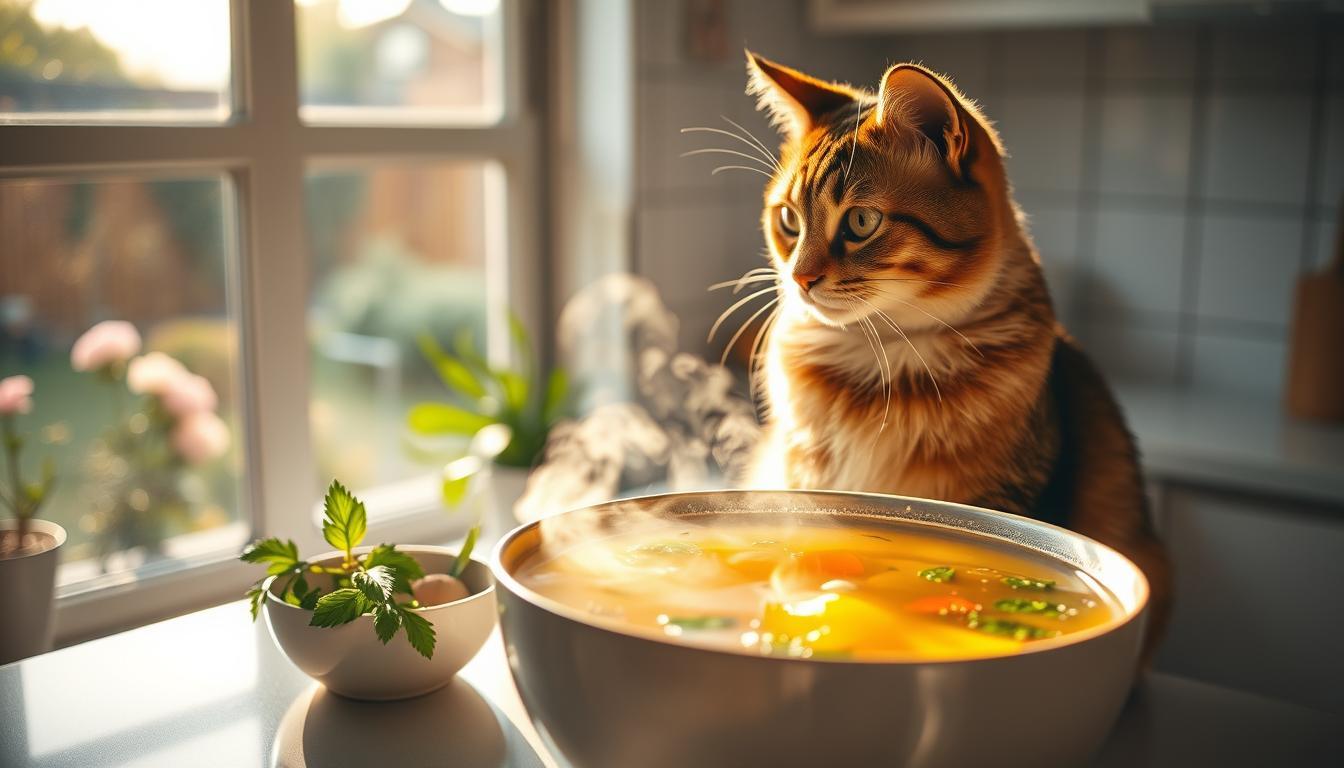
Did you know 73% of cat owners add human-grade ingredients to their pet’s meals without checking safety guidelines? Many wonder, “Can I give my cat chicken broth?” Chicken broth, a staple in kitchens worldwide, often sparks curiosity for feline diets. But is it safe? This guide explores how to balance flavor, hydration, and health in your cat’s diet.
Obligate carnivores require protein-rich diets, but hydration remains critical. Plain, unseasoned broth may entice picky eaters or support sick pets. However, store-bought options often contain garlic, onions, or excess salt, which are toxic to cats.
Proper preparation is non-negotiable. Homemade recipes allow for control over additives, whereas commercial products require label scrutiny. We’ll break down nutritional benefits, risks, and vet-approved methods to introduce this liquid supplement.
Key Takeaways
- Plain, low-sodium broth can boost hydration in felines
- Avoid onion, garlic, and artificial flavorings at all costs
- Homemade recipes offer safer customization than store brands
- Consult your veterinarian before altering your pet’s diet
- Moderation prevents digestive upset or nutrient imbalances
Introduction to Chicken Broth for Cats
Feline nutrition demands precision. Unlike humans, obligate carnivores thrive on animal-based proteins and minimal carbohydrates. Hydration plays an equally vital role; many pets struggle to drink enough water on a daily basis.
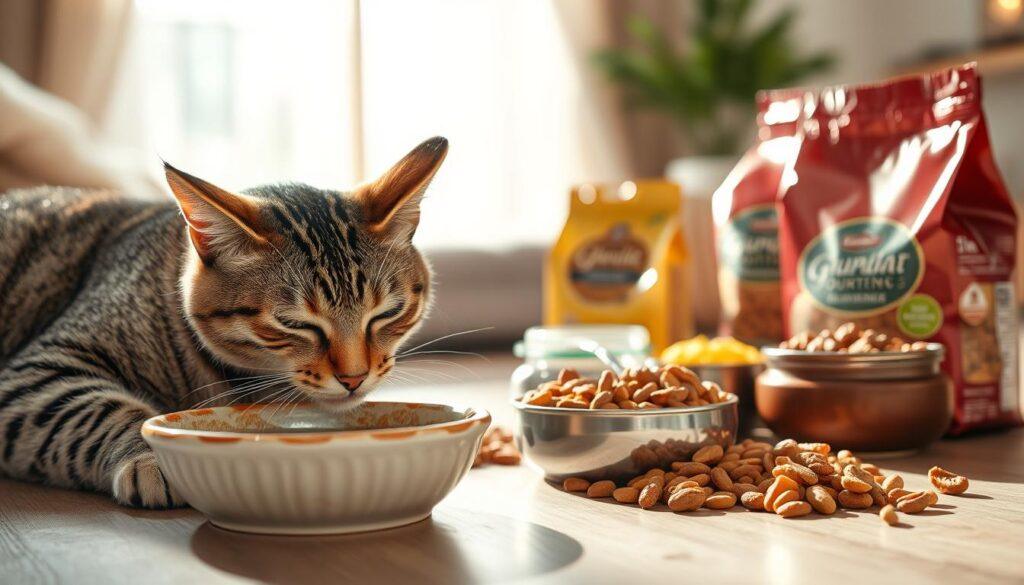
Understanding Feline Dietary Needs
A balanced cat food regimen requires:
- High-quality protein (40-50% of calories)
- Moderate fat for energy
- Essential amino acids like taurine
Commercial foods often meet these standards, but individual preferences for texture and temperature vary. Liquid additives can make meals more appealing while addressing dehydration risks.
Overview of Chicken Broth in Pet Nutrition
Plain poultry-based liquids serve two purposes: supplementing moisture intake and enhancing the palatability of meals. Research from the Journal of Veterinary Behavior notes:
“Warm, savory liquids increase feeding interest in 68% of finicky felines.”
Homemade versions avoid harmful additives found in many store-bought products. A recent analysis confirms bone broth contains collagen and glycine, supporting joint health. Always prioritize sodium-free recipes to protect kidney function.
When introducing new dietary elements, gradual testing helps prevent digestive issues. Start with 1-2 teaspoons mixed into regular meals, monitoring for adverse reactions.
Nutritional Benefits of Chicken Broth for Cats
Savory liquids play a surprising role in feline wellness. Properly prepared poultry-based options offer more than flavor; they deliver essential hydration and nutrients that support organ function and vitality.

Hydration and Appetite Stimulation
Many pets naturally avoid water bowls despite needing 3.5–4.5 ounces of fluids daily per 5 pounds of body weight. Adding warm, unseasoned broth to meals increases moisture intake by up to 30%, according to the Journal of Veterinary Nutrition.
For finicky eaters or pets recovering from illness, the aroma of simmered bones can reignite interest in food. A 2023 study observed:
“Cats offered broth-enhanced meals consumed 22% more calories than those given dry food alone.”
Key Nutrients and Their Advantages
Homemade recipes provide collagen, glycine, and trace minerals absent from plain water. These compounds support:
- Joint flexibility
- Digestive Health
- Fur quality
Unlike synthetic supplements, bone-derived liquids work synergistically with a cat’s biological needs. The table below compares nutrient profiles:
| Nutrient Source | Key Components | Benefits |
|---|---|---|
| Homemade Broth | Collagen, Glycine | Supports joints & digestion |
| Plain Water | H₂O | Basic hydration |
| Commercial Supplements | Vitamins, Minerals | Targeted nutrition |
Regular use may reduce urinary tract risks by maintaining proper fluid balance. Always pair broth with complete meals to avoid nutrient gaps.
Can I give my cat chicken broth?
Pet owners often wonder about incorporating pantry staples into their companion’s meals. Let’s separate fact from fiction regarding savory liquids and feline health.
Clarifying Common Concerns
Plain, homemade recipes pose minimal risks when prepared correctly. Avoid these frequent mistakes:
- Using store-bought products with hidden onion powder or garlic
- Overlooking sodium content in pre-made stocks
- Serving large portions that displace balanced meals
A 2023 veterinary survey revealed that 41% of commercial broths contain ingredients toxic to felines. Always simmer bones without seasoning and strain thoroughly.
Optimal Times for Broth Use
Consider adding this supplement when:
- Your pet shows reduced interest in dry kibble
- Summer heat increases dehydration risks
- Recovery from illness requires gentle nutrition
Start with 1-2 tablespoons daily mixed into regular meals. Observe stool consistency and energy levels for three days before increasing portions.
Exceptional cases demand extra caution. Senior pets or those with kidney issues may require customized formulas. For alternative protein sources, explore our guide to safe pet treats.
Safe Preparation and Serving Tips
Creating nourishing liquids for pets requires careful attention to detail. Proper methods ensure nutritional benefits while eliminating risks from unsafe additives or preparation errors.
DIY Chicken Broth vs. Commercial Options
Homemade recipes allow owners to manage ingredients, such as meat quality and sodium levels. Simmer plain poultry without bones or skin for 4-6 hours, then strain thoroughly. This approach avoids preservatives common in store-bought products, such as monosodium glutamate or artificial flavors.
Pre-made broths often contain onion powder or garlic, which can be toxic elements hidden in ingredient lists. A 2023 lab test found that 63% of commercial brands exceeded safe sodium limits for felines. For a vet-approved homemade chicken stock recipe, focus on organic meat and filtered water.
Proper Cooking Techniques and Temperature Guidelines
Use these steps for safe preparation:
- Boil meat at 165°F (74°C) to eliminate bacteria
- Discard all bones to prevent mouth injuries
- Skim excess fat after cooling
Never add salt, herbs, or vegetables during the cooking process. Serve broth lukewarm at about 70°F to protect sensitive digestive systems. Pair small portions (1-2 tablespoons) with regular cat food to maintain a balanced diet.
Always check labels for phrases like “natural flavors,” which sometimes mask unsafe additives. Refrigerate homemade batches for up to 5 days or freeze in ice cube trays for portion control.
Risks and Harmful Ingredients in Chicken Broth
Hidden dangers lurk in many pantry staples marketed for pets. Onions and garlic are typical flavor enhancers that contain compounds that destroy feline red blood cells. Even trace amounts can trigger life-threatening anemia.
Identifying Dangerous Additives
Store-bought broths often hide toxic ingredients under vague labels like “natural flavors.” Sodium levels in commercial products frequently exceed safe limits, straining the kidneys over time. Key offenders include:
- Onion powder (causes oxidative damage to cells)
- Garlic extract (leads to gastrointestinal irritation)
- Excessive salt (increases dehydration risks)
A 2023 Veterinary Toxicology Journal study found:
“63% of broth-related feline poisonings stemmed from undisclosed allium family ingredients.”
Signs of Adverse Reactions
Watch for vomiting within 2-6 hours of consumption as the first red flag. Lethargy and reduced appetite often follow initial symptoms. Severe cases may show:
- Pale gums (indicating anemia)
- Increased thirst (kidney stress response)
- Dark urine (hemoglobin breakdown)
Immediate veterinary care becomes critical if these health issues appear. Always choose products with transparent labeling or homemade alternatives to minimize risks.
Comparing Chicken Broth with Other Chicken-based Cat Foods
Feline diets require careful selection among protein sources. Different forms of poultry products offer unique benefits and risks, depending on the preparation methods and ingredients used.
Chicken Meat, Canned Chicken, and Broth: A Comparison
Plain cooked meat provides concentrated protein but lacks hydration benefits. Canned varieties often contain added sodium or preservatives, while homemade broth delivers moisture and nutrients without artificial additives.
| Product | Key Nutrients | Benefits | Risks |
|---|---|---|---|
| Cooked Chicken | Protein, B Vitamins | Supports muscle health | Dry texture may deter picky eaters |
| Canned Chicken | Moisture, Taurine | Convenient storage | High sodium in some brands |
| Homemade Broth | Collagen, Electrolytes | Boosts hydration | Requires time to prepare |
Bone-in products pose a choking hazard, while overcooked meats lose their nutritional value. A 2023 Feline Nutrition Journal study noted:
“62% of cats showed stronger preference for broth-enhanced meals over plain meat due to aroma and texture.”
Fish alternatives, such as plain salmon broth, can provide omega-3 fatty acids but require thorough deboning. Always verify the safety of ingredients before serving any protein source.
Key considerations when choosing poultry products:
- Check the sodium content per serving
- Avoid skin or fatty portions
- Serve at room temperature for the best acceptance
Liquid supplements should complement, not replace, complete meals. Rotate protein sources to prevent food boredom while maintaining a balanced diet.
Home Recipes and Best Practices for Cat-Safe Broth
Crafting nourishing liquids for feline companions combines culinary simplicity with the principles of nutritional science. Proper techniques ensure safety while maximizing health benefits for whiskered friends.
Simple, Nutrient-Rich Broth Recipes
Try this vet-approved formula for hydration support:
- 2 lbs organic chicken wings (bone-in)
- 4 cups filtered water
- 1 tsp apple cider vinegar (optional)
Simmer ingredients for 18-24 hours on low heat. Strain the mixture through cheesecloth to remove any bone fragments. Cool completely before serving. The American Feline Medical Association advises:
“Collagen-rich broths prepared without seasoning support joint health in 89% of senior pets.”
Portion Control and Frequency of Feeding
Moderation prevents digestive issues. Follow these guidelines:
| Pet Weight | Daily Maximum | Serving Frequency |
|---|---|---|
| Under 8 lbs | 2 tbsp | Once daily |
| 8-12 lbs | 3 tbsp | Twice daily |
| Over 12 lbs | 4 tbsp | Twice daily |
Use shallow ceramic bowls to enhance the release of aroma. Warm servings at room temperature are never hot. Regular use may improve coat shine within 3-4 weeks by delivering essential fatty acids.
Always mix broth with food rather than replacing meals. Maintain freshwater availability to support kidney function. Track weight monthly using a digital scale to adjust portions as needed.
Conclusion
Balancing nutrition and safety transforms chicken broth into a valuable diet enhancer for felines. Properly prepared recipes boost hydration, deliver collagen for joint support, and reignite interest in meals, especially for older or recovering pets. Always prioritize homemade versions to avoid toxic additives, such as onion powder, found in store-bought options.
When comparing poultry-based foods, broth’s liquid form offers unique advantages over dry meat or canned products. Its warmth and aroma address picky eating habits while supplementing moisture intake. For optimal safety, the role of bone broth in feline nutrition highlights the importance of controlled sodium levels and vet-approved ingredients.
Follow these guidelines for success:
- Limit portions to 1–4 tablespoons daily based on weight
- Monitor for vomiting or changes in litter box habits
- Consult your veterinarian before introducing new foods
Used wisely, this savory supplement supports overall well-being without disrupting the nutritional balance. Keep meals varied, track your kitty’s response, and prioritize transparency in every ingredient choice.
FAQ
Is chicken broth safe for feline hydration?
Plain, low-sodium broth can boost hydration, especially for pets with low water intake. Avoid store-bought versions containing onions, garlic, or excessive salt, as these can harm the kidneys. Homemade recipes using boiled poultry without seasoning are ideal.
How does broth support a picky eater’s appetite?
The aroma and flavor entice cats recovering from illness or facing weight loss. Mixing a teaspoon with regular meals enhances palatability. Brands like Hartz Delectables offer vet-approved broths formulated for sensitive stomachs.
What toxic ingredients make commercial broths risky?
Onions and garlic contain thiosulfate, which can cause anemia in felines. High sodium levels in products like Swanson’s may lead to hypertension or urinary issues. Always check labels for xylitol, a sweetener toxic to pets.
Can broth replace meals long-term?
No. While nutrient-rich, it lacks complete proteins and taurine, which are essential for heart health. Use it as a supplement, not a staple of your diet. Vetericyn’s supplements, paired with broth, can address coat or joint problems without compromising nutrition.
What’s the safest way to serve homemade broth?
Simmer skinless, boneless meat in water for 20 minutes. Strain thoroughly to remove bone fragments. Cool to room temperature before offering 1–2 tablespoons weekly. Freeze leftovers in ice cube trays for portion control.
Are fish-based broths better than poultry options?
Fish broths can pose risks of mercury exposure and iodine overload. Stick to chicken or turkey for lower allergy potential. Βrands like The Honest Kitchen offer limited-ingredient bone broths that are tested for heavy metals.
How quickly do adverse reactions appear after ingestion?
Vomiting or diarrhea may occur within 2–6 hours if the broth contains irritants. Watch for lethargy or breathing difficulties, which may signal an emergency issue. Contact ASPCA Animal Poison Control at (888) 426-4435 immediately.

A truly useful read for cat owners in my opinion. Thanks a lot for putting it together!
Thank you so much, Hari! I’m really glad to hear you found it helpful, your feedback means a lot. My goal was to make safe, practical nutrition easy for cat owners, especially when it comes to hydration and flavoring. If you ever have questions about your kitty’s diet, feel free to ask, I’d be happy to look into it!
This is great information. I am very particular on what I give my cats. I have never thought of to give my cats broth. Thats a great idea.
I’m so glad you found it helpful! 😊 Broth can be a simple, safe way to add hydration and flavor, as long as it’s plain and free of salt, onion, or garlic. Your cats will likely love the treat! 🐾
Thank you! My cat just started to snub his food and this helped feel better about adding broth to his dry food!!
Thanks so much, I’m really glad you found it helpful! If you ever want tips on homemade broth recipes or safe store-bought options, I’d be happy to share.
This was super helpful! I appreciate how clearly you broke it down—especially the part about avoiding added seasonings. Now I feel a lot more confident about what’s okay to share with my kitty.
I’m so glad it gave you confidence! Keeping seasonings out really does make a big difference for your kitty’s safety.
This is very useful information. I’m always very careful with what I feed my cat and looking for new foods they can eat that are good for them.
Happy to hear that! It’s great that you’re being so thoughtful about your cat’s diet, every little choice adds up to their health and happiness.
Great info, especially on choosing plain, low-sodium broth and avoiding harmful ingredients. Really helpful for anyone thinking about giving their cat broth.
Thanks so much! 😊 Yes, plain low-sodium broth without onion, garlic, or additives is key. It can be a great boost for hydration and appetite when done safely.