
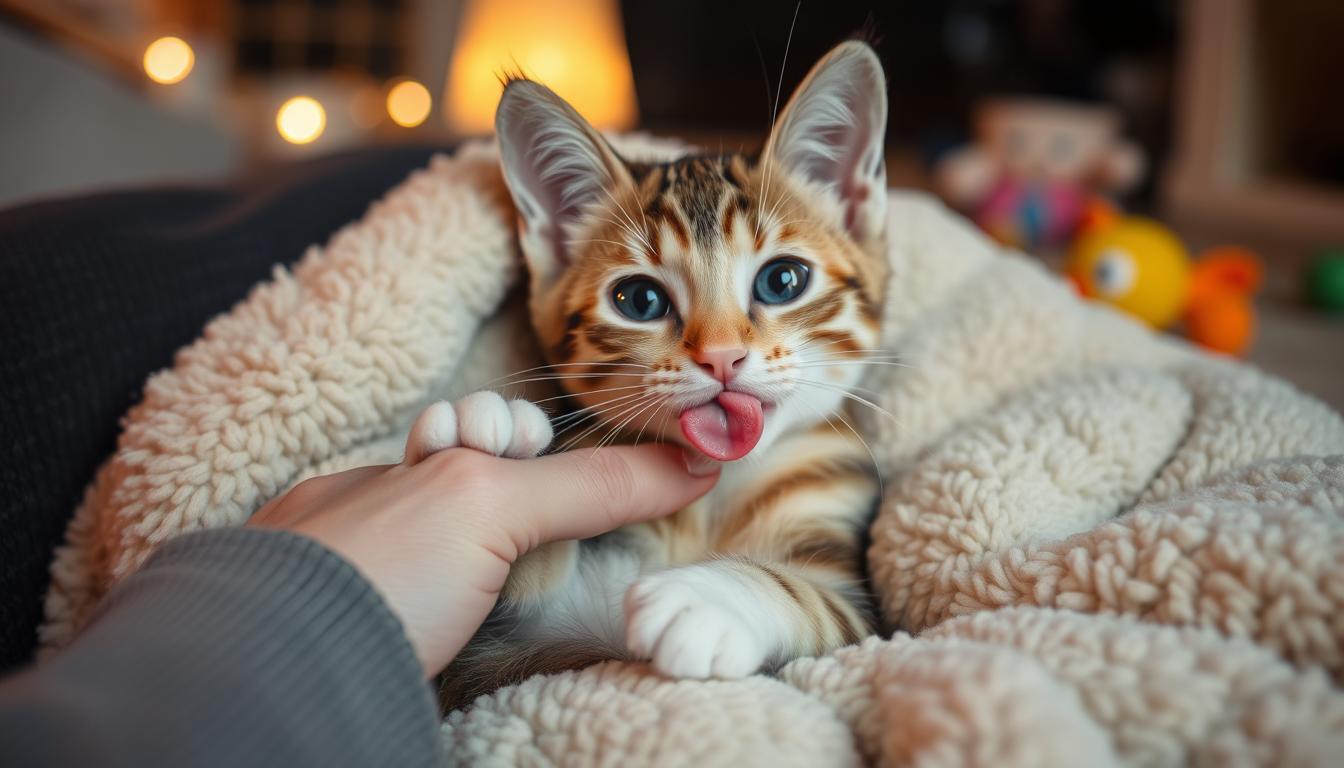
Cats lick and bite for many reasons, like showing love, asking for play, or grooming1. Each cat has a different threshold for feeling overstimulated. Knowing their body language is key to talking to them well1.
Many cat owners wonder, “Why does my cat lick and bite me?” Exploring cat communication and grooming can help understand these behaviors.
Kittens often bite to get to know their world1. This habit can stick with them as adults. They may lick and bite to show love, get attention, or tell you to stop petting them. Remember, the order of licking or biting doesn’t change what it means1.
Understanding your cat’s body language is crucial for a strong bond. By learning about cat communication cues, you can better meet their needs. Cats show they want to play by using specific body language, like big pupils, an arched back, and pointed ears and whiskers2.
Principais conclusões:
- Cats lick and bite their owners for various reasons, including affection, attention-seeking, and grooming.
- Kittens often bite to socialize and explore their surroundings.
- Understanding a cat’s unique body language is essential for effective communication.
- Cats communicate their need for playtime through specific body language cues.
- Building a strong bond with your cat involves learning to interpret their behavior and respond appropriately.
Cats Licking and Biting as a Form of Communication
Cats often puzzle their owners with their actions. But when they lick and bite, they’re not being mean. They’re trying to share their feelings and needs. Knowing why they do this can help owners and cats live better together.
Love Bites: A Sign of Affection
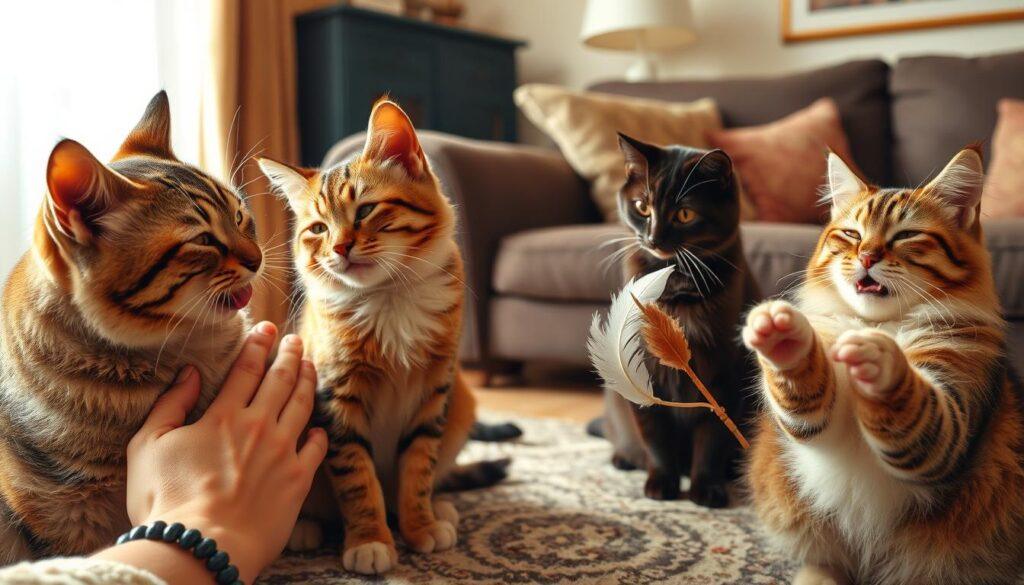
Cats lick and bite to show love. This is especially true for kittens, who use it to socialize. When they do it to people, it means they trust and feel comfortable around them. These bites are usually soft and don’t hurt, showing they feel good.
Every cat is different, and some show love more than others. Watching your cat’s actions and body language helps you understand them. For example, if they nibble on you while purring, it signifies love and connection.
Grooming Behavior: Your Cat Sees You as Family
Cats spend a lot of time grooming themselves. They lick their fur and sometimes their skin to stay clean. This is not just for cleanliness but also to bond with their group.
When a cat licks and bites you, they’re grooming you. They see you as part of their family. This shows they trust and care for you deeply.
| Cat Behavior | Significado |
|---|---|
| Love Bites | Gentle biting to show affection, socialize, or communicate pleasant feelings |
| Grooming | Licking and nibbling to maintain hygiene and strengthen social bonds |
| Licking and Biting | A way for cats to communicate their needs, feelings, and desire for attention |
In summary, cats lick and bite to show love, bond, and communicate. By understanding these behaviors, owners can build a stronger bond with their pets. This makes for a happier home for both.
Overstimulation: When Petting Becomes Too Much
Cats love attention, but knowing their limits is key to avoiding overstimulation. Cats can get stressed or frustrated, like when they see birds outside. Each cat has a different limit, leading to bites when they’re too touched4.
Recognizing the Signs of Overstimulation in Cats
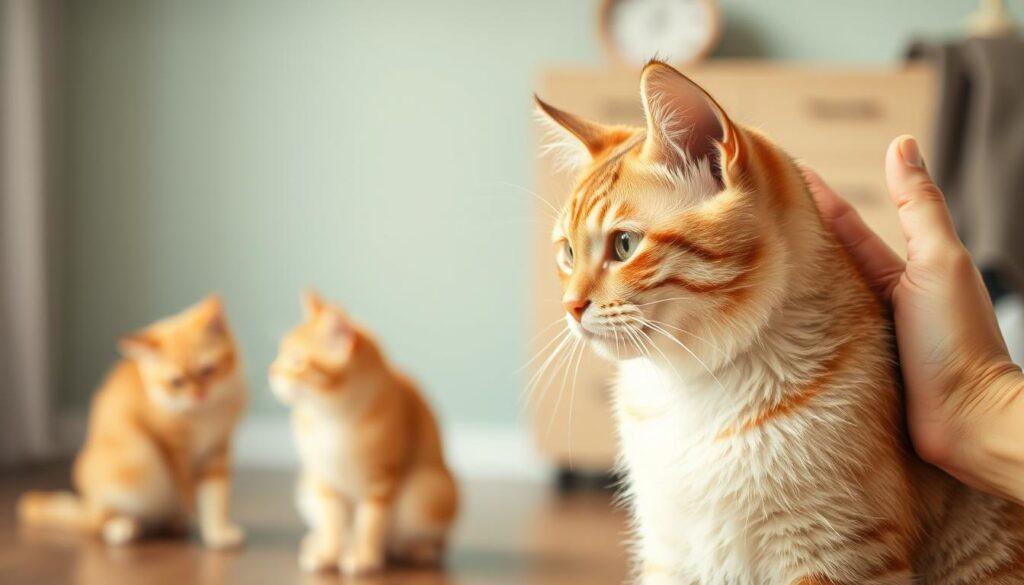
Cats react differently to too much stimulation. Some twitch their tails, while others bite3. Signs of overstimulation include ears back, twitching, and dilated pupils5.
Owners should watch for signs like restlessness and tail twitching3. These are clues that your cat is getting too stressed.
How to Avoid Overstimulating Your Cat
Stop petting your cat right away if you see these signs. Using treats during short petting sessions can make them enjoy it more. Playing with your cat several times a day can also help.
Changing how you pet them and playing more can help5. Play should mimic hunting to keep them happy and less stressed. After playing, give them high-protein snacks to relax.
It’s crucial to avoid situations that trigger aggression in cats. Positive reinforcement helps them relax instead of getting aggressive4.
Don’t punish your cat for biting due to overstimulation. Avoid laser lights as they can frustrate cats and lead to more problems.
| Do | Don’t |
|---|---|
| Watch for signs of overstimulation | Ignore your cat’s body language |
| Stop petting when your cat shows discomfort | Continue petting despite warning signs |
| Provide interactive play sessions | Use laser pointers that frustrate your cat |
| Reward calm behavior with treats | Punish your cat for biting due to overstimulation |
Why does my cat lick and bite me
Cats have their ways of showing love and needs. When they lick and bite, it might mean they want your attention or want to play. Understanding why they do this can strengthen your bond and keep them happy.
Playful Biting: Your Cat’s Invitation to Engage
Cats might lick and bite when they’re ready to play. They show this by ears forward and big pupils6. They might also play with toys or paw at things they find interesting7.
Playing with your cat using toys can meet their hunting needs. It also keeps their mind active and reduces biting.
Stress and Anxiety: Licking and Biting as Coping Mechanisms
But too much licking or biting can mean your cat is stressed or anxious. This could be because of new things or places6. Stress can make them groom too much or bite more than usual7.
Stress can come from loud noises, changes in their space, or other animals7. Licking might be a way for them to cope with stress8.
To ease their stress, give them cozy spots to hide. Using pheromone diffusers can also calm them down. If your cat’s stress doesn’t go away, see a vet for help. Toys and scratching posts can also help reduce their stress behaviors8.
| Cat Behavior | Possible Causes | Solutions |
|---|---|---|
| Playful Biting | Seeking attention, desire to play | Engage in interactive play sessions and provide toys |
| Excessive Licking/Biting | Stress, anxiety, overstimulation | Provide calming spaces, use pheromone diffusers, and consult a vet |
Understanding your cat’s behavior is key to a happy home. By recognizing your cat’s signals and creating a safe space, you can foster a strong bond with them.
Understanding Your Cat’s Body Language: Why Does My Cat Lick and Bite Me?
Cats are complex creatures, and understanding their body language is key to building a strong bond with your feline companion. A cat’s tail, ears, and eyes are all critical indicators of their mood and emotional state. By learning to interpret these cat body language signals, you can better communicate with your cat and avoid potential misunderstandings that may lead to licking or biting behavior.
Decoding Your Cat’s Tail, Ears, and Eyes
A cat’s tail is often referred to as a mood detector. When a cat’s tail is quivering with excitement, it’s best to avoid contact, as this may indicate overstimulation9. On the other hand, a calm tail with gentle tip movement is a sign of a content and relaxed cat. Paying attention to cat tail communication can help you determine when it’s appropriate to approach and interact with your feline friend.
Cat ear positions are another crucial aspect of feline body language. Forward-pointing ears and whiskers, combined with an arched back and dilated pupils, are clear signs that your cat is in a playful mood and ready to engage9. However, if your cat’s ears are turned back and their eyes are dilated, it may be a sign of overstimulation, and it’s best to give them some space to avoid potential biting or scratching9.
Cat eye dilation meaning is also essential to understand. Dilated pupils can indicate a range of emotions, from excitement and playfulness to fear and aggression. By observing your cat’s eyes in conjunction with their overall body language, you can gain valuable insight into their emotional state and respond accordingly.
Why Does My Cat Lick and Bite Me? Understanding This Behavior
Many cat owners often ask, “Why does my cat lick and bite me?” Cats may exhibit licking and biting behavior due to their natural predatory instincts10. However, excessive licking or biting can also be signs of overstimulation or an attempt to assert dominance10. By understanding the context and your cat’s body language, you can better interpret their behavior and take appropriate action, such as redirecting their attention or providing toys to manage the situation10.
Ultimately, staying alert to your cat’s body language is the key to building a stronger, more harmonious relationship. By recognizing signs of discomfort or overstimulation and responding appropriately, you can prevent unwanted biting behavior and create a more positive, trusting bond with your feline companion. Regular grooming, quality time, and interactive play can further strengthen this connection, leading to a happier and healthier life together10.
Conclusão
Compreensão comportamento do gato is key to a strong bond with your cat. Cats lick and bite to show their feelings and needs11. These actions can mean love, friendship, or even stress1213.
To have a good relationship with your cat, learn their body language. Knowing when they’re playful, loving, or stressed helps you act right13. Give them fun playtime, respect their space, and let them have quiet time too12.
Even if cats do weird things sometimes, getting to know them is worth it. By understanding their language and needs, you can grow closer. This way, you and your cat can have a lifelong friendship.
PERGUNTAS FREQUENTES
Why do cats lick and bite their owners?
Cats lick and bite their owners as a way to show love and ask for attention. It’s a common behavior, especially in kittens. They see their humans as part of their family and groom them to bond.
What are love bites in cats?
Love bites are a gentle way cats show affection or ask for attention. They groom their humans like they would another cat. This strengthens their bond.
How do cats groom themselves and others?
Cats groom by licking their coat and sometimes nibbling on their skin. This removes oils and dirt. When they groom their human, it’s a way to bond through a feline ritual.
What is overstimulation in cats?
Overstimulation happens when cats are touched in ways they don’t like or for too long. It causes frustration and biting. Signs include dilated pupils, turned-up ears, and a rapidly flicking tail.
How can I avoid overstimulating my cat?
To avoid overstimulation, don’t pet cats in areas they dislike. Stop petting at signs of discomfort. Keep sessions short. Never yell at or punish a cat for biting due to overstimulation.
What does it mean when my cat licks and bites me during playtime?
Cats may lick and bite to invite play. Look for forward-pointing ears and whiskers, a raised tail, and dilated pupils. Playing with toys can redirect this behavior.
Can excessive licking and biting be a sign of stress in cats?
Yes, excessive licking, biting, or aggression can be signs of stress or anxiety. Changes in the environment or routine can trigger it. Calming beds, pheromone diffusers, and vet consultations can help.
How can I tell if my cat is in a good mood for petting?
A cat’s tail is a mood detector. A calm tail with a gentle tip movement means they’re in a good mood. Avoid contact if their tail is quivering. Approach them when they’re relaxed and look for signs of discomfort or overstimulation.
Why is it important to understand my cat’s body language?
Cats communicate their needs through body language. Staying alert to these signs helps build a better relationship. Learning to read their body language is key to understanding their needs and building a strong bond.
How can I promote positive interactions with my cat?
Give cats space when needed, provide engaging playtime, and respect their boundaries. This prevents overstimulation and promotes positive interactions. Taking the time to learn their unique communication style is rewarding and enhances the human-feline relationship.
Links de origem
- Why Does My Cat Lick Me Then Bite Me? The Mystery Explained – https://nootspets.com/blogs/news/why-does-my-cat-lick-me-then-bite-me?srsltid=AfmBOopUALknTJURdPat5kMtpn_cFTmRDdzN0dVm6H2VQAAZ284l0NEC
- Why Does My Cat Lick And Then Bite Me? – https://cardboardcathomes.com/blogs/info/why-does-my-cat-lick-and-then-bite-me?srsltid=AfmBOoojdKn3XY0YcRVU_KSJxFDnsDeX1Y1Zn8s9C7uDFvqXRyMUQ_6T
- Why Does My Cat Lick Me Then Bite Me? The Mystery Explained – https://nootspets.com/blogs/news/why-does-my-cat-lick-me-then-bite-me?srsltid=AfmBOop6dBEn4B2MJHKv80C7SjK-lQvqlaqiH5G3DigMOgNV3pQzVADz
- Petting-Induced or Overstimulation Aggression in Cats – HSHV – https://www.hshv.org/petting-induced-or-overstimulation-aggression-in-cats/
- Why Does My Cat Lick Me Then Bite Me? The Mystery Explained – https://nootspets.com/blogs/news/why-does-my-cat-lick-me-then-bite-me?srsltid=AfmBOorMB8UXD3xTJBtZxkmeUwMwZa2wJbOhogUbvdEYu9FuZ5FbhS5x
- Why Does My Cat Lick And Then Bite Me? – https://cardboardcathomes.com/blogs/info/why-does-my-cat-lick-and-then-bite-me?srsltid=AfmBOorKH7Bz4a0ndYk_sXTZNdYL6tHFadAIYA-S4cn-9vQK3x52COIh
- Why Does My Cat Lick Me? 7 Common Reasons – https://www.petmd.com/cat/behavior/why-does-my-cat-lick-me
- Why Does My Cat Lick And Then Bite Me? – https://cardboardcathomes.com/blogs/info/why-does-my-cat-lick-and-then-bite-me?srsltid=AfmBOoqDQplHR-wPrqFV1jSEUbO5XWecophKDbZV_trrYwrllxSsDxzh
- Why Does My Cat Lick Me Then Bite Me? – https://www.uahpet.com/blogs/hydration-health/why-does-my-cat-lick-me-then-bite-me-understanding-feline-behavior?srsltid=AfmBOorfKIkT5oNTq0ragA8UZOMGFKBfIfT0BpaovqLIVgkUwzOZvHt_
- Why Does My Cat Lick Me Then Bite Me? – https://www.uahpet.com/blogs/hydration-health/why-does-my-cat-lick-me-then-bite-me-understanding-feline-behavior?srsltid=AfmBOoqjOSW0qt6-fK3vy_hle3qCnCNS0JQO43xS99K3zktszzs4Yi-a
- Why Does My Cat Bite Me Then Lick Me? – https://cooperandgracie.com/blogs/infos/why-does-my-cat-bite-me-then-lick-me
- Why Does My Cat Lick Me And Then Bite Me? – https://www.furryroyal.com/blogs-pet-life/why-does-my-cat-lick-me-and-then-bite-me.html?srsltid=AfmBOor3-EinkXQF2Lz9mpm7sjqPNINam8ue26FGst6gLt0xHQVHCg23