

34% of pet owners admit to using human skincare products on their animals without veterinary guidance, a risky trend when considering remedies like witch hazel. This North American shrub, Hamamelis virginiana, has been celebrated for centuries for its anti-inflammatory and astringent properties in human care. But what about feline companions? Specifically, can I use witch hazel on my cat?
Derived from the bark and leaves of the yellow-flowered plant, witch hazel is common in toners and first-aid products. While it may soothe human skin irritations, its effects on pets remain understudied. The European Agency for Veterinary Medicine acknowledges limited topical applications for animals, yet emphasizes species-specific risks.
Commercial formulas often contain additives like alcohol toxic to cats if ingested. Even alcohol-free versions require extreme caution, as feline metabolisms process compounds differently than humans. Always consult your veterinarian before testing natural solutions on pets.
Principais conclusões
- Witch hazel originates from a medicinal shrub used in human skincare for generations
- No comprehensive studies confirm its safety or effectiveness for cats
- Veterinary approval is essential before applying any human product to felines
- Some formulations contain hazardous ingredients like isopropyl alcohol
- This guide explores both potential benefits and documented risks
Understanding Witch Hazel: Origins, Composition, and Human Uses
Native American tribes first harnessed the Hamamelis virginiana shrub’s healing properties centuries ago. This deciduous plant, recognizable by its spidery yellow blooms, became a cornerstone of early colonial medicine. Distilled from bark and leaves, its extract remains popular in modern skincare for reducing redness and tightening pores.

Traditional Applications Through History
Indigenous communities brewed witch hazel teas to treat sore muscles and skin irritations. Colonizers adopted these practices, using them for burns, insect bites, and eye compresses. By the 19th century, pharmaceutical companies standardized their production for commercial toners and ointments.
Key Compounds and Skin Benefits
The plant’s potency comes from natural tannins and saponins. These compounds:
- Shrink swollen tissues (astringent effect)
- Calm rashes and acne
- Balance oily complexions
| Aplicativo | Human Benefit | Feline Consideration |
|---|---|---|
| Skin Irritation | Reduces redness | Unknown safety |
| Minor Wounds | Prevents infection | Risk of ingestion |
| Itchy Skin | Soothes discomfort | Possible dryness |
While humans benefit from witch hazel’s properties, cats require specialized care. Their thinner skin absorbs substances faster, and grooming behaviors increase ingestion risks. For persistent skin issues, consider professional grooming services instead of home remedies.
Risks and Benefits of Witch Hazel for Feline Skin
Natural remedies often walk a tightrope between therapeutic value and hidden dangers. Witch hazel’s tannins may temporarily calm irritated areas when properly diluted, but its application demands extreme caution. Holistic veterinarians occasionally recommend alcohol-free formulas for minor scrapes or insect bites under strict supervision.
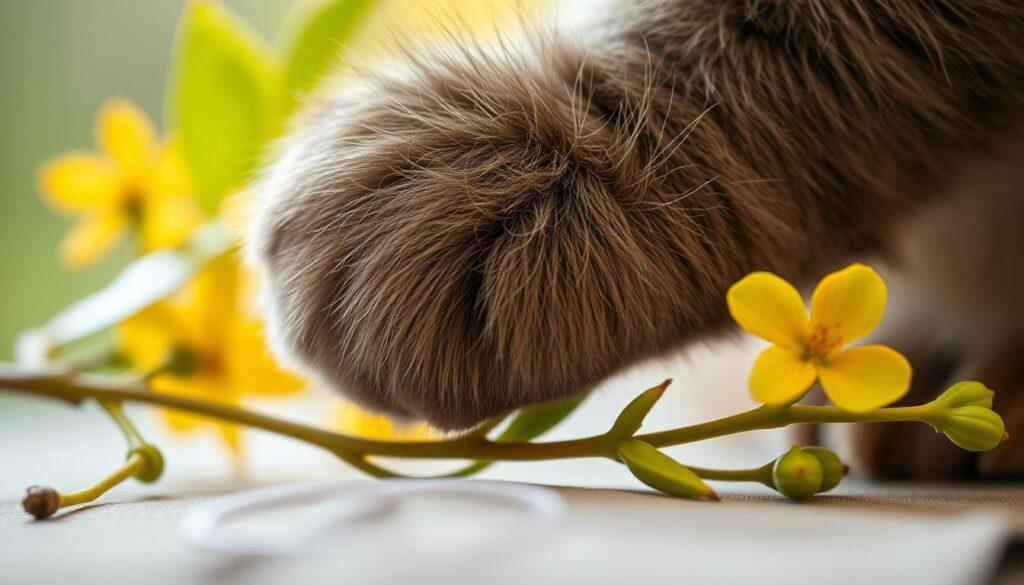
Potential Anti-Inflammatory and Astringent Benefits
The plant’s natural compounds could reduce swelling in superficial wounds. Some practitioners report success with:
- Dabbing diluted solutions on flea bite hotspots
- Cooling mild sunburn with chilled witch hazel pads
- Managing post-grooming razor burn in shaved areas
One study published in Veterinary Dermatology noted tannins’ ability to constrict blood vessels in animal trials. However, these findings involved controlled lab conditions, not household use.
Safety Concerns: Toxic Ingredients and Irritation Risks
Over 90% of commercial witch hazel products contain isopropyl alcohol or synthetic fragrances. These additives can trigger:
- Skin peeling from excessive dryness
- Vomiting if licked during grooming
- Neurological issues from prolonged exposure
Research confirms that even small amounts of alcohol-based toners may prove toxic to felines. Safer alternatives like non-toxic plants often better suit sensitive pets.
| Benefício | Impacto potencial | Risco |
|---|---|---|
| Reduces swelling | Temporary relief | Alcohol poisoning |
| Dries oozing wounds | Faster scabbing | Skin cracking |
| Calms itching | Less scratching | Accidental ingestion |
Veterinary dermatologist Dr. Ellen Choi warns: “What soothes human skin might chemically burn a cat’s thinner epidermis.” Always patch-test solutions and monitor for lethargy or appetite changes afterward.
Can I Use Witch Hazel on My Cat? Expert Guidance and Veterinary Advice
When considering natural remedies for feline care, professional guidance becomes non-negotiable. Veterinary dermatologists universally stress that human-grade products require rigorous evaluation before feline application. This precaution prevents accidental harm from hidden toxins or improper dosing.
Consulting Your Veterinarian Before Use
Schedule a veterinary consultation to assess three critical factors:
- Existing allergies or skin sensitivities
- Potential interactions with current medications
- Suitability of specific witch hazel formulations
Dr. Alicia Torres, a board-certified feline specialist, notes: “Many skin issues mimic each other in cats. What appears as a simple rash could signal systemic illness requiring lab tests.”
Proper Topical Application and Product Considerations
Select alcohol-free solutions labeled for veterinary use. Approved products typically feature:
- Organic witch hazel extract (≤10% concentration)
- No synthetic fragrances or preservatives
- Third-party safety certifications
Apply diluted mixtures with sterile cotton balls, avoiding the eyes and nose. Restrict applications to 1-2 times daily for ≤3 days unless directed otherwise. Immediately discontinue use if licking occurs or redness worsens.
| Safe Practice | Risk Factor |
|---|---|
| Vet-approved dilution | Undiluted solutions |
| Spot testing | Full-body application |
| Alcohol-free formulas | Isopropyl additives |
Monitor closely for 48 hours post-application. Seek emergency care if vomiting, lethargy, or appetite changes develop. For persistent conditions, explore professional grooming alternatives rather than prolonged home treatments.
Alternative Remedies and Safe Grooming Practices for Cats
Feline companions require tailored solutions that respect their delicate biology. While witch hazel poses risks, numerous vet-approved options address skin concerns without harmful side effects.
Exploring Other Natural Remedies and Herbs
Catnip stands out as a multi-purpose herb. Its leaves soothe minor irritations when brewed into cooled tea compresses. Valerian root offers calming properties during stressful grooming sessions. For dry skin, colloidal oatmeal baths provide relief without stripping natural oils.
Omega-3 supplements derived from fish oil support coat health. These fatty acids reduce inflammation better than alcohol-based toners. Always choose products formulated specifically for felines; human-grade items often contain toxic essential oils.
Using Cat-Safe Products for Grooming and Skin Care
Hypoallergenic shampoos with aloe vera and chamomile outperform generic human formulas. Brands like Vet’s Best and Earthbath avoid parabens and synthetic dyes. Their pH-balanced solutions mimic cats’ natural skin acidity.
| Human Product Risk | Cat-Safe Alternative | Principais benefícios |
|---|---|---|
| Fragranced lotions | Unscented moisturizing sprays | Prevents allergic reactions |
| Medicated wipes | Water-based grooming cloths | Reduces ingestion risk |
| Antiseptic creams | Veterinary hydrogel | Promotes wound healing |
Dr. Naomi Sutton advises: “Pet owners should prioritize products with the National Animal Supplement Council seal.” For resistant felines, professional grooming techniques minimize stress while addressing coat issues safely.
Check labels for certification codes like NASC or USDA Organic. When in doubt, consult your veterinarian about herbal alternatives to witch hazel. Remember – what works for dogs often harms cats due to metabolic differences.
Conclusão
Natural solutions like witch hazel present both opportunities and challenges for feline care. While its anti-inflammatory properties show promise for minor skin irritations, risks like alcohol toxicity and ingestion hazards demand caution. Veterinary consultation remains non-negotiable before testing any human-grade formulas.
Key considerations include using only alcohol-free, vet-approved products and avoiding sensitive areas. Monitor pets closely for signs of discomfort, such as excessive licking or problemas digestivos. Safer alternatives like oatmeal baths or omega-3 supplements often provide relief without hidden dangers.
For those proceeding with witch hazel, proper application methods and diluted solutions are critical. Always prioritize products designed for cats – their unique metabolism and grooming habits require specialized formulations.
Ultimately, informed decisions guided by professional advice protect your pet’s health. Explore vet-recommended grooming practices and herbal alternatives tailored to feline biology. When balancing natural remedies with safety, knowledge proves more valuable than convenience.
PERGUNTAS FREQUENTES
Is witch hazel toxic to cats?
Witch hazel (Hamamelis virginiana) contains tannins and alcohol in some formulations, which can irritate feline skin or cause vomiting if ingested. Always check labels for alcohol-free options and consult a veterinarian before use.
What skin conditions might witch hazel treat in cats?
Veterinarians occasionally recommend diluted, alcohol-free witch hazel for minor inflammation or surface irritation due to its astringent properties. Never apply it to open wounds or sensitive areas without professional guidance.
Can witch hazel replace prescribed feline skincare products?
No. While witch hazel has benefits for humans, cats require species-specific treatments. Brands like Vet’s Best or Burt’s Bees offer pet-safe alternatives formulated to avoid irritation or toxicity risks.
What symptoms indicate a negative reaction to witch hazel?
Watch for redness, excessive licking, diarrhea, or vomiting. These may signal irritation from tannins or alcohol. Discontinue use immediately and contact a vet if symptoms persist.
Are there safer herbal alternatives for cat grooming?
Yes. Chamomile, calendula, or colloidal oatmeal baths are gentler options. Products like Earthbath Hypoallergenic Wipes or TropiClean Spa Grooming Foam are vet-approved for sensitive feline skin.
How do I safely clean my cat’s paws with witch hazel?
Mix 1 part alcohol-free witch hazel with 3 parts water. Apply sparingly using a soft cloth, avoiding the face and mucous membranes. Rinse thoroughly and dry to prevent licking or ingestion.