
Did you know shelters report 50% lower adoption rates for black cats compared to other felines? This startling statistic reveals how centuries-old superstitions still shape lives today. For over 3,000 years, these animals have symbolized everything from divine protection to omens of misfortune. If you’re wondering what to do if a black cat crosses your path, it depends on where and when you encounter them.
Ancient Egyptians revered all cats as sacred beings. Killing one carried the death penalty. But by the Middle Ages, European folklore linked dark-furred felines to witchcraft. Pope Gregory IX’s 1233 “Vox in Rama” decree even portrayed them as demons in disguise. This association still lingers. Research from Cats Protection shows that 13% of Americans consider crossing paths with a black cat bad luck.
Cultural perspectives vary wildly. In Japan and the UK, the same encounter is seen as a sign of good fortune. Scottish tradition holds that a stray black cat at your door signifies that wealth is on the way. Meanwhile, Italian sailors once kept them aboard ships for protection during storms.
Modern studies reveal tangible consequences. October adoption rates drop 20% in some U.S. shelters due to Halloween fears. Yet social media trends now celebrate these sleek animals, with #BlackCatAppreciation posts garnering millions annually. Our guide separates fact from fiction while offering practical steps for those encountering these misunderstood creatures.
Key Takeaways
- Black cat symbolism spans 3,000+ years across multiple civilizations
- Cultural interpretations range from prosperity signs to witchcraft associations
- Adoption rates drop 50% compared to other cats due to lingering myths
- 13% of Americans still view them as bad luck omens
- Modern movements challenge stereotypes through education and celebration
The History and Folklore of Black Cats
For millennia, these dark-furred felines have swung between sacred symbols and feared omens. Their story spans continents and belief systems, revealing humanity’s evolving relationship with nature’s mysteries.
Ancient Egyptian Reverence and Prosperity
In 3000 BCE Egypt, sleek felines represented divine power. The goddess Bastet, depicted as a lioness or cat, governed protection, fertility, and childbirth. Families kept cats as living good luck charms, believing they attracted wealth. Killing one, even accidentally, meant execution.
Archaeologists found mummified cats buried with jewelry in royal tombs. “Cats weren’t just pets,” explains historian Janet Rae Orth. “They embodied cosmic balance between humans and gods.”
Medieval European Myths and Witchcraft
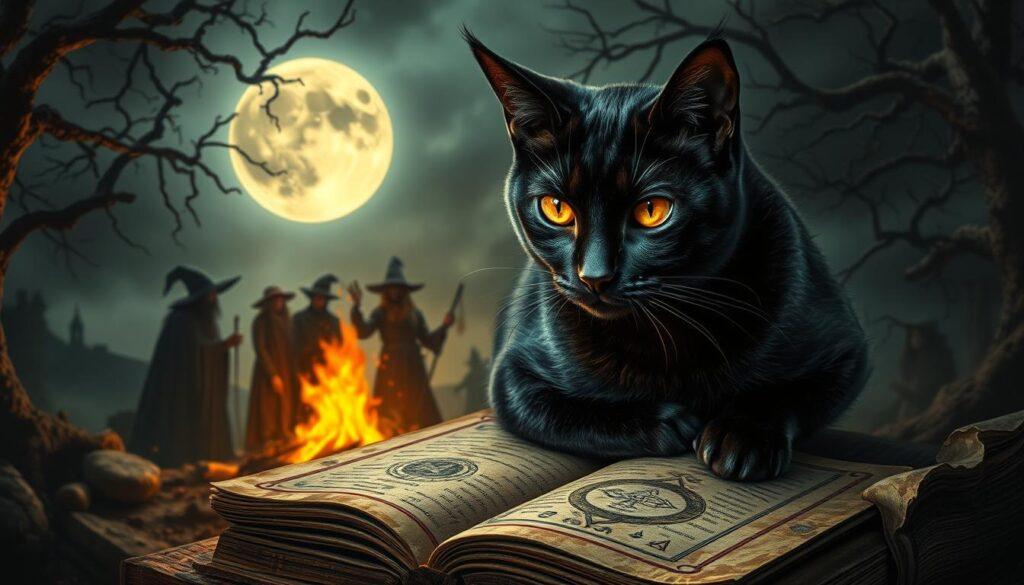
The 13th century brought drastic changes. Pope Gregory IX’s Vox in Rama (1233) declared cats, especially black ones, were witch familiars. This Church-endorsed superstition led to mass feline killings during plague outbreaks. Ironically, scholars like Mary Buckingham note this likely worsened the Black Death by allowing rat populations to thrive.
| Period | Region | Symbolism | Impact |
|---|---|---|---|
| 3000 BCE – 300 CE | Egypt | Divine protection, fertility | Legal protections, burial rituals |
| 1200 – 1600 CE | Europe | Witchcraft, bad luck | Mass killings, plague spread |
By the 1600s, English folklore claimed witches could transform into cats nine times. Sailors bucked the trend; many kept them aboard ships as storm predictors and rodent hunters.
What to do if a black cat crosses your path
When sleek shadows dart across sidewalks, many instinctively hold their breath, but why? This moment offers a chance to rewrite old narratives. Historian Janet Rae Orth suggests viewing such encounters as “portals for self-reflection” rather than ominous signs.
Practical Steps to Embrace the Moment
Pause and breathe deeply. Ancient Mediterranean traditions advised counting to thirteen to break negative energy cycles. Today, mental health experts recommend a simplified version:
- Acknowledge the encounter without judgment
- Visualize releasing outdated fears
- Set an intention for a renewed perspective
TikTok users have reinvented these rituals through trends like #CatCrossingChallenge, where participants share uplifting stories after feline meetings. One viral video shows a nurse adopting a stray she met mid-shift, calling it “the best career luck charm.”
Cultural Rituals and Positive Perspectives
Scottish lore recommends spitting three times for protection, a practice modernized as whispering affirmations. Italian traditions suggest tossing salt over your shoulder, now reinterpreted as scattering birdseed for good karma. Research shows these adaptations help people reclaim personal power.
Pop culture flips the script, too. Hocus Pocus 2 features a magical black cat aiding heroes, while shelters use Halloween to highlight their charm. As Orth notes: “How we frame these moments shapes our reality more than any ancient decree.”
Understanding Black Cat Symbolism and Superstitions
Across continents, the sleek silhouette of a dark-furred feline sparks wildly different reactions. In Japan and the United Kingdom, spotting one signals good fortune; British theaters even keep them backstage for luck. Meanwhile, French traditions recommend kindness toward these animals brings prosperity, while Indian lore views them as protective spirits.
Modern perspectives blend old beliefs with new understanding. Though Cats Protection research shows lingering adoption challenges, social media movements now celebrate their mystique. Studies reveal no correlation between feline encounters and actual misfortune; the real “bad luck” lies in outdated fears limiting human compassion.
These creatures embody cultural contradictions. Medieval Europe’s witch hunts contrasted with sailors who valued their storm-predicting skills. Today, they’re both Halloween icons and #LuckyCharm TikTok stars. As historian Mary Buckingham notes: “They’re living paradoxes, feared and adored across eras.”
By recognizing superstitions as mirrors of human imagination, we reclaim their power. Whether seen as omens or allies, black cats remain simply animals deserving of homes, not horror stories.
