
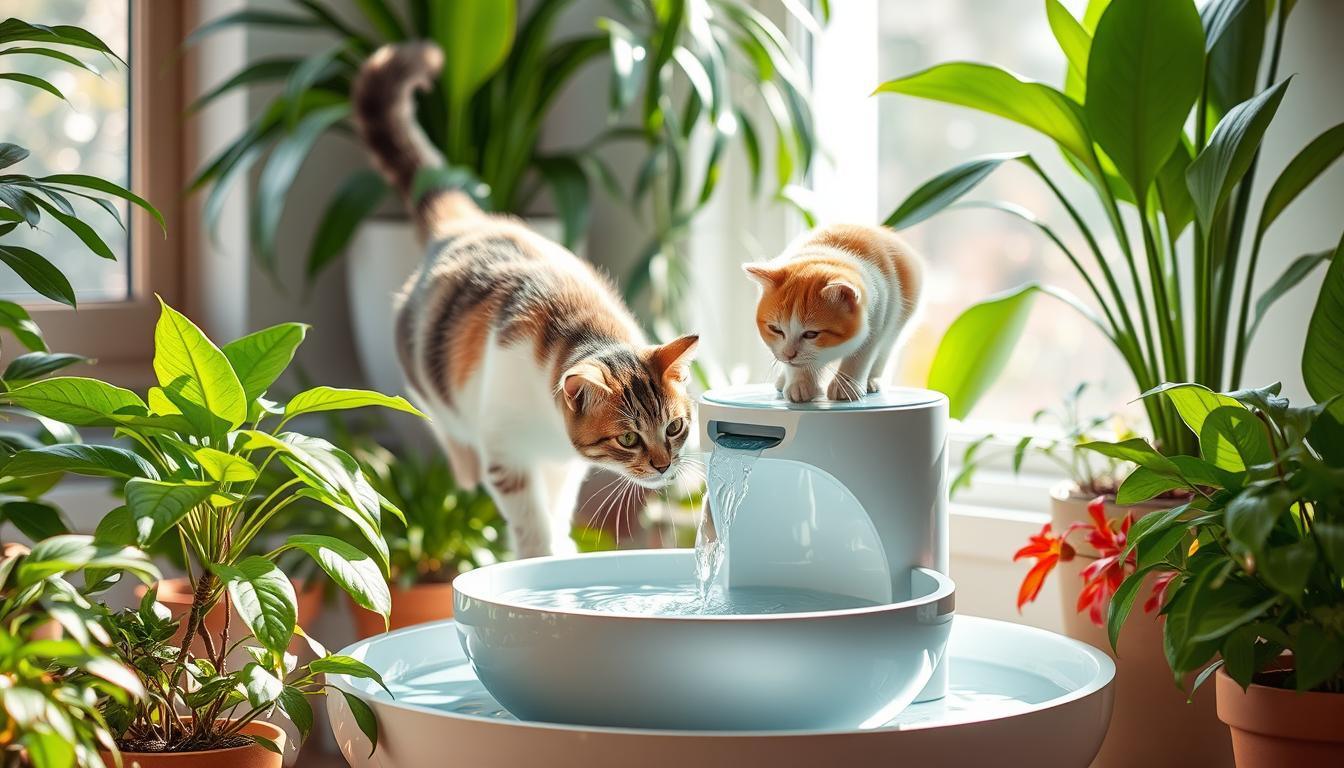
Did you know cats in the wild prefer moving water because it’s safer and cleaner than still water? As a pet owner, keeping your cat hydrated is crucial to preventing health problems such as urinary tract infections and kidney disease. Instead of using old water bowls, cat water fountains are a popular choice for keeping your pet healthy and hydrated.
Cat water fountains offer a constant flow of fresh, filtered water. This is more appealing to cats because it mimics their natural instincts32. Many fountains have filters that clean the water, making it taste and smell better for your cat’s sensitive nose3. These fountains encourage your cat to drink more, helping to prevent dehydration and improve overall health3.
However, with more people using cat water fountains, concerns arise about their safety and effectiveness. In this guide, we’ll examine the benefits, types, and safety aspects of feline hydration solutions. We aim to help you choose the best option for your furry friend.
Key Takeaways
- Cat water fountains encourage increased water intake, helping to prevent dehydration and urinary tract issues.
- Filtered water fountains remove impurities, providing your cat with fresh, clean water.
- Regular cleaning and maintenance are essential to prevent bacterial growth and ensure your pet’s water source remains safe.
- Select high-quality materials, such as ceramic or stainless steel, to minimize potential health risks associated with plastic fountains.
- Consider the size, capacity, and filtration system when selecting a cat water fountain to meet your pet’s specific needs.
Benefits of Cat Water Fountains
Cat water fountains are great for keeping cats hydrated and healthy. They provide a steady flow of fresh water. This encourages cats to drink more, which is key to their health.
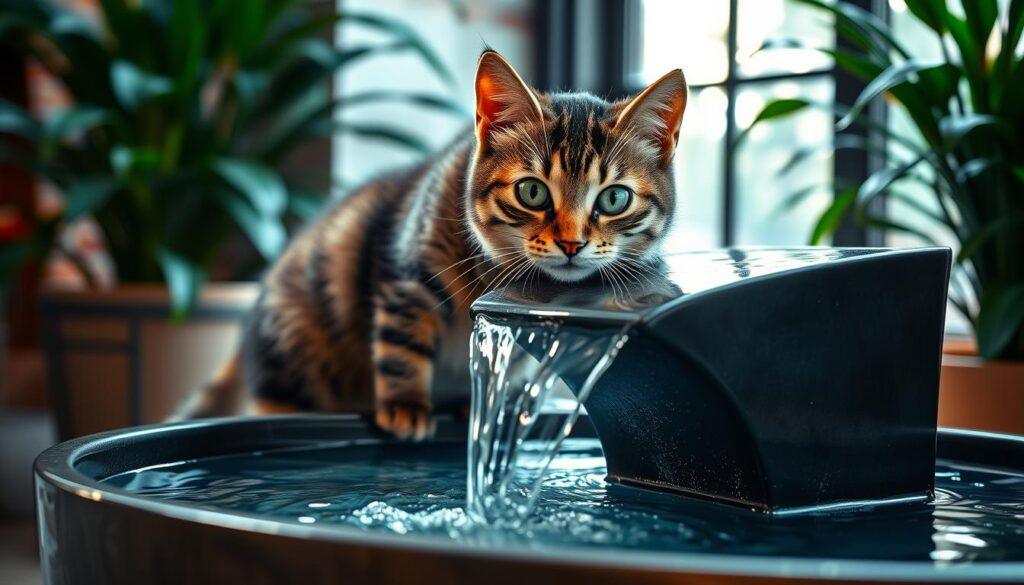
Encourages Cats to Drink More Water
One big plus of cat water fountains is that they make cats want to drink more. The Humane Society of Huron Valley says cats like moving water because it’s safer and cleaner. These fountains make water seem like a stream, making it more appealing to cats5.
Not drinking enough water can cause health problems in cats, like urinary tract issues5. Dehydration can also lead to kidney disease. Drinking fountains help keep cats hydrated, reducing the risk of dehydration and its related problems45.
Provides Fresh, Running Water
Cat water fountains provide cats with fresh, clean water at all times. Cats often prefer running water to still water in bowls. These fountains also cut down on the chance of water getting contaminated compared to bowls5.
Some fountains have filters to remove toxins from tap water. This makes the water safer for cats to drink. Most fountains have filters to clean the water5.
Reduces Stress and Anxiety in Cats
The sound and sight of running water can calm cats. It reminds them of rain or streams from their natural habitat. Cat water fountains also entertain and mentally stimulate cats, encouraging them to play with the water5.
| Benefit | Description |
|---|---|
| Increased Water Intake | Encourages cats to drink more water, preventing dehydration and related health issues |
| Fresh, Clean Water | Provides a continuous supply of fresh, filtered water, reducing the risk of contamination |
| Stress Reduction | The sound and sight of running water can be soothing, helping to reduce stress and anxiety in cats |
In summary, cat water fountains are very beneficial. They help cats stay hydrated and healthy. They also reduce stress and anxiety in cats, making their environment more peaceful.
Types of Cat Water Fountains
Choosing the right cat water fountain involves considering the various materials available. Each has its own benefits and drawbacks. Ceramic, stainless steel, and plastic are standard, with ceramic and stainless steel being easier to clean and more hygienic6. Let’s explore each type to help you choose the best for your cat.
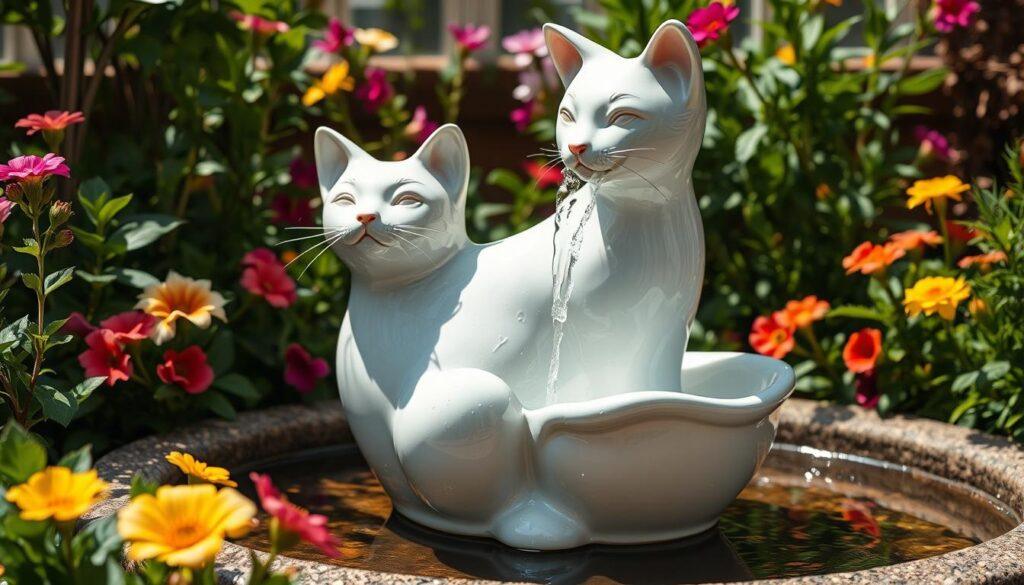
Ceramic Cat Water Fountains
Ceramic fountains, like the Cepheus 360, are a favorite among pet owners. They have a 71-ounce capacity and offer multiple drinking options. In a New York lab and home test, the Cepheus 360 was the top choice7. Ceramic fountains are heavy and stable, reducing the risk of tipping. They are also easy to clean, which is essential for your cat’s health6. However, they can be pricey and may chip or crack if dropped.
Stainless Steel Cat Water Fountains
Stainless steel fountains, such as the Pioneer Pet Raindrop Fountain, are durable and hygienic. They have a 60-ounce capacity and a quiet design. The Pioneer Pet fountain was the best stainless steel choice in the test7. Stainless steel fountains resist bacterial growth and are easy to clean and maintain. The PetSafe Drinkwell 360 offers adjustable water flow and a one-gallon capacity7. But, they might cost more than plastic fountains.
Plastic Cat Water Fountains
Plastic fountains, such as the Petlibro Water, are lightweight, affordable, and available in a variety of colors and designs. The Petlibro Water was the best plastic fountain, but specific data were not provided7. Plastic fountains are cheaper than ceramic or stainless steel, making them more accessible. However, they can scratch easily, which can harbor bacteria. Some cats may also get chin acne from plastic allergies6.
| Fountain Material | Advantages | Disadvantages |
|---|---|---|
| Ceramic | Heavy and stable, easy to clean, hygienic | More expensive, may chip or crack |
| Stainless Steel | Durable, resistant to bacteria, easy to clean | More expensive than plastic |
| Plastic | Lightweight, affordable, various colors and designs | Prone to scratches, may cause chin acne in some cats |
The best cat water fountain depends on your needs, budget, and preferences. By examining the various materials and options, you can select one that keeps your cat healthy, hydrated, and content.
Are Cat Water Fountains Safe?
Keeping your cat fountain clean is key to safety. These fountains help cats drink more water and maintain their health. However, it’s essential to be aware of the risks associated with prolonged use and electrical safety.
Cat water fountains are safe if you clean them often. Clean the fountain weekly and change filters as the maker suggests (every 2-4 weeks to 1-3 months)8. This prevents bacteria from causing health problems, such as skin allergies.
Importance of Regular Cleaning and Maintenance
Cleaning your pet fountain is vital for your cat’s health. Plastics can hold bacteria, so you need to clean them often. Scratches on plastic can let bacteria grow, causing problems like chin acne in cats9.
Choose fountains made from high-quality materials, such as high-fired ceramic or stainless steel. These are less likely to have harmful bacteria.
Potential Risks of Continuous Use
Constant access to water can help your cat stay hydrated and better absorb nutrients. However, be mindful of your cat’s water intake. Some cats might play with the water, leading to overhydration if not watched.
Be sure to monitor your cat’s water intake and adjust the fountain as needed.
Electrical Safety Considerations
Choose electric fountains with safety features, such as automatic shut-off. Always follow the maker’s setup and maintenance tips. Check the fountain’s electrical components regularly for damage.
Keep the fountain away from other electrical items and water to avoid the risk of short circuits.
By selecting a suitable cat water fountain, cleaning it regularly, and prioritizing electrical safety, you can help keep your cat healthy and hydrated. This way, you’ll also avoid risks from constant use.
Choosing a Safe and Reliable Cat Water Fountain
When selecting a safe cat fountain, consider a few key factors. Your cat needs clean, fresh water. A good, reliable pet water dispenser is made from high-quality fountain materials. These should be durable, easy to clean, and effective at preventing bacterial growth. Cats often don’t drink enough from bowls, so a fountain is a great way to get them to drink more10.
Look for High-Quality Materials
Choose a fountain made from safe, non-toxic stuff like stainless steel, ceramic, or BPA-free plastic. The Rellaty Automatic Pet Water Fountain is a good pick because it’s durable and easy to clean11. Ceramic fountains, like the PetSafe Drinkwell Pagoda Pet Fountain, are also beneficial because they’re easy to clean and help prevent bacterial growth. However, remember that plastic fountains can harbor bacteria, so clean them regularly.
Consider the Size and Capacity
The right fountain size depends on the number of cats you have and their drinking habits. Big fountains, like the Zeus H2Eau Drinking Fountain, hold 6 L and need less filling11. Smaller ones, like the Ciays Cat Water Fountain, hold 2.5 L and are better suited for single cats or small spaces.
Opt for Models with Built-in Filtration Systems
Built-in water filtration systems are a must. They clean the water, making it taste better and stay fresh. Fountains with filters, like the Catit Flower Cat Fountain, remove toxins from the water. Tap water can contain toxins, so a filter is essential. Change the filter every 2 to 4 weeks for best results11.
| Fountain | Capacity | Filters Included | Filter Lifespan | Main Material |
|---|---|---|---|---|
| Rellaty Automatic Pet Water Fountain | 3.2 L | 4 | Change every 2 to 4 weeks | Stainless steel |
| Zeus H2Eau Drinking Fountain | 6 L | 1 | Change monthly | BPA-free plastic |
| Ciays Cat Water Fountain | 2.5 L | 3 | Change every 2 weeks | Plastic |
| Catit Flower Cat Fountain | 3 L | 1 | Change monthly | BPA-free plastic |
| PetSafe Drinkwell Pagoda Pet Fountain | 2.07 L | 1 | Change every 2 to 4 weeks | Ceramic |
| Pioneer Pet Big Max Ceramic Drinking Fountain | 3.75 L | 1 | Change every 2 to 4 weeks | Ceramic |
By considering these points and selecting the right fountain, you can ensure your cat has access to clean water. This is key to their health and happiness. Features like filters, noise levels, and design are essential for a healthy drinking spot for your cat10.
Proper Placement and Installation of Cat Water Fountains
Choosing the right spot for your cat’s water fountain is key. It ensures they always have water nearby and stay hydrated. Most fountains require electricity, so choose a place close to an outlet. Consider the location of the outlets when selecting a spot for your cat’s fountain.
The fountain’s size matters too. Big ones need more room, while small ones fit better in tight spaces13. Placing the fountain in a quiet spot can encourage cats to drink more. Cats like calm places for their water, away from loud things13.
Don’t put the fountain near loud things like washing machines or TVs to keep cats calm13. Cats like watching outside, so near windows is good for them13.
For easy access, place the fountain in a central spot, especially in large homes or those with multiple cats. Bright spots help cats drink more and indicate when they need water. Consider whether your cat prefers to drink from a high location or on the floor when placing the fountain.
Keep the fountain away from food and litter to stay clean and avoid mess13. A water fountain can make a fun and stimulating place for your cat to drink13. Cats might like running water because it reminds them of rain or streams.
Consider the fountain’s material – ceramic, stainless steel, or plastic – for durability and ease of cleaning. Drinking enough water helps your cat digest more effectively and absorb nutrients. Using a fountain can help your cat get more nutrients because they drink more.
Maintaining Your Cat Water Fountain
To keep your cat healthy and hydrated, it’s key to keep their water fountain well-maintained. Regular cleaning, filter replacement, and water level checks are essential. Every pet owner should focus on these steps.
Regular Cleaning and Disinfecting
Cleaning your cat’s water fountain weekly is essential. It stops harmful bacteria from building up, which can harm your pet’s health15. Deep cleaning is also needed to keep your pet safe and prevent bacteria from growing16.
Take apart the fountain and wash all parts with warm, soapy water. Make sure to clean well in crevices and corners where bacteria hide. After rinsing, let the parts dry before reassembling the fountain.
Replacing Filters as Recommended
It’s best to change the fountain’s filter every 2-4 weeks for optimal performance and water quality. Many fountains have filters that clean tap water, making it safe for your cat to drink17. Always follow the manufacturer’s instructions for changing the filter to keep your cat’s water clean and fresh.
Don’t run a cat water fountain without a filter. The filter keeps the water clean and stops contaminants from building up17.
Monitoring Water Levels and Refilling as Needed
Check the water level in your cat’s fountain often and refill it when needed. This prevents the pump from drying out and getting damaged. Keeping your cat hydrated is crucial for their health, as it helps with digestion and nutrient absorption and maintains their skin and coat health.
But don’t overfill the fountain. Water leaks can occur if there’s too much water.
Also, be aware of any signs of wear, damage, or issues. Look for:
- Weak water flow
- Unusual noises
- Water not staying clean despite regular cleaning17
- Cracks or leaks in the fountain16
Address these issues promptly to ensure your cat’s fountain remains safe and functioning correctly. By following these cleaning and maintenance tips, you can help your cat stay healthy, hydrated, and happy.
Alternatives to Cat Water Fountains
While cat water fountains are popular, they may not be suitable for every cat or home. Fortunately, there are alternative methods to keep your cat’s water fresh. Let’s look at some cat water alternatives and their benefits.
Traditional Water Bowls
Traditional pet water bowls are a common and affordable choice. They come in many sizes, materials, and designs. This makes it easy to find one that fits your cat’s needs and your home.
These bowls are easy to use and don’t need electricity. But they need to be cleaned and refilled often. This keeps the water fresh and prevents bacteria18.
Automatic Water Dispensers
Automatic water dispensers for cats are another good option. They refill the bowl when the water level gets low. This ensures your cat always has fresh water.
These dispensers come in different sizes, from 60 oz to 168 oz18. They don’t have the appeal of running water, but they provide clean water without constant refilling.
When selecting an automatic water dispenser, consider the material, size, and ease of cleaning. The PetSafe Drinkwell Pagoda Ceramic Fountain holds 70 ounces, and the Pioneer Pet Raindrop Fountain holds 60 ounces. Prices range from $19.95 to $74.9518.
It’s key to clean your cat’s water source regularly. Use white vinegar weekly to keep it clean. Some cats may take time to adjust to new dispensers, so be patient and encourage them.
By choosing the right alternative, you can ensure your cat stays hydrated and healthy. Think about your cat’s preferences and your home’s needs.
Conclusion
Cat water fountains can help your cat drink more water. This is good for their health and hydration. When selecting a fountain, consider the material, size, and ease of cleaning.
Make sure the fountain is safe and easy to use. Please don’t leave it on all the time to avoid electrical problems20.
Fountains are great because they keep water flowing, which cats prefer over still water. But you can also use water bowls or automatic dispensers. It depends on what your cat likes and what works for your home.
Change the fountain’s filter often to keep the water clean22. You should do this every 2-4 weeks for optimal results. For a fountain that’s easy to clean and lasts a long time, check out the Petmate Deluxe Fresh Flow Fountain.
The key is to always have fresh, clean water for your cat. This keeps them healthy and happy. By focusing on safety and hydration, your cat will stay well for many years.
FAQ
Are cat water fountains safe for pets?
Yes, cat water fountains are safe for pets if used and maintained correctly. It’s key to clean them regularly to prevent bacterial and slime buildup. Also, watch your cat’s water use and check for any electrical issues.
What are the benefits of using a cat water fountain?
Cat water fountains help cats drink more water. They provide a constant supply of fresh, clean water. This can also help reduce stress and prevent health issues such as urinary tract infections.
What types of cat water fountains are available?
You can find cat water fountains made from ceramic, stainless steel, and plastic. Ceramic ones are heavy and stable. Stainless steel ones are durable and effective in fighting bacteria. Plastic ones are lightweight and inexpensive, but they may scratch easily.
How often should I clean my cat’s water fountain?
Clean your cat’s water fountain every time you refill it, usually once a week. Take it apart and wash all parts with warm, soapy water. Be sure to clean the corners where bacteria often hide. Rinse it well and let it dry completely before reassembling.
What should I consider when choosing a cat water fountain?
Look for a fountain that’s safe and reliable. Choose ones made from high-quality materials that are easy to clean and effective at fighting bacteria. Consider the fountain’s size and the amount of water it holds, keeping your cats’ needs in mind. Also, pick ones with filters and quiet pumps.
Where should I place my cat’s water fountain?
Select a spot that’s easily accessible for your cat but not too crowded. Ensure it is placed on a stable surface and kept away from electrical outlets. Some cats like quiet places to drink, so choose a calm room.
How often should I replace the filters in my cat’s water fountain?
Change the filters in your cat’s fountain every 2-4 weeks, as recommended by the manufacturer. This keeps the water fresh. Check the water level daily and refill it as needed to prevent damage to the pump.
Are there alternatives to cat water fountains?
Yes, you can use traditional water bowls or automatic water dispensers instead. Bowls are inexpensive and straightforward, but they require more frequent cleaning. Dispensers provide fresh water without running water, but they may not be as appealing to cats.
Source Links
- Are Plastic Water Fountains Safe for Cats? – https://www.uahpet.com/blogs/hydration-health/are-plastic-water-fountains-safe-for-cats?srsltid=AfmBOopiwYGu9kpJ0u8ZVxvLCjdSk2fYnpEphiwz0HJRGsaL4OBVdFkG
- Is it Safe to Leave Your Cat Water Fountain On All the Time? – https://www.uahpet.com/blogs/hydration-health/is-it-safe-to-leave-your-cat-water-fountain-on-all-the-time?srsltid=AfmBOooglwYjOCORA7x4UhyTYaAxJ4PUSzu1LE3XPKECJUbYTirX-Uol
- The Benefits of Cat Water Fountains – https://www.getsetpet.com/blogs/pet-portal/the-benefits-of-cat-water-fountains?srsltid=AfmBOorQf81314ENQeXQNtuZEkfzEO0XC1JivV7zLmdhMQFrEuIBTeSw
- Buying a Cat Water Fountain? Here’s What to Know – https://www.zoetispetcare.com/blog/article/buying-cat-water-fountain
- We Tested Over 20 Cat Water Fountains And These 8 Are The Best – https://www.thesprucepets.com/top-automatic-water-dispensers-554933
- Is your fountain pet safe? Find out what makes a fountain pet safe – https://thirstycatfountains.com/is-your-pet-fountain-safe/
- Cat Water Fountain: A Guide to Choosing the Best One for Your Feline Friend – https://www.uahpet.com/blogs/hydration-health/cat-water-fountain-a-guide-to-choosing-the-best-one-for-your-feline-friend?srsltid=AfmBOoop1xwEZfQnNoSkXxtdvSgbtupere3fzZG8d-x1I840lhIxHHZ9
- 7 Best Water Fountains for Cats and Dogs, Tested by Our Pets – https://www.goodhousekeeping.com/life/pets/g43612600/best-water-fountain-for-cats/
- Best Placement for a Cat Water Fountain: Expert Advice on Ideal Locations – https://www.uahpet.com/blogs/hydration-health/best-placement-for-a-cat-water-fountain-expert-advice-on-ideal-locations?srsltid=AfmBOopAQZgCwtcIWGkjMx–f73BE1QZymu1dcPv19tn3-xxdJsMca_B
- Cat Water Fountain Maintenance 101: Best Practices in 2023! – https://petlibro.com/blogs/all/cat-water-fountain-maintenance-101
- Is it Safe to Leave Your Cat Water Fountain On All the Time? – https://www.uahpet.com/blogs/hydration-health/is-it-safe-to-leave-your-cat-water-fountain-on-all-the-time?srsltid=AfmBOorpo-Rk8L–WBdn_LJvawvMqtuO2Jj6MPOc-o8TmLdL_kcAEtLK
- Cat Water Fountains & Automatic Water Dispensers | PetSafe® – https://www.petsafe.com/shop/cat/fountains-and-feeders/fountains/
- Is it Safe to Leave Your Cat Water Fountain On All the Time? – https://www.uahpet.com/blogs/hydration-health/is-it-safe-to-leave-your-cat-water-fountain-on-all-the-time?srsltid=AfmBOoohIEXES4hYkBARX2U7ORHtyQR2Wf4J6sfBr90_XwxjRCc-Iaml
- Do Vets Recommend Water Fountains for Cats? – https://petlibro.com/blogs/all/do-vets-recommend-water-fountains-for-cats
- Why Your Cat Needs a Water Fountain: Top Benefits | Petmate Cat Water Fountains | Petmate – https://www.petmate.com/blogs/petmate-academy/why-your-cat-needs-a-water-fountain?srsltid=AfmBOorVLAxFfE9cS2EiHHelsomyFii-kil4HPlUnmkXS0NrRU3jvd6B