
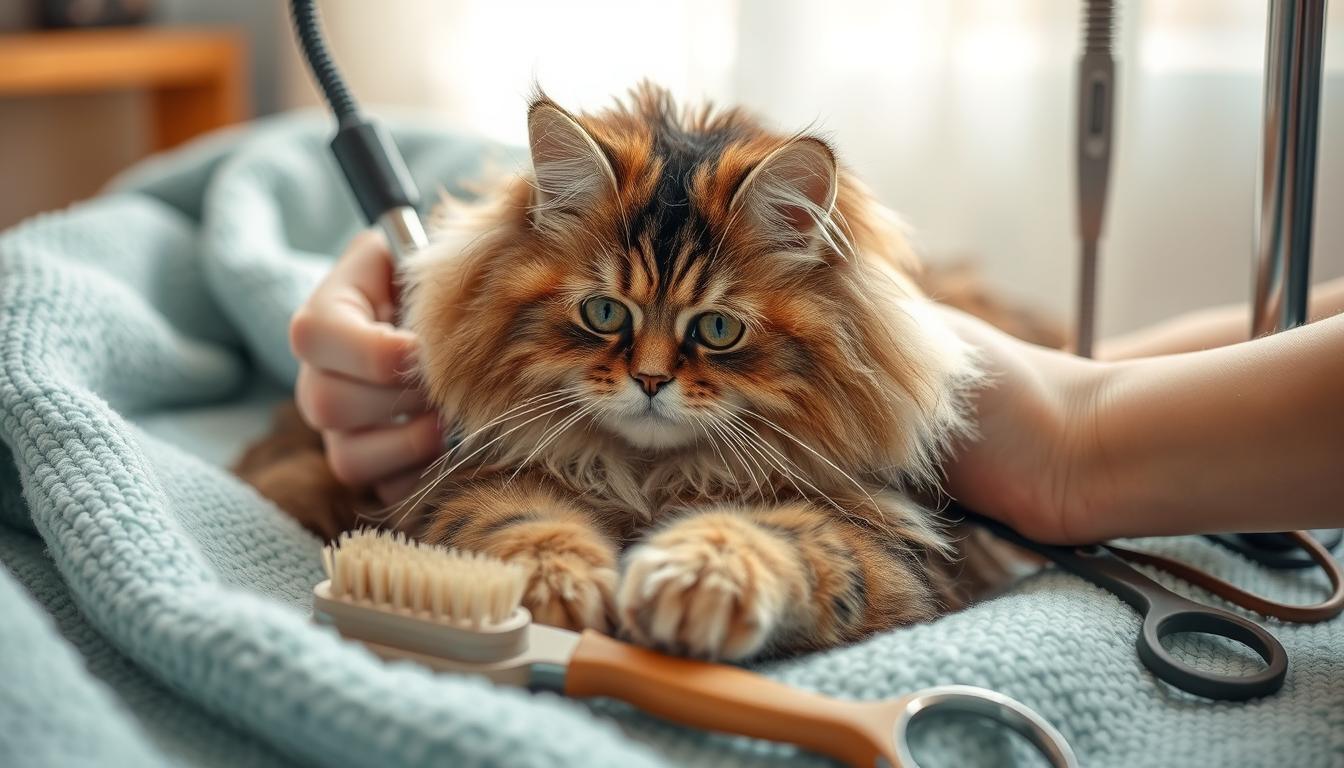
Did you know that 90% of cats show stress signs during grooming1? This fact highlights the importance of understanding how cats behave and using safe methods to handle them during grooming. Learning how to restrain a cat for grooming helps keep both the cat and the groomer safe, making the experience better for everyone.
Most cats like being handled confidently during grooming1. But every cat is different. Their mood can change based on their age, health, and past experiences. By adjusting grooming to fit each cat and using the proper restraints, we can make grooming less stressful and safer.
There are many ways to keep cats safe during grooming. Using towels gently, air muzzles or e-collars when necessary, and grooming loops and carriers can also be helpful. Having someone to help with holding the cat is also very helpful, especially for anxious or aggressive cats.
Key Takeaways
- Understand feline behavior and temperament to tailor the grooming process accordingly.
- Create a calm environment and gather the necessary tools before beginning the grooming session.
- Employ safe restraint methods such as towels, air muzzles, e-collars, grooming loops, and carriers.
- Adapt restraint techniques to meet the individual needs of each cat and consider seeking assistance when necessary.
- Consult with a veterinarian for guidance on the best restraint and grooming techniques for your cat.
Understanding Feline Behavior and Temperament
To make grooming a positive experience for cats and their owners, it’s key to understand cat behavior. Knowing how cats react to grooming helps groomers make the process more comfortable. This way, both cats and their owners enjoy the grooming session.
Recognizing Different Cat Temperaments
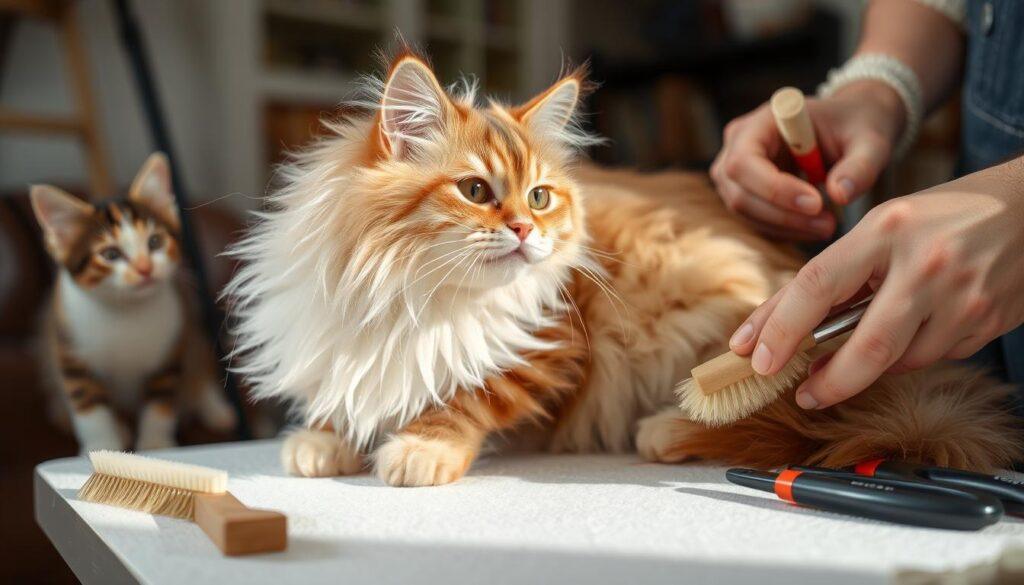
Cats come in many different temperaments, shaped by their breed, age, and health. For instance, some breeds like Siamese and Burmese cats tend to chew compulsively, known as pica2. Knowing these traits helps groomers adjust their methods. Older cats, especially those around 19 years old, need extra care and gentleness during grooming.
Factors Influencing Cat Behavior During Grooming
Several things can affect a cat’s behavior during grooming. Their health, past experiences, and stress from their environment play significant roles. Groomers need to keep the environment calm and peaceful to avoid aggression2. Male cats may also show signs of urinary tract infections through inappropriate urination or spraying, requiring careful attention during grooming2.
| Factor | Influence on Cat Behavior |
|---|---|
| Breed | Certain breeds may have specific grooming needs or behavioral traits |
| Age | Elderly cats may require extra patience and gentleness |
| Health Conditions | Medical issues can impact a cat’s tolerance for grooming |
| Past Experiences | Negative grooming experiences can lead to fear or aggression |
| Environmental Stressors | Unfamiliar surroundings or loud noises can cause anxiety |
Importance of Tailoring the Grooming Process to Each Cat
Every cat is different, and their behavior is influenced by many factors. Groomers need to adjust their techniques for each cat. This may involve changing the grooming environment, utilizing specific tools, or handling them differently. For example, while muzzling is sometimes needed, most cats dislike it, so groomers should look for other ways to restrain them.
By understanding cat behavior and tailoring grooming to each cat, groomers can create a safer and more positive experience. As more groomers focus on low-stress handling, it’s clear that the cat’s well-being is key to successful grooming.
Preparing for Safe and Stress-Free Cat Grooming
For cat grooming tips, a calm space is key. Pick a small room with closed doors and windows. This helps your cat feel safe and keeps distractions away. Brush your cat’s coat 1-2 times a week for their skin health4.
Long-haired cats like Persians or Maine Coons need more grooming. Their coats are dense and can mat easily.
Creating a Calm Environment
To calm your cat during grooming, play soft music or use pheromone diffusers. Speak softly and give treats to make grooming positive. Regular grooming keeps your cat looking good and healthy, preventing health issues6.
Gathering Necessary Grooming Tools and Supplies
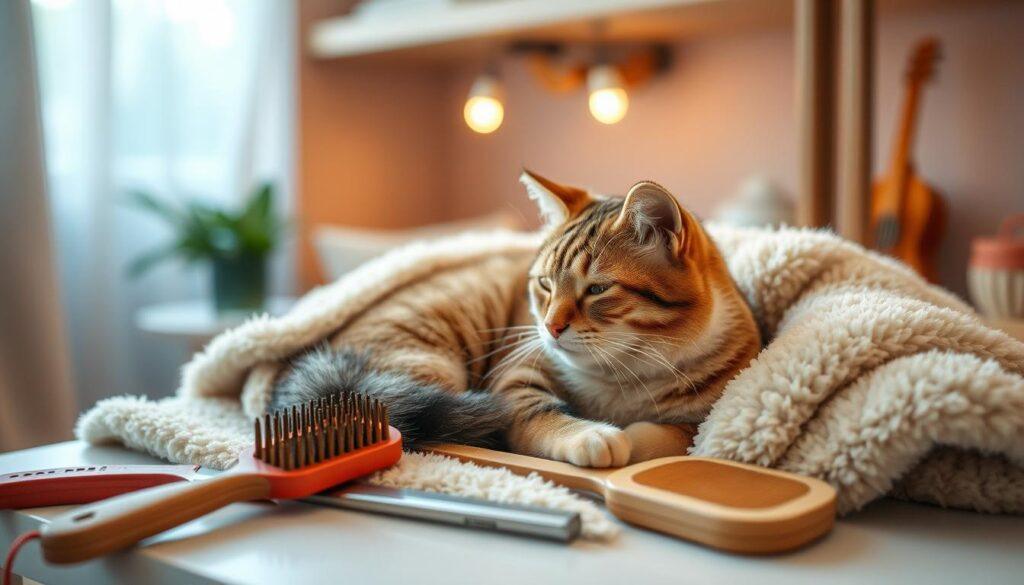
Get all grooming tools and supplies ready before starting. You’ll need:
- Brushes and combs for your cat’s coat
- Nail clippers for cats
- Ear cleaner and cotton balls
- Towels for gentle restraint and drying
- Treats for positive reinforcement
Choosing the proper grooming tools is crucial. Use soft-bristle brushes, rubber mittens, wide-toothed combs, or slicker brushes for your cat’s coat6. Senior cats or overweight cats may need extra help with grooming.
The key to successful cat grooming is patience, understanding, and tailoring the process to your cat’s individual needs and temperament.
By following these pet grooming best practices and understanding your cat’s behavior, grooming can be a safe and stress-free experience. Cats of all ages and breeds can get skin problems, especially young, old, or stressed cats4. Regular grooming keeps your cat healthy and looking great.
Safe and Effective Cat Restraint Methods
When it comes to cat handling for groomers, using safe and effective restraint is key. It makes sure both the cat and the groomer have a stress-free time. Different methods are most effective based on the cat’s personality and the specific grooming task.
Using Towels for Gentle Restraint
Wrapping a cat in a towel is a simple yet effective way to restrain them safely. It gives them a sense of security and comfort, helping them relax during grooming7. Towels can also distract or gently hold a cat in place while grooming specific areas.
Employing Air Muzzles and E-Collars
For cats that might bite, air muzzles and e-collars are suitable for protection. They let the cat see and move a bit, but still keep them safe. It’s essential to introduce these tools slowly and with positive rewards to make the cat comfortable with them.
Proper Use of Grooming Loops and Carriers
Grooming loops help keep a cat in place, but they should never be around the neck alone. A safer option is a figure-eight loop around the neck and behind the front legs. Carriers can also help keep a cat secure or supported during grooming.
The Role of Assistants in Cat Grooming
A well-trained assistant is invaluable in cat grooming. They can help with holding, distracting, and checking if the cat is comfortable. The groomer and assistant need to communicate well to avoid accidents and make sure the cat has a good experience8.
| Restraint Method | Best Used For | Key Points |
|---|---|---|
| Towels | Calming, gentle restraint | Wrap snugly, use as a distraction |
| Air Muzzles/E-Collars | Bite prevention | Introduce gradually, allowing visibility |
| Grooming Loops | Securing the cat in place | Use a figure-eight loop, not just a neck loop |
| Carriers | Containment, support | Utilize for specific tasks |
| Assistants | Restraint, monitoring | Clear communication is key |
The goal of safe cat restraint methods is to make grooming a positive and stress-free experience. This strengthens the bond between the cat and its owner7. By choosing the proper techniques for each cat and focusing on their comfort, groomers can make sure everyone has a good experience.
How to Restrain a Cat for Grooming
Grooming a cat can be challenging, especially since many people think it’s not necessary. But, cats really do need help for good grooming. To make grooming safe and stress-free, knowing how to handle cats and adjust restraint methods is crucial.
Techniques for Holding and Supporting Cats During Grooming
When grooming a cat, it’s essential to hold them right and keep them comfortable10. Using different parts of your body can make cats feel safer and more supported. Getting cats used to grooming tools can also help them get used to grooming.
Tools like grooming mittens or rubber brushes are gentler and might be better for some cats10. A grooming spray can also help remove loose hairs10.
Safely Scruffing a Cat When Necessary
Most cats don’t like being held or carried. Scruffing should only be used when it’s really needed to avoid bites or to calm a cat quickly. When scruffing, make sure to support the body to avoid hurting them.
“Scruffing should only be used as a last resort and with great care to ensure the cat’s safety and comfort.”
Adapting Restraint Methods to Individual Cat Needs
About 95% of cats don’t mind grooming, but some can be very aggressive10. Some breeds, like Chinchilla Persians, might even howl when touched gently10.
To handle these challenges, groomers can use different restraint methods, such as:
- Wrapping cats in a towel for grooming
- Using cat muzzles to keep them calm
- Having another person help with grooming
| Cat Temperament | Suitable Restraint Method |
|---|---|
| Calm and cooperative | Gentle handling and support |
| Fidgety or anxious | Towel wrap or grooming loop |
| Aggression or biting | Air muzzle or e-collar (with caution) |
Adapting restraint methods to each cat’s individual needs is key to ensuring a safe and successful grooming experience.
Handling Aggressive or Anxious Cats During Grooming
When grooming cats, patience and understanding are key. Cats spend a lot of time grooming themselves. But some may only tolerate a few minutes of grooming. It’s essential to be friendly and firm, never using force or fear.
Each cat is unique, so grooming needs to be tailored to their individual needs. Anita Kelsey, a mobile cat groomer, specializes in grooming all types of cats. She uses low-stress techniques12. Finding a quiet space for grooming is crucial for nervous cats.
Dealing with aggressive or anxious cats requires rewards and confidence. Start grooming cats early to help them get used to it. If a cat gets too stressed or aggressive, stop grooming. In some cases, sedation might be needed12.
Pet grooming best practices mean knowing when a cat is too anxious. Look for signs of severe anxiety and seek vet help. Matted fur may need professional trimming to avoid pain for the cat. Anita Kelsey, who focuses on one client a day, is great for tough cases12.
“No archaic face muzzles or restraints are used during grooming sessions, instead, compassionate low-stress handling techniques are applied.” – Anita Kelsey, cat behaviour counselor and expert in low-stress cat grooming12
Alternative Grooming Options for Difficult Cats
Some cats are hard to groom, especially those with long hair. They can get mats and tangles if not brushed often13. Shy cats or those who have endured negative grooming experiences might steer clear of it altogether13. For cats with arthritis, grooming can be a painful challenge, making the process difficult13.
Cats require assistance to maintain their coat and overall health. A good grooming kit is key, with tools like brushes and shampoos.
Considering Sedation or Medication for High-Stress Cats
For cats that become extremely stressed during grooming, there are alternative methods. Professionals, such as groomers or veterinarians, can help with severe mats. In some cases, a vet might suggest sedation to make grooming safe and comfortable.
Discussing Grooming Challenges with Veterinarians
It is essential to discuss grooming challenges with your veterinarian. They can offer advice and suggest grooming methods that work for your cat.
| Grooming Challenge | Potential Solution |
|---|---|
| Matted or tangled fur | Apply olive oil to the mat and gently work it out15 |
| The cat dislikes brushing | Use grooming gloves or provide treats during brushing |
| Aggressive behavior during grooming | Consult with a veterinarian for sedation or medication options |
Using olive oil to fix mats needs room-temperature oil. Be ready for oil spills on surfaces where your cat sleeps15. Positive rewards can help pets feel better about grooming15.
Understanding your cat’s needs and working with vets can help. This way, you can overcome cat grooming challenges and keep your cat healthy and groomed.
Conclusion
Grooming your cat at home needs patience, understanding, and the proper techniques. This ensures a safe and stress-free experience for both you and your cat. By knowing your cat’s temperament and tailoring grooming to them, you can make grooming sessions calm and positive16.
Having the right tools and supplies is key to a successful grooming session17. This includes gentle cat shampoo, clean water for rinsing, and towels. These items help make grooming easier and more effective.
When grooming your cat, using safe and effective restraint methods is essential. Tools like towels, air muzzles, e-collars, grooming loops, and carriers can keep your cat secure and comfortable. Adapting these methods to your cat’s needs and getting help when needed can make grooming easier16.
For aggressive or anxious cats, grooming needs extra care and consideration. Introduce grooming tools gradually, use positive reinforcement, and provide breaks when necessary. This can help reduce stress and aggression18.
In some cases, grooming may need to be done under sedation or with medication. Talking to your vet can help find the best way to groom your cat16. By following these pet grooming best practices, you can make grooming a bonding experience. This promotes a healthy coat, skin, and overall well-being for your cat.
FAQ
What is the purpose of restraining a cat during grooming?
Restraint during grooming keeps both the cat and groomer safe. Wiggly cats and sharp tools can cause accidents. Proper restraint makes grooming safe and stress-free for the cat.
How can understanding a cat’s temperament and behavior help with grooming?
Knowing a cat’s temperament and health helps groomers tailor their approach. This makes grooming a positive experience for both the cat and the owner.
What should I do to prepare for a successful cat grooming session?
Prepare by choosing a small room and having everything ready. Anticipate your cat’s reaction and be prepared for any situation. Start with a gentle touch to ease your cat’s tension.
What are some safe and effective methods for restraining cats?
Use towels to distract or wrap the cat. Air muzzles and e-collars protect against bites. Grooming loops should not be used around the neck. Carriers can help contain the cat. Always communicate with your assistant to avoid injury.
How can a groomer use their body to help restrain a cat during grooming?
Use different parts of your body to make the cat feel secure. Scruffing is only for emergencies. Always support the cat’s body and adjust methods based on the cat’s behavior.
What should I do if a cat becomes aggressive or anxious during grooming?
Stay friendly and firm, never using force. Rewards and confidence are key. If the cat gets too stressed, stop grooming. Sedation should only be used with a vet’s approval.
What are some alternative grooming options for cats that are difficult to groom?
For tough cats, consider lion cuts or sedation. Always talk to a vet about grooming challenges. They can help find the best solution for the cat’s well-being.
Source Links
- How to Safely Restrain a Cat: Dr. Karyn Shares Her Tips (with Video) – Catster – https://www.catster.com/felines-weekly/how-to-safely-restrain-a-cat-dr-karyns-tips/
- A Beginners Guide to Cat Behavior – https://www.tuftandpaw.com/blogs/cat-guides/beginners-cat-behavior-guide?srsltid=AfmBOoqRtGb5Odn4Ud6dzsv3R1k-IR7xOhZPWoHupnVOe9UjDU8anSTj
- Cat Grooming Tips – https://www.aspca.org/pet-care/cat-care/cat-grooming-tips
- Cat Grooming Tips – https://www.groomersu.com/blog/cat-grooming-tips
- Course Content and Outcomes Guides (CCOG) at PCC – https://www.pcc.edu/ccog/vt/102/
- Grooming Aggressive Cats – https://www.groomarts.com/blogs/2017/grooming-aggressive-cats
- Grooming aggressive or nervous cats – https://www.catbehaviourist.com/blog/stress-free-cat-grooming/
- How to Groom a Cat That Hates It: 8 Vet-Approved Tips – Catster – https://www.catster.com/lifestyle/how-to-groom-a-cat-that-hates-it/
- Oiling Point Of Fur Mats (Using Olive Oil To Remove Clumps Of Matted Fur) – https://www.karikells.com/Petsitter/2017/olive-oil-to-remove-matted-fur/
- (10) Easy Steps for Grooming Your Dog or Cat. | SUPERIOR ANIMAL CLINIC – https://superioranimalclinicvet.com/10-simplified-steps-of-grooming-a-pet-dog-or-cat/
- What if my cat has aggressive behavior? – Charlie’s Grooming Studio – Dog Grooming Services Calgary – https://calgarydoggrooming.ca/what-if-my-cat-has-aggressive-behavior/
