
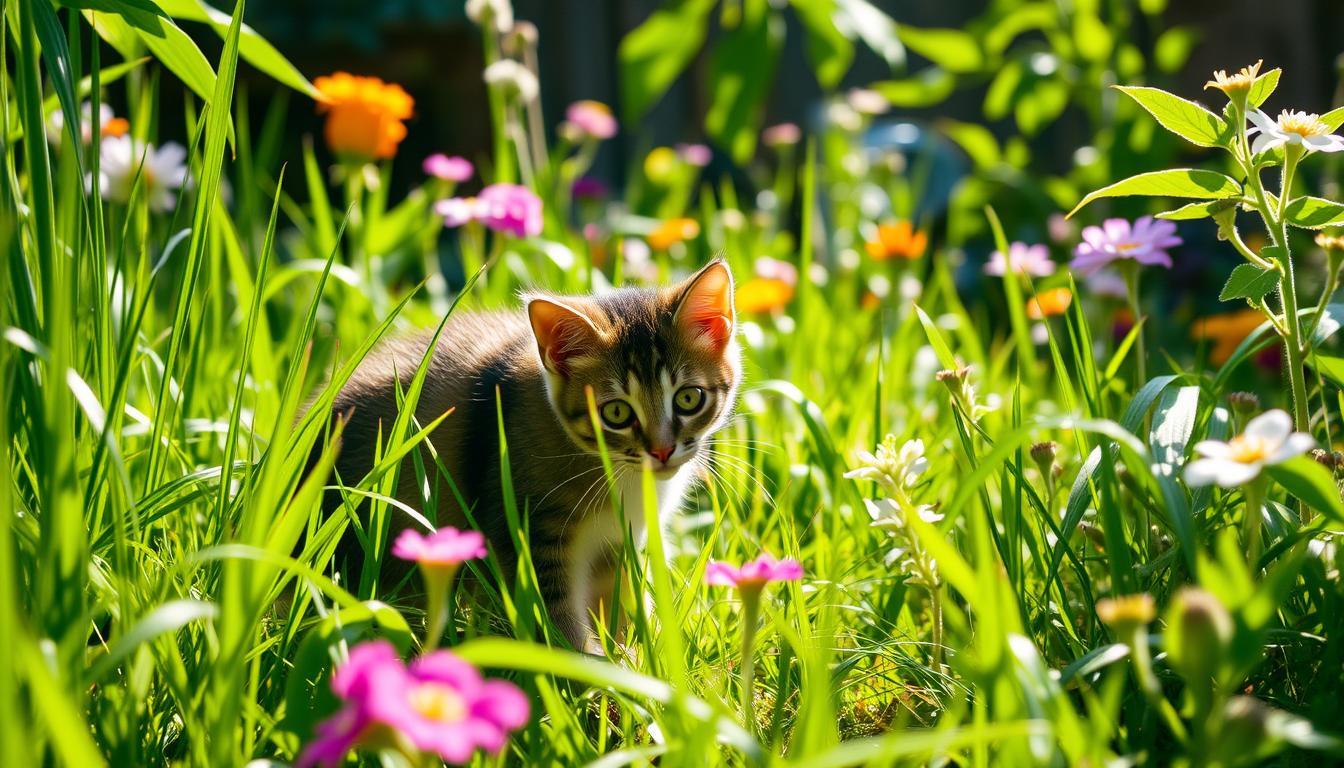
Did you know indoor cats can live up to 15-17 years? But outdoor cats only live 2-5 years1. This gap leads many to wonder, How Long Can an Indoor Cat Survive Outside? They face dangers such as finding food, water, and shelter, and avoiding predators.
Indoor cats are used to regular meals and fresh water. They also love the safety and comfort of their homes. But when they go outside, they face many dangers. These dangers include diseases, parasites, injuries, and extreme weather.
To keep indoor cats safe, owners must be aware of the risks associated with outdoor adventures. They can provide safe outdoor time by using a cat harness and leash, or creating a secure outdoor area. By understanding these challenges and taking steps to protect them, owners can let their cats enjoy the outdoors safely.
Key Takeaways
- Indoor cats live up to 13 years longer than outdoor cats1.
- Indoor cats face many challenges outside, like finding food and water and avoiding predators.
- Outdoor dangers, such as diseases and injuries, can shorten indoor cats’ survival time outside.
- Owners can provide their indoor cats with safe outdoor experiences by supervising them, using harnesses, and creating secure areas.
- Visiting a vet and taking steps like vaccinations and microchipping can protect indoor cats outside1.
Understanding the Challenges of the Outdoors
When an indoor cat goes outside, it faces many challenges of outdoor survival. It must find food and water, as it’s used to getting meals from its owner. Hunting for food can be hard for indoor cats without experience.
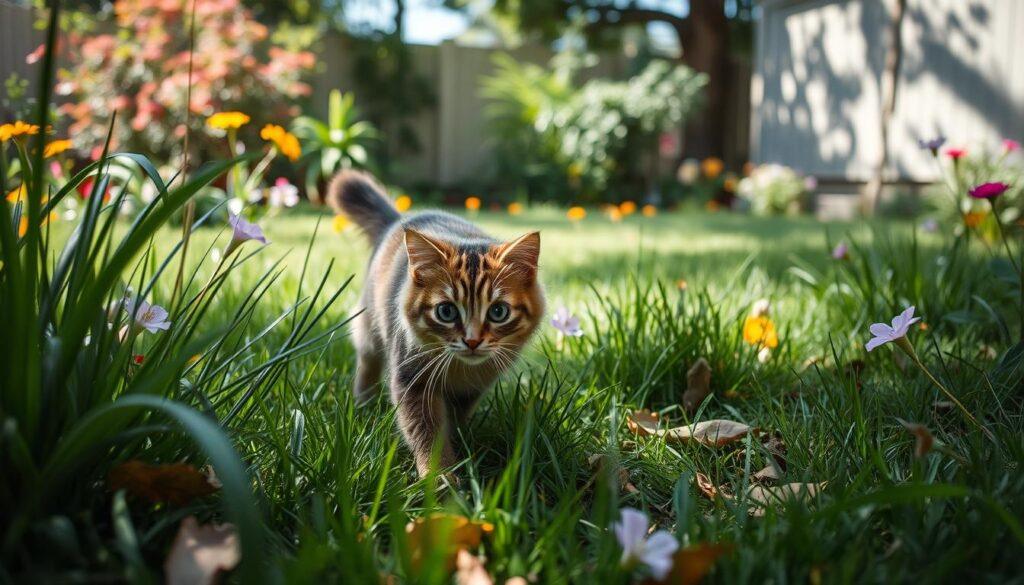
Finding a safe place to hide is also key. Indoor cats may struggle to find suitable shelter from adverse weather conditions and predators.
Food and Water Availability
Indoor cats may struggle to find food and water outside. Community cats get help from people, but indoor cats might not be as lucky4. They need to hunt, which is hard for them without practice.
Finding Shelter
Indoor cats are used to warm, dry homes. Outside, they must find shelter from dangers and the weather. Some people help community cats through shelters, but indoor cats may not have the same level of support.
Avoiding Predators
Indoor cats need to learn to avoid predators outside. They face dangers from other animals and people4. Without experience, they might not know how to stay safe, which could lead to harm.
| Challenge | Indoor Cat’s Experience | Outdoor Cat’s Experience |
|---|---|---|
| Food and Water | Provided by the owner | Must hunt or rely on human feeders |
| Shelter | Comfortable home | Must find suitable protection from elements and predators |
| Predator Avoidance | Limited exposure to threats | Faces dangers from other animals and humans |
Health Risks and Hazards for Indoor Cats Outside
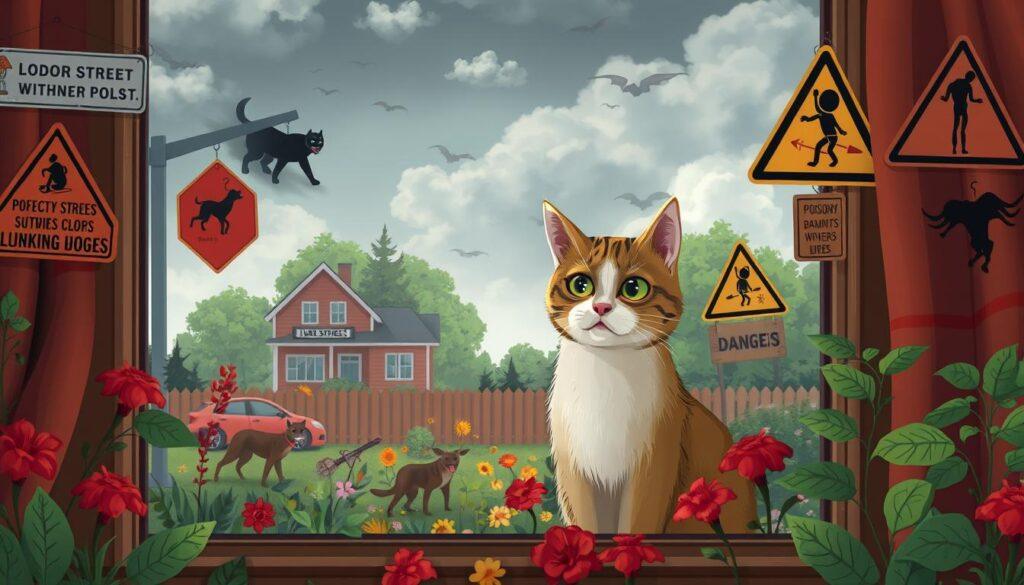
The outdoors might seem exciting to indoor cats, but it’s fraught with dangers. They can contract diseases, pick up parasites, sustain injuries, or encounter harsh weather. These hazards pose serious risks to their health and safety.
Exposure to Diseases and Parasites
Outdoor adventures can expose cats to diseases like feline leukemia and AIDS. They can also get upper respiratory infections and other illnesses. These dangers come from infected cats or contaminated areas5.
Cats outside are also at risk for parasites, such as fleas and ticks. These pests can make cats sick and even spread diseases to people6.
Injuries from Fights or Accidents
Outdoor cats often get hurt in fights or accidents. They might get injured by dogs, wild animals, or even other cats. They also risk being hit by cars because they don’t know how to avoid streets5.
Other dangers include falling from high places, getting stuck, or poisoning from antifreeze. Without quick help, these injuries can be deadly.
Extreme Weather Conditions
Indoor cats aren’t used to harsh weather. Cold can cause hypothermia, and heat can lead to dehydration. They’re also at risk during storms or hurricanes.
These weather events can scare cats, disorient them, and even cause them to get lost.
Cat owners need to be aware of the risks associated with outdoor adventures. They should consider the dangers and take steps to keep their cats safe. Regular vet visits, vaccinations, and a secure outdoor space can help protect cats from the dangers of the outdoors.
Factors Affecting an Indoor Cat’s Outdoor Survival Time
When an indoor cat goes outside unexpectedly, its survival time can change a lot. This depends on individual cat characteristics and environmental influences. These cat survival factors are crucial to determining how long a cat can survive outdoors.
One significant factor is the cat’s health and fitness. A 2013 study in Veterinary Record used “kitty cams” to study 55 indoor/outdoor cats7. It found that healthier, fitter cats do better outside and avoid dangers.
Age also matters a lot. Younger cats are more agile and curious, while older cats face more challenges outside. A cat’s personality and its boldness also play a role. In a UK study, cats lived an average of 14 years, with most being mixed breeds8.
Factors such as predators, busy roads, and access to food and water also impact a cat’s survival. Urban cats face different dangers than rural cats, like more cars and other cats. Indoor cats avoid risks like car accidents and poison9.
“Anecdotal evidence suggests that outdoor cats can face various risks, including encounters with predators, interactions with other animals, car accidents, or getting lost.”7
What the cat has experienced before also matters. Cats that have been outside before or know how to hunt might do better. But even experienced cats can struggle in new places.
| Factor | Impact on Outdoor Survival |
|---|---|
| Health and Physical Condition | Healthier, fitter cats have a better chance of adapting to outdoor life |
| Age | Younger cats are more agile and curious, while older cats may struggle |
| Personality and Temperament | Bolder, more adventurous cats may navigate outdoor challenges better |
| Environmental Factors | The presence of predators, busy roads, and access to resources affect survival. |
| Prior Experiences and Skills | Cats with some outdoor experience or hunting skills may be better prepared |
While some cats may have traits that help them survive outside, it’s essential to remember that outdoor cats typically live 1-5 years. Indoor cats, on the other hand, can live 12-15 years7. Keeping a cat safe and healthy means providing it with a secure and comfortable indoor environment. An all-indoor cat lives an average of 13 to 17 years, while outdoor cats might only live 2 to 5 years9.
Comparing Life Expectancy: Indoor vs. Outdoor Cats
The debate on whether indoor or outdoor cats live longer is key. Knowing what affects a cat’s life can help owners choose the best lifestyle for their pets. Let’s examine the differences in lifespan between indoor and outdoor cats.
Average Lifespan of Indoor Cats
Indoor cats usually live longer than outdoor ones. They can live from 9 to 18 years, with most reaching 14 to 15 years. Indoor cats live between 12 and 18 years11. Several things help them live longer, such as:
- Controlled environment with fewer risks and hazards
- Regular veterinary care, vaccinations, and parasite prevention 10
- Balanced diet and exercise
- Reduced exposure to diseases and parasites
Female cats live longer than males, and spayed or neutered cats live longer than intact ones 10. Mixed-breed cats also live longer than purebreds 10.
Reduced Life Expectancy for Outdoor Cats
Outdoor cats face many dangers that shorten their lives. They live about 4 to 13 years10, or 10 to 15 years11. Their shorter life is due to:
- Exposure to vehicular accidents and other physical dangers
- Increased risk of infectious diseases and parasites
- Conflicts with other animals, including predators
- Extreme weather conditions and environmental hazards
Outdoor cats are at a higher risk due to their tendency to explore. They are also more likely to get fleas, especially during the warmer months.
| Lifestyle | Average Lifespan | Key Factors |
|---|---|---|
| Indoor Cats | 12-18 years | Controlled environment, regular care, reduced risks |
| Outdoor Cats | 4-13 years | Exposure to dangers, diseases, parasites, and environmental hazards |
Cats with both indoor and outdoor access live like indoor cats10. This highlights the importance of providing safe outdoor experiences for cats, such as cat enclosures or supervised time.
The comparison of cat life expectancy between indoor and outdoor lifestyles emphasizes the importance of responsible pet ownership and making informed decisions to ensure the health and well-being of our feline friends.
How Long Can an Indoor Cat Survive Outside?
When an indoor cat goes outside, how long it can survive depends on many things. Some cats may survive for a short time, but most indoor cats aren’t prepared for the outdoors. They face many dangers and challenges.
Short-term Survival Depends on Individual Circumstances
The length of time an indoor cat can survive outside depends on several factors. It needs to find food, water, and shelter. It also has to avoid predators.
Cats with thick coats can adapt to the weather better12. Their weight also plays a role in how they handle cold12. If it gets too cold, they risk getting very sick12.
Getting used to something can take weeks or even months. Start with short times outside, like 10 minutes, and slowly increase it13. Always watch them outside and don’t let them go off alone13.
Long-term Survival is Unlikely Without Intervention
Even if an indoor cat can survive for a short time outside, living there long-term is very hard. Outdoor cats usually don’t live as long as indoor cats. Indoor cats can live up to 17 years or more14.
Outdoor cats are more likely to become sick and contract parasites. They also face dangers from other animals and cars14.
| Factors Affecting Survival | Short-term | Long-term |
|---|---|---|
| Food and Water Availability | Crucial for survival | Consistent access required |
| Shelter | Protection from elements | A safe, stable environment is needed |
| Predator Avoidance | Immediate threat | Constant danger |
| Health Risks | Exposure to diseases | Cumulative effects over time |
| Human Intervention | May prolong survival | Essential for long-term well-being |
In conclusion, while an indoor cat may survive outside for a short time, living there long-term is highly unlikely without assistance. The dangers and challenges of outdoor life are too great. It’s best to keep indoor cats safe at home or provide them with supervised outdoor time.
Tips for Safely Providing Outdoor Experiences
As a cat guardian, you might be thinking about letting your indoor cat go outside. It’s natural to want to give them fresh air and new sights. But it’s essential to keep them safe and healthy.
Indoor cats can live up to 17 years, while outdoor cats live only 2 to 5 years on average. This is because outdoor cats face many dangers. But, with the proper precautions, you can let your cat enjoy the outdoors safely.
Supervised Outdoor Time
One way to let your cat explore outside is by supervising them. You can watch them in a fenced yard or a special outdoor area. Please ensure they don’t get into trouble or attempt to escape.
It’s also essential to give them food and water outside. This helps keep them from hunting in dangerous places15.
Using a Cat Harness and Leash
Another safe way to let your cat explore is by using a harness and leash. This enables you to control where they go and keeps them safe from danger. Start by getting them used to the harness indoors with treats.
Once they’re comfortable, you can take them on walks in quiet, safe places. Always watch them and never leave them alone on a leash16.
Creating a Secure Outdoor Enclosure or Catio
If you want a permanent outdoor space for your cat, consider a catio. A catio is a safe outdoor area just for cats. It allows them to enjoy fresh air and nature without risk.
When building a catio, consider its size, accessibility, and incorporate features that allow pets to hide and climb. A catio keeps your cat safe and happy while they explore15.
“A catio is the perfect way to give your indoor cat a taste of the outdoors without the risks associated with free-roaming. It’s a win-win situation for both you and your feline companion.”
The key to safe outdoor time for your cat is careful planning and supervision. Use strategies like supervised time, harnesses, leashes, and secure enclosures. This way, your cat can enjoy the outdoors while staying safe.
Remember, the decision to let your cat outside depends on your situation and their needs. By focusing on safety, you can ensure your indoor cat stays happy and healthy. For more tips, consult your veterinarian and consider training your indoor cat to remain outdoors.
What to Do if Your Indoor Cat Escapes
Discovering your indoor cat has escaped can be scary. But it’s essential to stay calm and act fast. Most cats tend to hide close to home, so start by searching in the immediate vicinity. They usually stay within a few houses if they can find a hiding spot18.
Search Immediately and Thoroughly
Start looking for your cat right away. Check places like under decks and bushes. Cats have a better sense of smell than humans, so placing their litter box outside might bring them back.
Use sounds like shaking food to get their attention. Food is a big motivator for cats. Most missing cats are found within a week, so there’s a good chance of finding yours in just three days.
Notify Neighbors and Local Shelters
Tell your neighbors about your missing cat. Please provide them with a detailed description and a recent photograph. Posting notices in places like grocery stores can help18.
Also, contact local animal shelters with your cat’s details. Registering your cat on a pet database can help find them faster.
Set Up Humane Traps with Familiar Food
If you can’t find your cat, try using humane traps to catch it. Use their favorite food to bait the traps. Cats start looking for food and water after a few days18.
Live traps are safe and effective. Check the traps often and take your cat to the vet after catching them.
Use online platforms like Craigslist and social media to share your cat’s photo and details18. Social media can help reunite a lost pet with its owner. Make a “Lost Pet” flyer with a clear image and your contact info18. Offering a reward can also help find your cat.
Conclusion
Indoor cat safety is key to keeping our cats happy and healthy. Outdoor dangers, such as car accidents, can shorten a cat’s life if they roams free. But, indoor cats can live up to 20 years or more20. In the US and Canada, approximately 81% of cats stay indoors for safety reasons.
Keeping indoor cats safe from outdoor dangers is crucial. Safe outdoor time, such as using a harness and leash or a secure outdoor area, can be significant. Also, microchipping and wearing an ID collar can help if a cat escapes.
Protecting indoor cats from outdoor risks is vital for their well-being. By understanding these dangers and using prevention strategies, we can ensure our cats live long, happy lives. They can still enjoy the outdoors safely and healthily.
FAQ
What challenges do indoor cats face when venturing outside?
Indoor cats face many challenges outside. They need to find food, water, and shelter. They also have to avoid predators and navigate new places. These challenges can make it hard for them to survive outside.
What health risks do indoor cats encounter outdoors?
Being outside is risky for indoor cats. They can catch diseases and acquire parasites, such as fleas and ticks. They might also get hurt in fights or accidents. Bad weather can also harm them.
How long can an indoor cat survive outside?
The amount of time an indoor cat spends outside varies, depending on its health, hunting habits, and the environment in which it lives. Some cats may thrive outside, but they typically require long-term human assistance.
What is the difference in life expectancy between indoor and outdoor cats?
Indoor cats live longer, from 10 to 20 years. Outdoor cats, however, live only 2 to 5 years. Indoor cats live safer lives, helping them live longer than outdoor cats.
How can I safely provide my indoor cat with outdoor experiences?
To give your indoor cat outdoor time safely, try supervised visits. You can also train them to wear a harness and leash. Alternatively, consider creating a secure outdoor area or catio. These options allow your cat to enjoy the outdoors without risk.
What should I do if my indoor cat escapes?
If your indoor cat gets out, start looking right away. Check nearby spots and tell your neighbors and local shelters. Use social media to spread the word. Setting up humane traps with familiar food can help you find your cat.
Source Links
- https://www.petmd.com/cat/care/can-indoor-cat-be-part-time-outdoor-cat – Can an Indoor Cat Be a Part-Time Outdoor Cat?
- https://www.humanesociety.org/resources/outdoor-cats-faq – Outdoor cats FAQ
- https://www.americanhumane.org/fact-sheet/indoor-cats-vs-outdoor-cats/ – Indoor Cats vs. Outdoor Cats – American Humane
- https://catbehavioralliance.com/outdoor-vs-indoor-cats/letting-your-cat-go-outside/ – Letting Your Cat Go Outside?
- https://ask.metafilter.com/288386/Do-outdoor-cats-eventually-gain-reliable-survival-skills – Do outdoor cats eventually gain reliable survival skills?
- https://www.ncbi.nlm.nih.gov/pmc/articles/PMC9799304/ – Longevity and mortality in cats: A single institution necropsy study of 3108 cases (1989–2019)
- https://cattime.com/cat-facts/health/78-indoor-outdoor-cats – Keeping Your Cat Indoors vs. Letting Them Outside – CatTime
- https://www.embracepetinsurance.com/waterbowl/article/how-long-do-cats-live – How Long do Cats Live? | Understanding the Average Lifespan of Indoor & Outdoor Cats
- https://www.argospetinsurance.co.uk/we-talk-pet/indoor-vs-outdoor-cats-which-is-best-for-you/ – Indoor vs outdoor cats: Which is best for you?
- https://cats.com/can-cats-survive-in-the-cold – Can Cats Survive in the Cold? A Vet Explains – Cats.com
- https://www.hshv.org/how-to-transition-your-cat-to-an-indoor-outdoor-lifestyle/ – How to Transition Your Cat to an Indoor/Outdoor Lifestyle – HSHV
- https://aercmn.com/indoor-cats-vs-outdoor-cats/ – Indoor Cats vs. Outdoor Cats
- https://tractive.com/blog/en/good-to-know/best-tips-for-outdoor-cat?srsltid=AfmBOoqZKZM2YYo8Dz29ZdrEcr-j72eq0Z_r1-66cmgW0epgMc2Lqg7U – 10 Tips For Keeping Outdoor Cats Safe & Healthy
- https://catiospaces.com/catios-cat-enclosures/cat-behavior-enrichment/cat-can-safely-enjoy-time-outside/ – How Your Cat Can Safely Enjoy Time Outside
- https://www.mlar.org/media/1139/lost-my-cat.pdf – PDF
- https://sciencebasedmedicine.org/the-great-outdoors-debate/ – The Great Outdoors (Debate)
- https://www.cabbagetownpetclinic.com/blog/may-2023/indoor-versus-outdoor-cats – Indoor versus outdoor cats
