
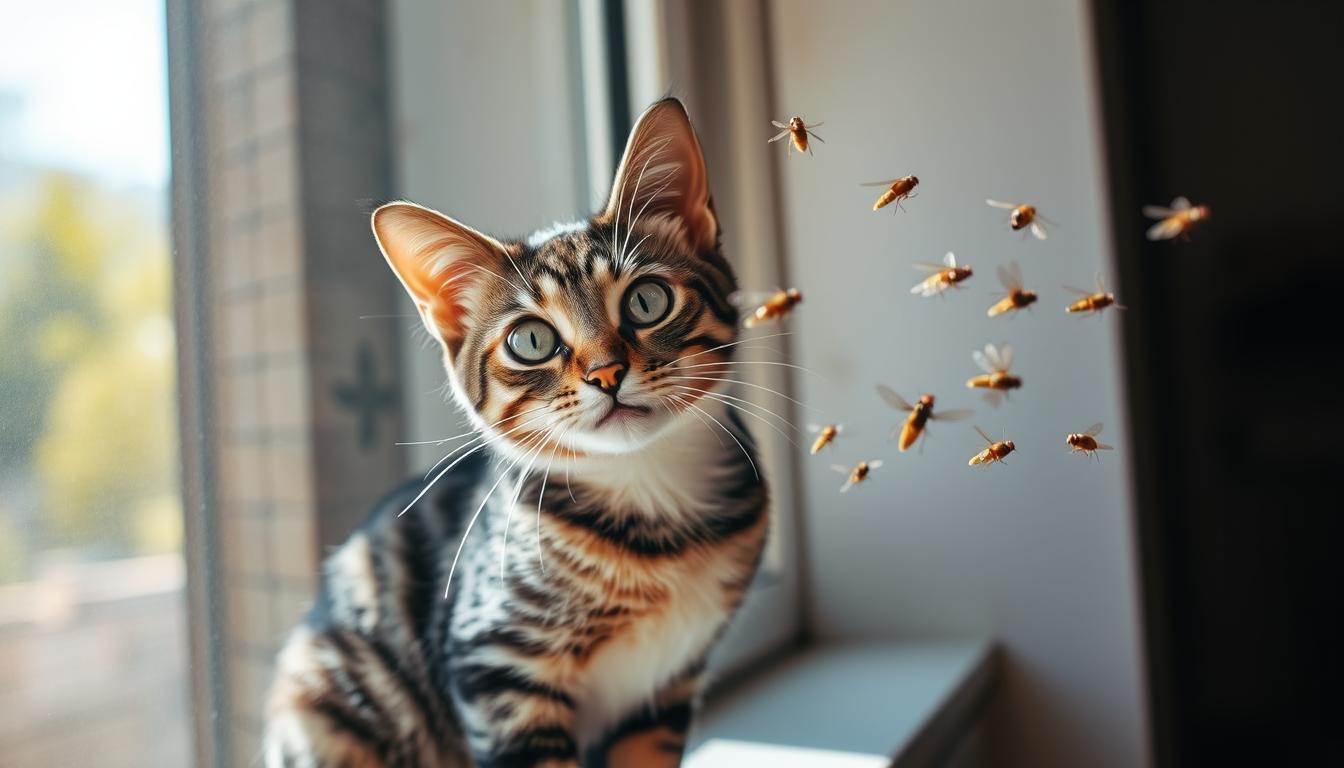

If you’re wondering, “Why does my cat eat flies?” it’s usually because their natural hunting instincts and curiosity are triggered. Small, moving targets like flies activate their prey drive.
Flies can carry diseases and parasites that might harm cats. If your cat eats a fly and acts strangely, see a vet. Eating flies can lead to stomach problems and exposure to harmful chemicals.
To keep your cat safe, offer them fun activities and a balanced diet. Also, make sure their food area is clean. The pet food industry is exploring the use of insects, such as black soldier fly larvae. Insects, like crickets and flies, can be a good protein source for cats, says a study by Ros-Baró M. et al1.
Key Takeaways
- Cats eat flies due to their natural hunting instincts, but continuous consumption may increase health risks.
- Flies can carry diseases and parasites that can harm cats, causing gastrointestinal distress and exposure to toxins.
- Some common insects offer varying levels of protein content, with crickets being high, beetles moderate, and flies low in protein1.
- Cat owners are increasingly accepting insects as a potential ingredient in pet food, especially when informed about the eco-friendly benefits1.
- Providing alternative play activities, a balanced diet, and a clean feeding area can help prevent cats from eating flies.
The Feline Fascination with Flies: A Natural Instinct
Cats are born to hunt, with a deep instinct to chase and catch prey2. This urge comes from their wild ancestors, who needed to hunt to survive. Even though domestic cats are far from their wild roots, they still chase insects like flies.
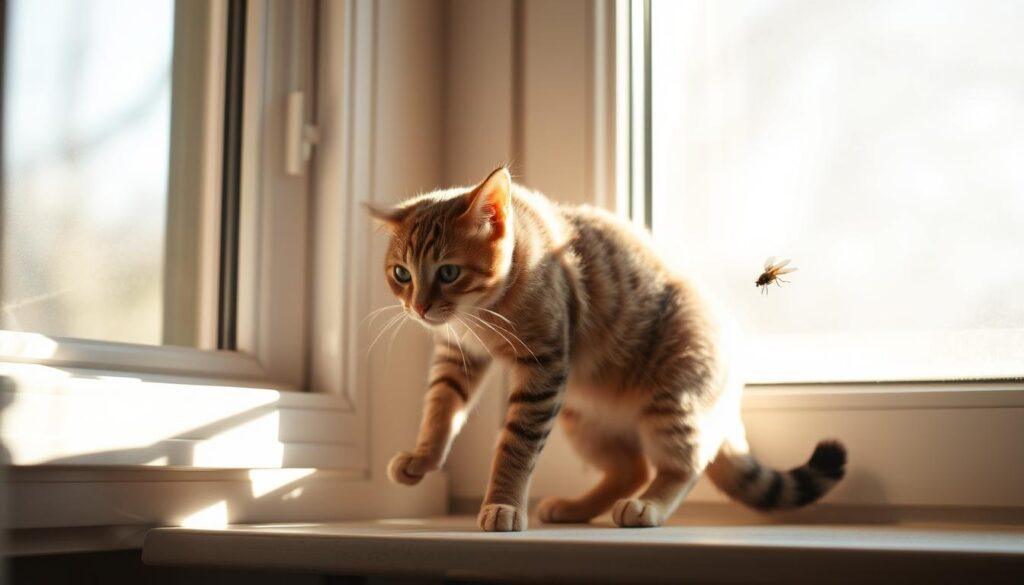
Seeing a fly buzz can make a cat want to hunt. They stalk, pounce, and try to catch it. This isn’t just for house cats; feral cats also hunt insects and other small animals3.
Cat expert Paula Stewart says all domestic cats are great hunters3. Their eyesight and quick reflexes make them perfect for catching prey. When a cat sees a fly, it uses these skills to try to catch it.
Cats chasing flies can be fun to watch. A TikTok video of a cat trying to catch a fly in a washing machine drum has gotten a lot of views3. People love watching cats try to catch insects.
While cats are born to hunt, owners can help them in positive ways. Giving them toys that mimic prey can keep them happy3. Toys that encourage pouncing and kicking are especially good4.
Understanding why cats chase insects is important for understanding their behavior. By giving them the right toys, owners can keep their cats happy and prevent any trouble from their hunting.
Nutritional Value of Flies for Cats: A Closer Look
Flies might not be the first choice for alternative protein sources for cats. Yet, they offer surprising nutritional benefits. Flies have 50% to 75% protein by dry weight. This makes them a good source of protein for cats’ muscle growth and repair5.
Protein Content in Flies
Flies also contain essential amino acids such as lysine and methionine. These are key for cats’ health5. While not a regular part of a cat’s diet, flies can provide a nutritional boost.
Compared to other insects, flies have less protein than crickets but more than beetles5. More cat owners are open to insects in pet food, especially when they learn about their eco-friendly benefits.
Other Potential Nutrients
Flies also have nutrients beyond protein. Chitin in their exoskeletons may help a cat’s gut health5. They also have trace minerals like iron, zinc, and magnesium, and B-complex vitamins important for cats5.
The nutritional value of flies for cats is indeed surprising. However, flies should not be the main source of nutrition. Cats need a balanced diet that meets their specific needs, and canned food alone cannot provide all the necessary nutrients.
| Insect | Protein Content | Other Nutrients |
|---|---|---|
| Flies | 50-75% of dry weight | Chitin, trace minerals (iron, zinc, magnesium), B-complex vitamins |
| Crickets | High | – |
| Beetles | Moderate | – |
Cat owners need to focus on a balanced, species-appropriate diet for their pets. While an occasional fly might not harm and offers some benefits, it should not be a big part of a cat’s diet.
Cats as Natural Hunters: The Thrill of the Chase
Cats are born to hunt, with a deep instinct to chase and catch. This skill was key to their survival in the wild. Even domestic cats keep this instinct alive6. They track, pounce, and use their claws to grab and hold onto prey, showing their natural hunting drive6.
Cats often hunt even when they’re not hungry. They chase toys, insects, or anything that moves. This shows their strong prey drive, no matter if they’re full or not6. This hunting behavior is more common in farm cats, who hunt mice and rats to survive6.
Kittens start learning to hunt through play. This helps them improve their coordination and hunting skills. It also keeps adult cats sharp and fit6. Hunting helps cats mark their territory and keep others away, especially for outdoor cats6.
Cats learn to hunt by watching others and trying new things. They get better with time, using their senses to track prey6. Their hunting skills come from their wild ancestors and what they learn from others6.
Cats use different hunting methods, like pouncing and sneaking up on prey. They are very adaptable and agile in their hunting6. They use their sharp claws and quick reflexes to catch prey, showing their hunting skill6. Even domestic cats play with their prey, like toys, to tire it out and check its health6.
Pet cats hunt for about 3 hours a day, while feral cats hunt for 12 hours7. Cats are more likely to hunt if they only get scraps to eat7. Hungry cats play more intensely with toys that look like prey7. Their drive to hunt is not just about hunger, but also about their natural instincts7.
While most bugs won’t harm cats, some can make them sick. Bugs like fleas and ticks can carry diseases. Regular vet visits and deworming are important for cats that eat bugs1.
Potential Risks of Eating Flies: What Cat Owners Should Know
Cats chasing and eating flies might seem fun, but there are risks. Flies can carry harmful parasites, bacteria, and viruses. These can be dangerous for cats. Even though a cat’s stomach acid can kill most bacteria, it’s still important to watch your pet.
Parasites and Diseases
Cats that eat flies can get parasites and diseases. Flies can carry harmful microbes that cats might ingest. If a cat has stomach problems for more than 24 hours after eating flies, it’s a sign of infection.
Another risk is if flies have been sprayed with insecticides. Cats can get sick if they come into contact with these chemicals. Signs of poisoning include drooling, trouble breathing, or loss of coordination. This needs immediate vet care.
Digestive Issues from Fly Exoskeletons
Flies’ exoskeletons can also upset a cat’s stomach. Eating flies can cause vomiting, diarrhea, and loss of appetite. It’s important to watch your pet to avoid these problems.
To keep your cat safe, stop them from eating flies. Keep your home clean to keep flies away. Wash pet food dishes and clean spills to keep flies off. Use trash cans with lids and screens to keep flies out naturally.
Regular vaccinations, deworming, and flea prevention are key. They help cats fight off diseases, even if they eat flies.
| Risk | Potential Impact | Prevention Measures |
|---|---|---|
| Parasites and Diseases | Gastrointestinal infections, bacterial infections, and protozoan infections | Regular veterinary check-ups, monitoring fly-eating habits |
| Toxicity from Insecticides | Drooling, difficulty breathing, loss of coordination | Using pet-safe bug sprays, organic-based pesticides |
| Digestive Issues from Exoskeletons | Vomiting, diarrhea, and temporary loss of appetite | Limiting fly consumption, keeping a clean environment |
Why Does My Cat Eat Flies? Decoding Feline Behavior
Understanding why cats love to chase flies is key. Cats are born to hunt, and seeing a fly makes them want to chase it. It’s their instinct.
Cats might play with things on tables because they’re bored or need something new to play with. This curiosity also makes them chase bugs. The bugs’ fast moves make cats feel like they’re hunting, which is fun and keeps them active.
Flies might also be a tasty snack for cats. Even though they’re not a big part of a cat’s diet, they do have some protein. Cats might eat non-food items if they’re bored, stressed, or have a mineral deficiency.
While it’s normal for cats to catch flies sometimes, eating too many can upset their stomach. Cats might bring dead bugs to their owners as a way to say hello or thank them. If your cat keeps bringing you dead flies, it’s their way of showing you they care.
Cats often engage in play behavior, such as rolling around on their back, which signifies trust and a desire to engage in playtime with their owners.
To understand your cat, watch how they move. If a cat’s tail is straight up, they’re friendly and ready to play12. A twitching tail means they’re excited to play. A slow swishing tail shows they’re focused and ready for fun12.
By understanding cat behavior, you can make their life more interesting. Give them toys, puzzles, and playtime to keep them busy and happy.
Every cat is different, and their personality and past experiences affect how they behave. Some cats love to chase flies more than others. If your cat seems healthy and happy, don’t worry if they catch a fly sometimes. But if you notice any changes, talk to your vet.
In summary, cats chase flies because it’s in their nature and they’re curious. By understanding why they do this and giving them what they need, you can ensure they’re happy and healthy. With love and understanding, you and your cat can live together in a happy home.
Monitoring Your Cat’s Fly-Eating Habits: When to Be Concerned
Cats love to chase and eat bugs, including flies. This is a natural behavior for them. But it’s important to keep an eye on how many flies they eat. Cats need a lot of protein to stay healthy, and they usually get it by hunting animals.
Some cats might eat insects instead of hunting because of their playful nature13.
When monitoring cats eating flies, look for signs of stomach problems. While eating insects rarely causes harm, fleas can carry tapeworms and make cats anemic13. Also, stinging insects like wasps and spiders are dangerous to cats and should be avoided 14.
Signs of Gastrointestinal Distress
Watch for signs of stomach trouble if your cat eats flies. Anaphylactic reactions in cats include swelling, difficulty breathing, vomiting, and seizures. Other signs of stomach problems might be:
- Loss of appetite
- Lethargy
- Abdominal pain or tenderness
- Constipation or diarrhea
- Blood in the stool
If your cat shows signs of an anaphylactic reaction, get them to the vet right away14. Signs like vomiting a lot, pain, and misery might need vet care with fluids and pain medicine15.
Importance of Regular Veterinary Check-Ups
It’s key to take your cat to the vet regularly, especially if they eat insects. Most pets with stomach blockages do well, depending on the type and size of the blockage. Vets use X-rays to find blockages and might need more tests15.
It usually takes 10-24 hours for something to move through a cat’s stomach, but it can take longer15.
At vet visits, your cat’s health is checked, and they get shots and screenings. Deworming and flea control can also help keep them safe from insects1314.
| Insect Type | Potential Risks |
|---|---|
| Fleas | Tapeworms, anemia |
| Ticks | Lyme disease, ehrlichiosis |
| Bees, Wasps | Allergic reactions, stings |
| Spiders | Venomous bites, allergic reactions |
In summary, while cats eating flies is usually okay, watch for stomach problems. Regular vet visits and preventive care can keep your cat healthy and happy, even if they eat insects.
Alternatives to Flies: Providing Safe and Healthy Snacks for Your Cat
Cats naturally hunt and eat insects like flies. But it’s key to provide them with safe, healthy snacks for their well-being. With over 50% of homes having a cat or a dog, the pet food market has grown significantly. In 2020, it hit USD 125 billion in sales16.
As a cat owner, make sure 90% of your cat’s calories come from balanced food. Only 10% should be from treats and snacks.
When choosing healthy cat treats, opt for low-calorie options. Introduce new treats slowly to watch for any digestive issues. While some insects, like crickets, are safe for cats, not all are. They might harbor parasites or cause stomach problems.
Instead, choose treats made just for cats. They need 26% to 30% protein on a dry basis16.
“Treats are a great way to bond with your cat and provide enrichment, but it’s crucial to choose safe and healthy options that complement their balanced diet.” – Dr. Sarah Johnson, DVM
Here are some tips for giving treats to your cat:
-
- Choose treats made for cats and approved by your vet
- Don’t give more than 10% of your cat’s daily calories to avoid obesity
- Go for low-calorie treats. Be careful of “light” or “lower-calorie” treats, as they might not be much lower in calories
- Use some of your cat’s regular food as treats to keep their diet balanced
- Watch your cat’s behavior and health after trying new treats. Talk to your vet if you see any bad changes
Here’s a list of safe and healthy cat snacks:
| Treat | Benefits | Serving Size |
|---|---|---|
| Freeze-dried chicken | High in protein, low in fat | 1-2 pieces |
| Dental treats | Promotes oral health, freshens breath | 1 treat per day |
| Catnip toys | Provides mental stimulation and exercise | 5-10 minutes of playtime |
| Tuna flakes | Rich in omega-3 fatty acids, supports brain and eye health | 1/4 teaspoon |
By providing your cat with safe, healthy snacks, you meet their hunting needs. Also, keep your home pest-free to avoid harmful insects. Always talk to your vet if you’re worried about your cat’s health or behavior.
Conclusion
In this cat eating flies summary, we’ve looked into why cats hunt insects. Cats are meat-eaters, but flies can provide some nutrients, such as protein and vitamins. Yet flies can also carry harmful germs and diseases, especially if they come from dirty places.
While it’s okay for cats to eat flies sometimes, there are risks. Flies can make cats sick if they’ve been near harmful chemicals. Eating flies can also upset a cat’s stomach, leading to vomiting and diarrhea20.
To keep cats safe, watch for signs they’re catching too many flies. This could mean they’re bored or stressed. Give them healthy food and toys to play with instead of flies20. If your cat seems sick after eating a fly, see a vet right away20.
In summary, it’s key to understand our cats’ hunting nature while also keeping them safe. Clean their food area, give them safe toys, and take them to the vet regularly20. If your cat shows signs of serious sickness from eating flies, get them to the vet fast20. By being informed and caring, we can ensure our cats live happy, healthy lives, even with their fly-chasing habits20.
FAQ
Why do cats eat flies?
Cats eat flies because it’s in their nature. They are drawn to the movement and sound of flying insects. This triggers their hunting instinct, making them chase and catch flies.
Is it safe for cats to eat flies?
While flies are generally safe for cats, there are risks. Flies can carry parasites and diseases. Their exoskeletons might also upset your cat’s stomach if your cat eats too much of them. Always watch your cat when it’s fly-eating, and talk to a vet if you’re worried.
Can eating flies provide any nutritional value for cats?
Flies and other insects can give cats protein and nutrients. But, they shouldn’t be a main part of a cat’s diet. It’s important to feed your cat a balanced diet, as advised by your vet.
How can I stop my cat from eating flies?
It’s hard to stop cats from hunting flies because of their instincts. But you can try to keep flies away. Use screens and pet-safe repellents. Give your cat toys and playtime to keep them busy and happy.
When should I be concerned about my cat eating flies?
If your cat vomits or has diarrhea after eating flies, see a vet. Also, if your cat’s behavior or health changes, check with your vet. This ensures your cat stays healthy and free from parasites.
Source Links
- Is It Safe for Cats to Eat Insects? Exploring the Risks and Benefits – https://www.catsluvus.com/cat-grooming/is-it-safe-for-cats-to-eat-insects-exploring-the-risks-and-benefits/
- 5 Cat Toy Alternatives to Dangerous Things Your Cat Wants to Play With – https://www.petmd.com/cat/5-cat-toy-alternatives-dangerous-things-your-cat-wants-play
- Cat leaves internet in stitches as he falls into washer trying to catch fly – https://www.newsweek.com/cat-tries-catching-fly-funny-video-1797371
- Play with this – not that! How to choose the best cat toys | Burgess Pet Care – https://www.burgesspetcare.com/blog/cat/play-with-this-not-that-how-to-choose-the-best-cat-toys/
- Is it Safe for Cats to Eat Flies? – https://crazycatslady.com/is-it-safe-for-cats-to-eat-flies/
- Cat Hunting Behavior – Your Comprehensive Guide! – https://www.lifewithcats.tv/cats-hunting/
- Understanding the hunting behaviour of cats – https://icatcare.org/understanding-the-hunting-behaviour-of-pet-cats-an-introduction/
- Cat Tail Language: Decoding What Their Wags Mean (With Infographics) – Catster – https://www.catster.com/cat-behavior/cat-tail-language-movements-meanings/
- Is It Safe for Your Cat to Eat Bugs? – https://www.petmd.com/cat/behavior/it-safe-your-cat-eat-bugs
- Can Cats Eat Bugs & Insects? Vet-Approved Health & Safety Facts – Catster – https://www.catster.com/cat-health-care/can-cats-eat-bugs/
- Did Your Cat Eat Something Weird? – https://www.pethealthnetwork.com/cat-health/cat-diet-nutrition/did-your-cat-eat-something-weird
- Insects as Feed for Companion and Exotic Pets: A Current Trend – https://www.ncbi.nlm.nih.gov/pmc/articles/PMC9179905/
- Are Moths Safe for Cats to Eat? Understanding Feline Dietary Risks – https://www.catsluvus.com/cat-grooming/are-moths-safe-for-cats-to-eat-understanding-feline-dietary-risks/
- My Cat Ate a Fly: Should I Be Worried? – https://thelittlefluffpedia.com/my-cat-ate-a-fly-should-i-be-worried/