
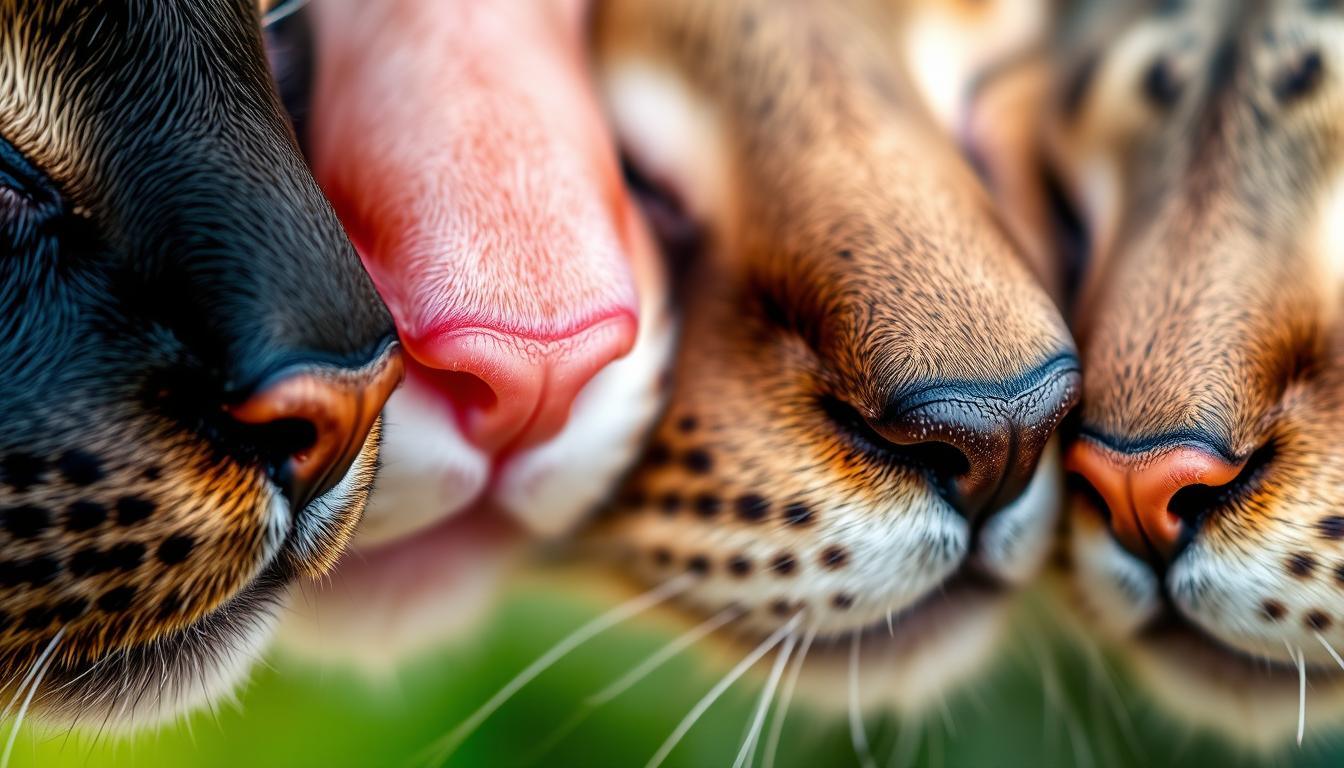
Did you know your feline companion’s sniffer is 14 times more powerful than yours? With over 200 million scent receptors compared to our mere 5 million, these furry detectives rely on their noses to hunt, navigate, and even explore different cat nose types to recognize family members. This biological marvel isn’t just cute, it’s a survival superpower.
Every bump and curve on a feline’s nose tells a story. Genetics determines whether it’s button-shaped, Roman, or flat, while pigments create stunning variations in color from bubblegum pink to midnight black. Like snowflakes, no two nose prints are alike, making each pattern as unique as a fingerprint.
This extraordinary organ does more than sniff out treats. It helps our pets map their surroundings, detect danger, and communicate emotions. When your furry friend rubs their face against you, they’re not just showing affection; they’re marking you as part of their territory.
Key Takeaways
- Felines possess 200 million scent receptors, 40 times more than humans
- Nose structure plays a critical role in hunting and territory identification
- Genetics determines nose shape, while melanin creates color variations
- Each nose has unique ridges used for identification, similar to fingerprints
- Smell drives essential behaviors from food selection to social bonding
Understanding the Unique Functionality of Cat Noses
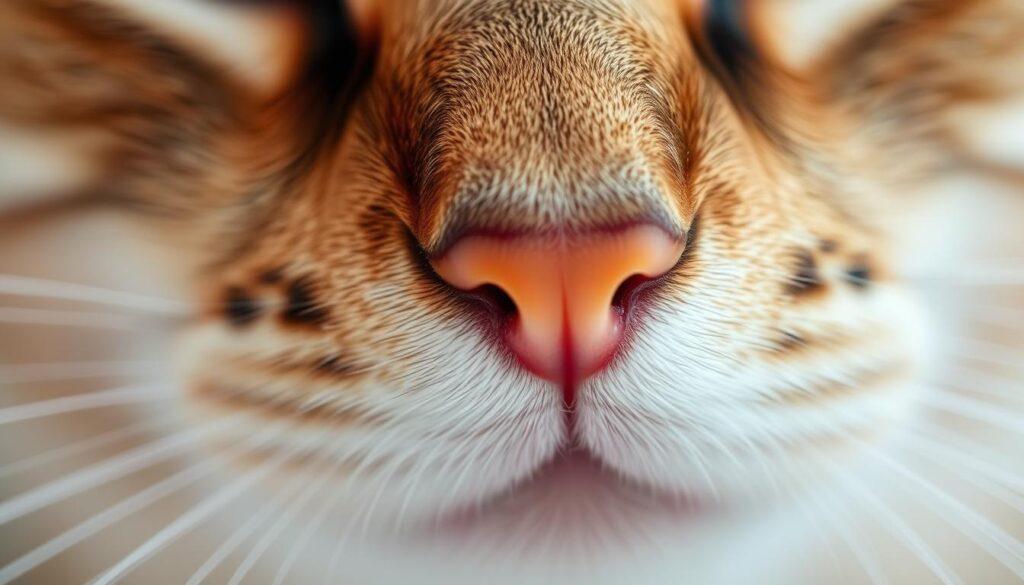
Behind every twitch of a whisker lies an extraordinary scent-processing system. Felines rely on their nasal superpowers to interpret chemical signals invisible to humans, transforming odors into detailed environmental maps.
The Science Behind Scent Receptors and Behavior
Specialized cells in the nasal cavity detect smells 100 times weaker than humans can perceive. When air enters the nostrils, odor molecules bind to receptors that send signals to the olfactory bulb, a brain region 40% larger than ours. This biological radar helps pets:
- Detect spoiled food before tasting
- Locate prey through subtle pheromones
- Identify familiar humans by scent signature
Recent studies reveal that their nasal structure outperforms lab equipment in analyzing complex chemical mixtures.
Decoding Nose Prints and Colors
Each feline sports a distinct nose pattern formed by raised skin ridges. These markings develop during embryonic growth and remain unchanged throughout life. Shelter workers increasingly photograph nose prints for identification, a method more reliable than microchips in some cases.
Pigmentation ranges from pink to charcoal, often matching fur shades. Darker noses are typically found in sun-loving outdoor pets, while indoor companions may have lighter tones. When two cats touch noses, they exchange scent profiles like business cards, establishing social bonds and territorial boundaries.
Exploring Cat Nose Types and Their Distinct Traits
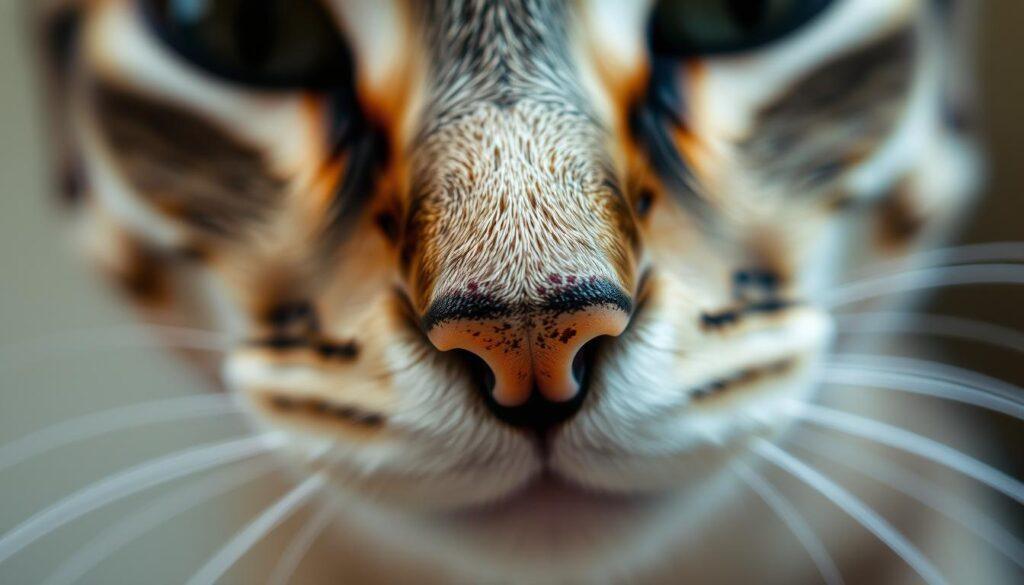
A feline’s snout serves as a living canvas where genetics and melanin collaborate. Pigment cells mirror coat shades precisely charcoal noses complement black fur, while snow-white companions frequently sport pink leathers. This biological synchronization extends to multicolored pets, creating speckled or two-toned nasal designs.
Fur Shade’s Direct Impact on Nasal Tones
Melanin distribution creates striking correlations between coat and nose hues:
| Fur Color | Nose Pigmentation | Example Breeds |
|---|---|---|
| Black | Deep charcoal | Bombay, Panther |
| White | Bubblegum pink | Persian, Khao Manee |
| Orange | Coral tones | Maine Coon, Abyssinian |
| Gray | Slate gray | Russian Blue, Chartreux |
| Multicolored | Mixed patterns | Calico, Tortoiseshell |
Deciphering Nasal Identity Signatures
Each ridge pattern forms during embryonic development, creating permanent identification marks that can be used for lifelong identification. Veterinary researchers confirm these unique nose patterns remain unchanged through adulthood, more consistent than coat colors that shift with age.
Geneticists use nasal markings to study inheritance patterns. While siblings share fur hues, their nose prints differ like human fingerprints. This diversity helps explain why litters contain varied personalities despite shared DNA.
These distinct features transform every sniff into a personalized signature. From hunting strategies to social interactions, nasal characteristics shape how felines experience their world.
A Look at Long-Nosed Cat Breeds
Elongated snouts aren’t just striking features; they’re evolutionary masterpieces, enhancing survival skills. Defined by triangular skulls and extended nasal bridges, these long-nosed breeds excel at tracking scents while maintaining sleek profiles. Their aerodynamic designs combine form and function, making them perfect for active lifestyles.
Highlights from Oriental, Chausie, and Highlander Breeds
The Oriental Shorthair stuns with its wedge-shaped head and almond eyes, its tubular body stretching like a dancer’s silhouette. Chausies descended from jungle felines boast angular muzzles and oversized ears that amplify their wild charm. Highlanders surprise with curled ears framing their elongated faces, blending exotic looks with playful energy.
Other Notable Breeds With Distinct Features
Turkish Vans display pink-rimmed nostrils against snowy fur, while Russian Blues pair slate-gray noses with emerald eyes. The Cornish Rex’s wavy coat accentuates its Roman nose profile, creating a striking contrast. Longhair varieties like Balinese flaunt plume-like tails that balance their refined facial structures.
These breeds share key traits:
- Slender bodies supporting agile movement
- Large ears enhance heat regulation
- Prominent cheekbones create a regal appearance
Whether short-haired athletes or fluffy companions, each combines elegance with heightened sensory abilities. Their distinct profiles make them stand out in both shows and living rooms across America.
Flat-Faced Cat Breeds and Health Considerations
While their adorable features charm many, flat-faced breeds require specialized care. Persian, Himalayan, and Exotic Shorthair companions face unique anatomical challenges due to shortened skulls. These brachycephalic pets often struggle with breathing, vision, and dental alignment, issues demanding proactive management.
Understanding Brachycephalic Concerns
Compressed facial structures create narrowed nostrils and crowded teeth. Over 60% of these breeds develop breathing difficulties from elongated soft palates. Veterinarians warn: “Snoring isn’t normal, it’s often the first sign of airway obstruction.” Watch for these red flags:
- Loud breathing during rest
- Exercise intolerance
- Blue-tinged gums from oxygen lack
Maintaining Eye and Dental Health
Shallow eye sockets leave corneas vulnerable to injury. Daily cleaning prevents tear stains and infections. Dental issues arise from misaligned jaws. Annual cleanings remove plaque in hard-to-reach areas. The best dietary options combine soft textures with tartar-control ingredients.
Owners should allocate time for:
- Weekly face wipe-downs
- Monthly weight checks
- Immediate vet visits for squinting or drooling
With proper attention, these distinctive companions thrive. Regular veterinary partnerships help detect common issues early, as prevention always beats emergency care.
Conclusion
From scent mastery to striking patterns, feline companions showcase nature’s ingenuity. Their nose structure and distinct markings reveal evolutionary marvels, whether tracking prey or identifying loved ones. Each ridge and hue serves a purpose, blending survival skills with artistic beauty.
Long-nosed breeds thrive with aerodynamic efficiency, while flat-faced varieties demand careful health monitoring. Pigmentation variations mirror fur tones precisely, creating coordinated looks from charcoal shades to rosy pinks. These traits aren’t just aesthetic; they’re biological signatures influencing behavior and care needs.
Understanding a pet’s unique nose patterns and head shape helps owners make informed choices. Whether drawn to sleek profiles or round faces, recognizing these characteristics ensures better support for their well-being.
Every feline’s features, from color contrast to spatial awareness, craft a one-of-a-kind companion. Celebrate this diversity, and let it guide your journey to finding the perfect match. After all, a pet’s charm lies not just in its look, but in the fascinating science beneath its whiskers.
FAQ
How does fur color relate to nose pigmentation?
Pigmentation in a feline’s nasal area often matches their coat. For example, ginger breeds like the American Shorthair typically have pinkish hues, while darker-furred companions like Bombay cats usually sport black or deep brown shades.
Are nose prints unique identifiers like human fingerprints?
Yes! Each individual has distinct ridges and patterns on their snout, similar to fingerprints. Veterinarians and researchers sometimes use these markings for identification, though the practice isn’t yet widespread.
Which breeds are prone to breathing issues due to flat faces?
Brachycephalic breeds such as Persians, Himalayans, and Exotic Shorthairs frequently face respiratory challenges. Their shortened nasal passages can lead to snoring, labored breathing, or heat intolerance, requiring attentive care.
What specialized care do brachycephalic breeds require?
Regular veterinary check-ups, maintaining a calm environment, and cleaning facial folds are essential. Dental hygiene is also critical, as crowded teeth in flat-faced breeds can lead to periodontal disease.
Do long-nosed breeds have enhanced scent-detection abilities?
Breeds like the Oriental Shorthair and Chausie possess elongated snouts, which contain more scent receptors, thereby improving their olfactory skills. This trait supports hunting instincts and environmental exploration.