
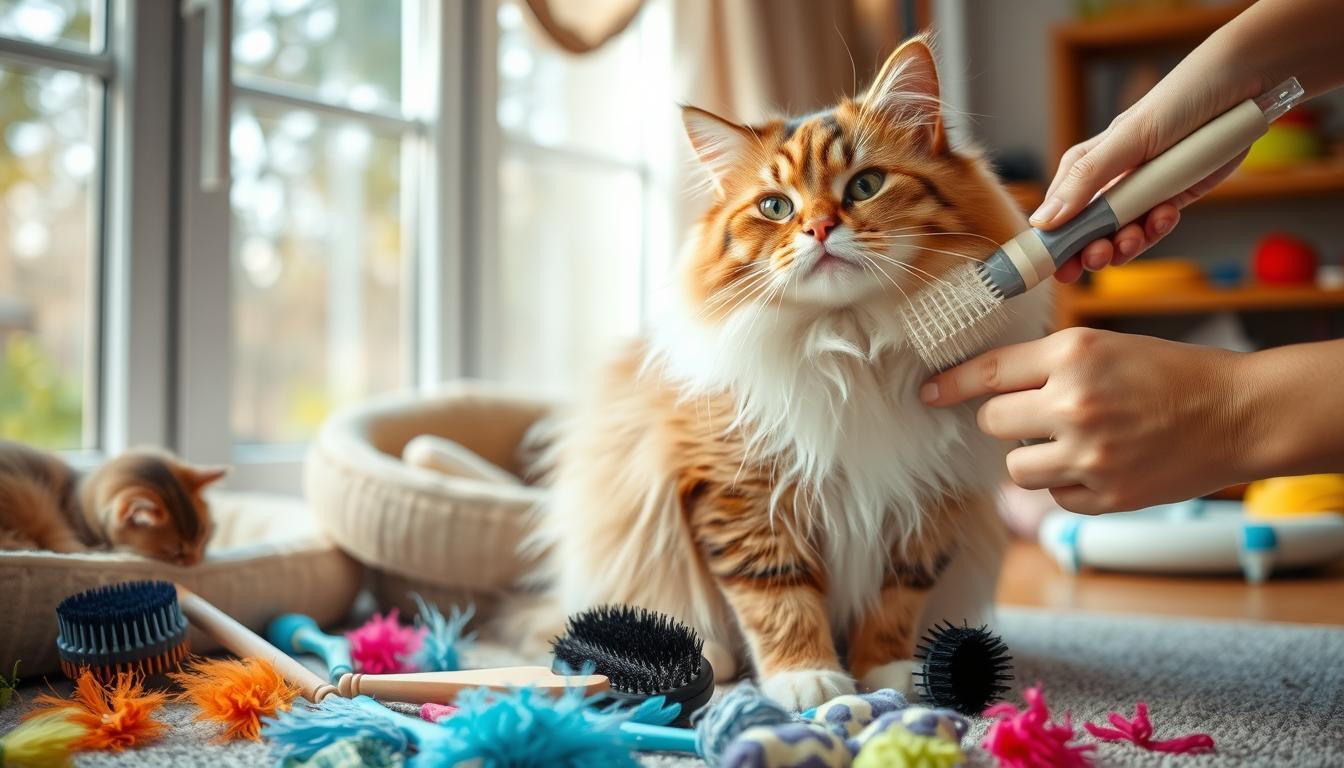
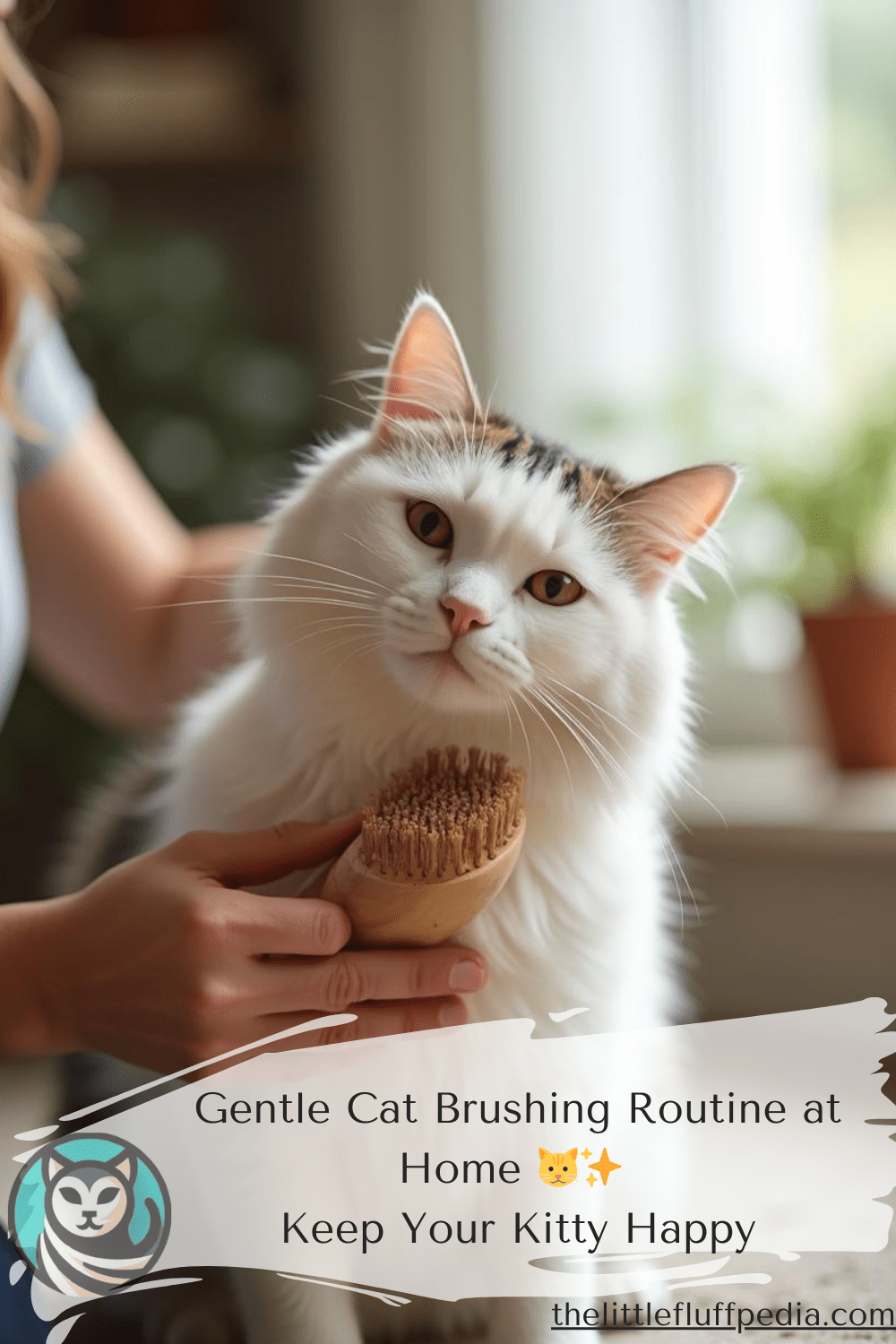
Did you know that long-haired and medium-haired cats require daily grooming to maintain their coats and prevent mats? How often should I brush my cat? Regular brushing is essential for maintaining a healthy coat, preventing tangles, and reducing shedding. It not only enhances their fur’s appearance but also promotes overall well-being. Understanding how often to brush your cat helps ensure a happy, healthy pet.
So, how often should you brush your cat? It depends on their coat type, age, health, and shedding season. Short-haired cats usually groom themselves, but still need weekly grooming.2 Cats with long, silky, or curly coats need daily brushing to avoid tangles and mats.
Having a regular brushing schedule is good for your cat’s fur and helps you bond with them. Grooming allows you to check for health issues and helps distribute natural oils throughout the coat. This makes their fur shiny and healthy. The ASPCA offers great tips on grooming your cat, highlighting the importance of proper fur care.
Key Takeaways:
- Regular brushing is essential for maintaining your cat’s coat health and overall well-being.
- The ideal cat grooming frequency depends on factors such as coat length, age, health, and shedding patterns.
- Long-haired and medium-haired cats require daily brushing, while short-haired cats can be groomed once a week.
- Brushing your cat helps remove loose hair, distribute natural oils, and prevent matting.
- Grooming sessions provide an opportunity to bond with your cat and monitor their health.
Benefits of Regular Cat Brushing
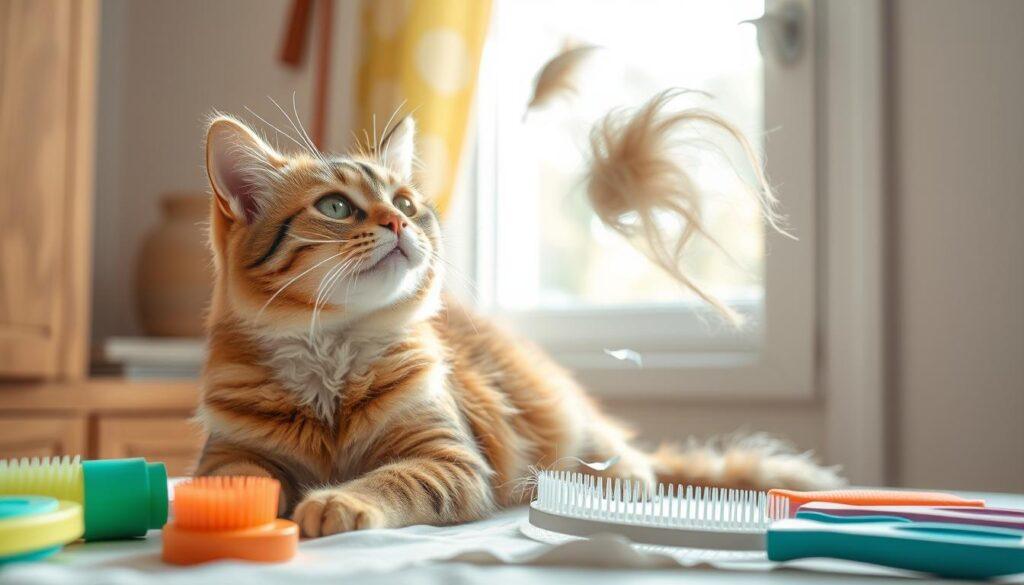
Brushing your cat regularly is great for their health and happiness. It helps prevent hairballs, which can block their intestines4. By brushing, you remove loose fur, making it less likely for hairballs to form4.
Brushing also makes your cat’s coat shiny and healthy. It spreads natural oils and lets you check for skin issues or fleas. For long-haired cats, it prevents painful mats from forming.
Brushing also removes debris, such as twigs, from your cat’s fur. It’s key for outdoor cats or those with long fur. Plus, it’s a great way to bond with your cat, making grooming a positive experience6.
Brushing your cat daily or every other day can reduce shedding. This means less hair on your floors and clothes6. It also keeps their coat healthy and lets you check for fleas or other health issues6.
| Coat Type | Brushing Frequency | Benefits |
|---|---|---|
| Short-haired | Weekly or occasional | Reduces shedding, promotes healthy coat |
| Long-haired | Daily | Prevents mats, lessens hairballs |
| Indoor/Outdoor | Daily or weekly | Removes debris, monitors skin health |
Regular brushing is a key part of your cat’s grooming routine. It keeps their coat healthy, reduces shedding, and stops hairballs. It also strengthens your bond with your cat. Tailor brushing to your cat’s needs for optimal health and happiness.
Factors Affecting Cat Brushing Frequency
When deciding how often to brush your cat, several factors are important. These include their coat length and type, age, health, and seasonal shedding. Tailoring your cat’s brushing routine to their needs helps maintain a healthy coat.
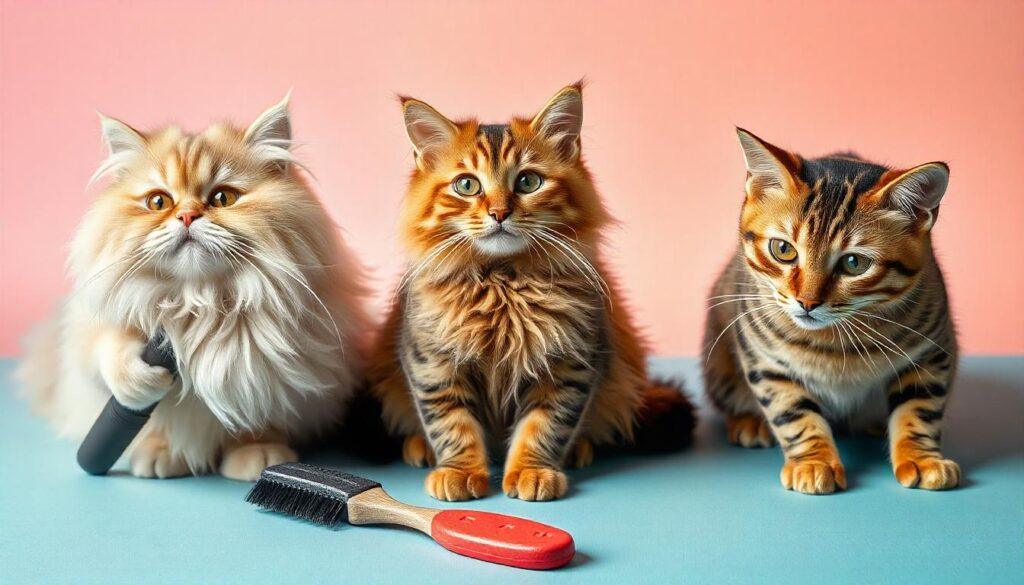
Cat’s Coat Length and Type
The length and thickness of your cat’s fur affect their brushing needs. Long-haired cats, like Persians or Maine Coons, need daily brushing to avoid mats7. They should be brushed for 5 to 10 minutes daily to prevent tangles8. Short-haired cats, such as American Shorthairs, may only need brushing once or twice a week7.
Thicker-furred cats, such as Maine Coons, require daily brushing. But cats with thinner fur, such as Siamese, may need less frequent brushing. Using the right grooming tools for your cat’s coat makes brushing more effective7.
Age and Health Considerations
A cat’s age and health affect its grooming needs. Kittens and young cats shed more than older cats. Senior cats or those with health issues may need more frequent brushing. Regular, proper cat brushing helps monitor a cat’s skin and coat and spot health issues early.
Seasonal Shedding Patterns
Cats shed more in spring and fall as temperatures change. You may need to brush them more during these times to manage loose fur7. Regular brushing also reduces hairballs by removing loose hair7. Cats who aren’t brushed regularly can develop hairballs, tangles, and mats7.
| Cat Coat Type | Brushing Frequency | Brushing Duration |
|---|---|---|
| Long-haired (Persian, Maine Coon) | Daily | 5-10 minutes |
| Short-haired (American Shorthair) | 1-2 times per week | 5-10 minutes |
| Thick-furred (Norwegian Forest Cat) | Daily | 5-10 minutes |
| Thin-furred (Siamese, Balinese) | Less frequent | 5-10 minutes |
Brushing a cat at least once a week is recommended, with each session lasting 5 to 10 minutes8. However, cats have different feelings about grooming. Some enjoy it, while others get upset8. Start with short grooming sessions for cats that don’t like it8. By considering your cat’s needs and preferences, you can create a cat brushing routine that keeps their coat healthy and strengthens your bond.
How Often Should I Brush My Cat?
The amount of brushing your cat needs depends on their fur length and type. It’s key to brush them regularly to keep their coat healthy and prevent mats. Brushing also makes their coat look great, spreads natural oils, removes loose hair, and boosts blood flow.
Short-Haired Cats
Short-haired cats only need a weekly brush9. They are easy to groom because their fur doesn’t tangle or mat easily. Still, brushing them weekly helps remove loose hair and keeps their coat in top shape. You may need to brush more frequently during shedding seasons to prevent hairballs and keep your home clean.
Medium-Haired Cats
Medium-haired cats need to be brushed more often than short-haired ones. Brush them at least twice a week to avoid tangles and mats. Their longer, denser fur can easily get matted if not brushed regularly. Brushing them every few days keeps their coat smooth and healthy, reducing loose hair at home.
Long-Haired Cats
Long-haired cats need daily brushing9. They have the most demanding grooming requirements due to their long, luxurious fur. Without daily brushing, they can develop painful mats and tangles, causing skin irritation and discomfort. Brushing them daily prevents these problems and keeps their coat looking stunning. Long-haired cats shed frequently, so brushing them regularly helps keep your home hair-free.
| Cat Coat Type | Brushing Frequency |
|---|---|
| Short-haired | Once weekly |
| Medium-haired | Twice a week |
| Long-haired | Daily |
These are general guidelines for brushing your cat based on their coat type. Some cats may need more or less brushing depending on their age, health, and shedding level. It’s essential to watch your cat’s coat and adjust brushing frequency as needed to keep their fur healthy and tangle-free.
Proper Cat Brushing Techniques
Learning how to brush your cat properly is key to keeping their coat healthy. The right tools and techniques can make your cat’s coat smooth and shiny. Here are some tips to help you brush your cat effectively.
Choosing the Right Grooming Tools
First, pick the right grooming tools for your cat’s coat type. Short-haired cats do well with rubber or bristle brushes. Long-haired cats need bristle brushes and long-toothed combs for grooming10.
For short-haired cats, a fine-toothed flea comb and a soft brush are enough. Medium and long-haired cats need a wide-toothed comb and longer brushes. These tools help remove tangles and spread natural oils.
Brushing Your Cat’s Coat
When brushing, use a wide-toothed metal comb and follow the hair growth direction. Focus on areas prone to tangles, such as the chest, abdomen, and behind the ears. Be gentle when untangling to avoid skin damage.
Regular brushing can reduce hairballs. If your cat has too many hairballs, see a vet10.
Make brushing a routine to help your cat get used to it. Start by letting them sniff the brush, then brush gently in their favorite spots. Use treats before, during, and after brushing for positive reinforcement11. A licki mat with treats can distract them during brushing11.
Handling Matted Fur
If your cat gets matted fur, use dematting combs, not scissors. Cutting mats can hurt your cat’s skin. Gently work through the mats with the comb, avoiding pulling or tugging.
Watch your cat’s coat and skin health. Excessive grooming can mean allergies, stress, or parasites. See a vet if you notice this10. The diet also affects coat and skin health, so a good diet is important10.
| Coat Type | Recommended Brushing Frequency | Suitable Grooming Tools |
|---|---|---|
| Short-haired | Once or twice weekly1110 | Fine-toothed flea comb, soft brush, grooming mittens/gloves, rubber or bristle brushes10 |
| Medium-haired | Daily11 | Wide-toothed comb, longer brushes |
| Long-haired | Daily11 or several times a week10 | Wide-toothed comb, longer brushes, bristle brushes, long-toothed combs10 |
By using the right tools and techniques, you can keep your cat’s coat healthy and shiny. Be patient, gentle, and consistent. Always prioritize your cat’s comfort.
Conclusion
Regular grooming is key to your cat’s health and happiness. The cat brushing schedule varies based on several things. These include coat length, age, health, and shedding patterns.
Long-haired cats need daily brushing. Medium-haired cats should be brushed a few times a week. Short-haired cats need brushing at least once a week to keep their coat clean and healthy12.
Choosing the right tools and techniques is important. It helps prevent your cat from becoming uncomfortable or stressed.
Keeping your cat’s teeth clean is also crucial. Over half of cats have dental disease. Bad dental health can cause heart, liver, and kidney problems.
Brushing your cat’s teeth monthly with special toothpaste and a brush can prevent dental issues. If your cat doesn’t like tooth brushing, try dental gels, chews, or professional cleanings.
Grooming regularly keeps your cat’s coat and teeth in top shape. It also helps you bond with your cat and catch health problems early. Be patient and gentle during grooming, always putting your cat’s comfort first.
By grooming your cat regularly, you can prevent serious health issues. If you’re unsure about your cat’s grooming needs or dental health, talk to your vet. They can advise you on how often to brush your cat.
FAQ
How often should I brush my short-haired cat?
Brush your short-haired cat at least once a week. This keeps their coat healthy and prevents matting. You might need to brush more during shedding seasons.
What are the benefits of regularly brushing my cat?
Brushing removes loose fur, dirt, and debris. It prevents hairballs and keeps your cat’s coat shiny. It also helps you spot skin issues, fleas, or lumps. Plus, it strengthens your bond with your cat.
How often should I brush my long-haired cat?
Long-haired cats need daily brushing. This prevents tangles and mats. Regular grooming keeps their fur healthy and looking good.
What factors affect how often I should brush my cat?
Brushing frequency depends on several things. These include coat length, age, health, and shedding patterns. Long-haired cats need more brushing. Older or less mobile cats may need additional support.
What type of grooming tools should I use for my cat?
Select grooming tools that match your cat’s coat type. Short-haired cats do well with a fine-toothed flea comb, soft brush, and grooming mitts. Long-haired cats need a wide-toothed comb and longer brushes.
How can I safely remove mats from my cat’s fur?
Use a de-matting comb to remove mats safely. Gently tease the knots with the comb. Be careful not to hurt your cat’s skin. Never use scissors to cut out mats, as it can be dangerous.
Source Links
- How often do I need to groom my cat? – RSPCA Knowledgebase – https://kb.rspca.org.au/knowledge-base/how-often-do-i-need-to-groom-my-cat/
- How & Why To Groom Your Cat | RSPCA – RSPCA – rspca.org.uk – https://www.rspca.org.uk/adviceandwelfare/pets/cats/health/grooming
- Cat Brushing 101 – https://www.zoetispetcare.com/blog/article/cat-brushing
- Tips for Brushing Your Cat and Why You Should – https://www.preventivevet.com/cats/tips-for-brushing-your-cat-and-why-you-should
- Brush Your Cat the Right Way With Tips From the Pros – https://be.chewy.com/how-to-brush-a-cat/
- How Long Should You Brush Your Cat? Vet-Reviewed Facts – Catster – https://www.catster.com/lifestyle/how-long-should-you-brush-cat/
- Cat Grooming: Brushing, Bathing, Nail Clipping, and More – https://www.webmd.com/pets/cats/cat-grooming
- Brushing Cat’s Hair and Causes of Cat Skin and Fur Problems – https://www.webmd.com/pets/cats/cats-fur-problems-grooming
- How Often Should I Brush My Cat? Vet Approved Advice – Catster – https://www.catster.com/cat-health-care/how-often-should-you-brush-cat/
- Effective vs. Ineffective Cat Grooming – All About Cats – https://weareallaboutcats.com/effective-vs-ineffective-cat-grooming/